If you’re involved in project management, you’ve likely heard the term “risk matrix” thrown around. But what exactly is a risk matrix, and how does it work?
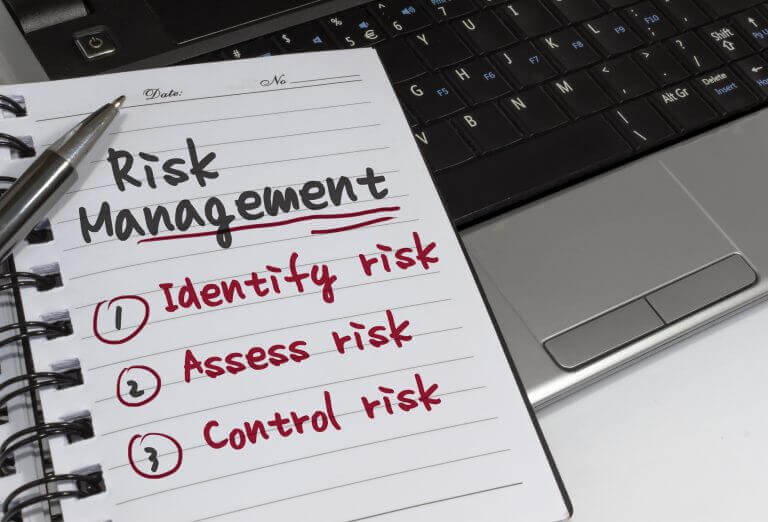
At its core, a risk matrix is a tool that helps you identify, assess, and prioritize risks so that you can make informed decisions about how to manage them.
Understanding Risk Matrices A risk matrix is typically a two-dimensional chart that plots the likelihood of a risk occurring against the severity of its impact. By looking at the chart, you can quickly see which risks are most likely to occur and which ones would have the biggest impact if they did.
This information can help you decide which risks to focus on first and which ones can be addressed later.
The Role of Risk Matrices in Risk Management Risk matrices play a crucial role in risk management. By using a risk matrix, you can gain a better understanding of the risks you face and make informed decisions about how to manage them. This can help you avoid potential problems and ensure that your projects are completed on time and within budget.
Key Takeaways
- A risk matrix is a tool that helps you identify, assess, and prioritize risks.
- Risk matrices plot the likelihood of a risk occurring against the severity of its impact.
- Risk matrices play a crucial role in risk management by helping you make informed decisions about how to manage risks.
Understanding Risk Matrices
If you are involved in risk assessment, you have probably heard of a risk matrix. A risk matrix is a graphical tool used to evaluate risks and determine the appropriate response. It is a simple and effective way to communicate risk information to stakeholders.
Definition of a Risk Matrix
A risk matrix is a two-dimensional matrix that is used to evaluate risks based on their likelihood and impact. The likelihood of a risk refers to the probability that it will occur, while the impact refers to the severity of the consequences if it does occur. The risk matrix is usually divided into a grid, with the likelihood on one axis and the impact on the other.
Components of a Risk Matrix
A typical risk matrix has four or five risk levels, which are usually colour-coded. The risk levels represent the level of risk associated with a particular event. For example, a risk level of low means that the risk is minor and can be managed with routine procedures, while a risk level of high means that the risk is significant and requires immediate attention.
The components of a risk matrix include:
- Likelihood: This refers to the probability that a risk will occur. Likelihood is usually expressed as a percentage or a fraction.
- Impact: This refers to the severity of the consequences if a risk does occur. Impact is usually expressed in terms of cost, time, or human life.
- Probability: This is the likelihood of a risk occurring, expressed as a number between 0 and 1.
- Severity: This is the impact of a risk, expressed as a number between 0 and 1.
- Risk levels: These are the levels of risk associated with a particular event. Risk levels are usually colour-coded to make them easier to understand.
In summary, a risk matrix is a simple and effective tool for evaluating risks based on their likelihood and impact. It is a valuable tool for communicating risk information to stakeholders and can be used to determine the appropriate response to a particular risk.
The Role of Risk Matrices in Risk Management
A risk matrix is a tool used in risk management to identify, analyse, and evaluate potential risks. It is a visual representation of the likelihood and impact of identified risks, which helps in prioritising them for further action. Risk matrices are widely used in various industries, including construction, healthcare, and finance.
Identifying Potential Risks
The first step in risk management is to identify potential risks. This can be done by brainstorming, reviewing historical data, and consulting with subject matter experts. Once identified, risks are usually categorised based on their nature, such as financial, operational, or reputational risks.
Analysing Risk Impact and Probability
After identifying potential risks, the next step is to analyse the impact and probability of each risk. This is where the risk matrix comes into play. The risk matrix is a two-dimensional table that maps the likelihood and impact of each identified risk. The likelihood and impact are usually rated on a scale from 1 to 5, with 1 being the lowest and 5 being the highest.
The likelihood of a risk refers to the chance that it will occur. The impact of a risk refers to the severity of the consequences if it does occur. By mapping the likelihood and impact of each risk on the risk matrix, the risks can be prioritised based on their level of risk. The risks that are rated as high risk require immediate action, while those that are rated as low risk can be monitored or ignored.
In conclusion, risk matrices are an essential tool in risk management. They help in identifying potential risks and prioritising them based on their level of risk. By using a risk matrix, you can ensure that your organisation is prepared to deal with potential risks and minimise their impact on your business.
Creating and Using a Risk Matrix
A risk matrix is a visual representation of the likelihood and impact of risks associated with a particular project or activity. It is a useful tool to help you calculate risk, prioritize risks, and determine appropriate risk responses. In this section, we will discuss the two main steps in creating and using a risk matrix.
Designing a Risk Matrix
The first step in creating a risk matrix is to design it. To do this, you need to define your risk criteria. Risk criteria are the factors that you will use to assess the likelihood and impact of risks. Common risk criteria include probability, severity, and frequency.
Once you have defined your risk criteria, you can create a matrix that maps out the different levels of likelihood and impact. For example, you might use a five-point scale for both likelihood and impact, with 1 being the lowest and 5 being the highest. You can then create a grid that maps out the different levels of likelihood and impact, with each cell representing a different level of risk.
Interpreting Matrix Results
Once you have designed your risk matrix, you can use it to assess the risks associated with your project or activity. To do this, you need to score each risk based on its likelihood and impact. You can then plot each risk on the matrix and determine the appropriate risk response.
For example, if a risk has a high likelihood and a high impact, you might need to take immediate action to mitigate the risk. If a risk has a low likelihood and a low impact, you might choose to monitor the risk and take no action unless the situation changes.
In conclusion, a risk matrix is a valuable tool for assessing and prioritizing risks associated with a project or activity. By designing a risk matrix that maps out the different levels of likelihood and impact, and by scoring each risk based on these criteria, you can determine the appropriate risk response and take action to mitigate risks.
Applying the Risk Matrix to Project Management
A risk matrix is a graphical tool that helps project managers to identify, assess, and prioritise project risks based on their likelihood and impact. Once the risks are identified and assessed, the project manager can then allocate resources to the risks that pose the greatest threat to the project’s success.
Prioritising Project Risks
The risk matrix is used to prioritise project risks by assigning a score to each risk based on its likelihood and impact. The likelihood and impact scores are usually represented on a scale of 1 to 5, with 5 being the highest score. The scores are then multiplied to give a risk score, which is used to prioritise the risks.
For example, if a risk has a likelihood score of 4 and an impact score of 3, its risk score would be 12. A risk with a higher risk score would be prioritised over a risk with a lower risk score.
Resource Allocation Based on Risk Prioritisation
Once the project risks have been prioritised, the project manager can then allocate resources to the risks that pose the greatest threat to the project’s success. This involves identifying the resources required to mitigate the risks and allocating them accordingly.
For example, if a risk has a high likelihood and impact score, the project manager may allocate more resources to mitigating that risk than to a risk with a lower likelihood and impact score. This ensures that the project team is focusing its efforts on the risks that pose the greatest threat to the project’s success.
In summary, the risk matrix is a powerful tool that helps project managers to identify, assess, and prioritise project risks. By using the risk matrix, project managers can allocate resources to the risks that pose the greatest threat to the project’s success, ensuring that the project team is focusing its efforts on the risks that matter most.
Risk Matrix Limitations and Considerations
When using a risk matrix, it is important to consider its limitations and potential challenges. Here are some key considerations to keep in mind:
Subjectivity in Risk Assessment
One of the main limitations of a risk matrix is that it relies on subjective assessments of both likelihood and impact. This can lead to inconsistencies in the way that different individuals or teams assess risks, as well as potential biases based on personal experience or perception. To mitigate this risk, it is important to establish clear criteria for assessing likelihood and impact, and to involve multiple stakeholders in the risk assessment process to ensure that a variety of perspectives are considered.
Challenges in Defining Likelihood and Severity
Another challenge with a risk matrix is defining the likelihood and severity of a risk event. Likelihood, or the probability that a risk event will occur, can be difficult to define accurately, particularly for rare or complex events. Similarly, severity, or the impact of a risk event, may be difficult to define consistently across different types of risks. To address these challenges, it may be helpful to use historical data or expert opinion to inform likelihood and severity assessments, and to establish clear definitions and criteria for each.
Overall, while a risk matrix can be a useful tool for assessing and prioritising risks, it is important to be aware of its limitations and potential challenges. By taking a thoughtful and structured approach to risk assessment, and involving a variety of stakeholders in the process, you can help to ensure that your risk management efforts are as accurate and effective as possible.
Enhancing Risk Matrices for Better Outcomes
When it comes to risk management, risk matrices are a popular tool for assessing and prioritising risks. However, not all risk matrices are created equal. By incorporating stakeholder input and improving accuracy, you can enhance your risk matrix for better outcomes.
Incorporating Stakeholder Input
Stakeholders are key to the success of any risk management process. By involving key stakeholders in the development of your risk matrix, you can ensure that their concerns and perspectives are taken into account. This can help to increase buy-in and engagement, as well as improve the accuracy of your risk matrix.
One way to incorporate stakeholder input is to hold workshops or focus groups. This can provide an opportunity for stakeholders to share their views and insights, as well as to identify risks that may not have been considered previously. You can also use surveys or interviews to gather feedback from stakeholders who may not be able to attend in person.
Improving Risk Matrix Accuracy
Accuracy is crucial when it comes to risk management. If your risk matrix is inaccurate, it can lead to poor decision-making and potentially disastrous outcomes. To improve the accuracy of your risk matrix, consider the following:
- Use reliable data: Your risk matrix is only as good as the data you use to populate it. Make sure that your data is accurate, up-to-date, and relevant to the risks you are assessing.
- Define your criteria: Clearly define the criteria you are using to assess risks. This can help to ensure consistency and reduce the risk of bias.
- Use a consistent scale: Make sure that your risk matrix uses a consistent scale for both likelihood and consequence. This can help to ensure that risks are assessed consistently and accurately.
- Review and update regularly: Your risk matrix should be reviewed and updated regularly to ensure that it remains accurate and relevant. This can help to identify new risks and ensure that existing risks are still being assessed accurately.
By incorporating stakeholder input and improving accuracy, you can enhance your risk matrix for better outcomes. Remember, your risk matrix is only a tool – it is up to you to use it effectively to make informed decisions and manage risks effectively.
Integrating Risk Matrices with Other Risk Management Tools
Risk Management Plan Development
When developing a risk management plan, a risk matrix can be a valuable tool to help identify and prioritise risks. The risk matrix can be used in conjunction with other risk management tools such as risk control measures and risk mitigation strategies to help develop a comprehensive plan that addresses all potential risks.
ISO and PMI both recommend the use of risk matrices in their risk management standards. The PMI’s Project Management Professional (PMP) certification requires an understanding of risk management tools, including risk matrices.
Combining with Other Risk Assessment Tools
Risk matrices can be used in conjunction with other risk assessment tools to provide a more comprehensive view of risks. For example, a risk control matrix can be used to identify and assess control measures, while a risk matrix can be used to prioritise risks based on their likelihood and impact.
When combining risk matrices with other risk assessment tools, it is important to ensure that the risk matrix is compatible with the other tools being used. For example, if using a risk control matrix, the risk matrix should use the same risk categories as the risk control matrix to ensure consistency in risk assessment.
In conclusion, integrating risk matrices with other risk management tools can help develop a comprehensive risk management plan that addresses all potential risks. When combining risk matrices with other risk assessment tools, it is important to ensure compatibility and consistency in risk assessment.
Case Studies and Practical Applications
Real-World Examples of Risk Matrices
Risk matrices have been implemented in various industries and organizations to assess and manage risks effectively. One example is the oil and gas industry, where risk matrices are commonly used to evaluate the likelihood and severity of potential hazards. According to a study published in OnePetro, risk matrices have some limitations, but they remain a popular risk management tool in the industry.
Another example of a real-world application of risk matrices is in project planning. A study published in the Journal of Construction Engineering and Management found that a risk management matrix was effective in identifying potential risks and developing suitable risk-response measures. The study also highlighted the importance of considering commercial matters and scope of work when implementing a risk management matrix.
Lessons Learned from Implementing Risk Matrices
While risk matrices can be useful tools for assessing and managing risks, there are also lessons to be learned from their implementation. One lesson is that risk matrices should be tailored to the specific needs of the company or organization. A study published in ScienceDirect found that risk characterizations should be customized to highlight knowledge aspects relevant to the organization.
Another lesson is that risk matrices should not be the sole risk management tool. According to a study published in Semantics Scholar, the use of risk matrices in risk assessment should be complemented with other risk management tools. The study also emphasized that risks in the unsafe work domain should not be accepted.
In summary, risk matrices have been implemented in various industries and organizations to assess and manage risks effectively. While there are some limitations to their use, there are also lessons to be learned from their implementation. Customization and complementation with other risk management tools are key to effective risk management.
Frequently Asked Questions
What is the purpose of utilising a risk matrix in risk management?
A risk matrix is a tool that helps organisations to visualise and prioritise risks based on their severity and probability. By using a risk matrix, you can identify which risks are most critical and require immediate attention. This tool is useful for risk management because it enables you to make informed decisions about how to allocate resources and implement strategies to mitigate risks.
How do you calculate risk using the probability and severity formula?
To calculate risk using the probability and severity formula, you need to determine the likelihood of a risk occurring and the potential impact it could have. Probability is typically measured on a scale from 1 to 5, where 1 is the least likely and 5 is the most likely. Severity is also measured on a scale from 1 to 5, where 1 is the least severe and 5 is the most severe. To calculate the risk rating, you simply multiply the probability by the severity. For example, if the probability is 3 and the severity is 4, the risk rating would be 12.
What are the principal components of a risk matrix?
The principal components of a risk matrix are the probability and severity scales, the risk rating scale, and the risk control matrix. The probability and severity scales are used to assess the likelihood and impact of risks, while the risk rating scale is used to categorise risks into different levels of severity. The risk control matrix is used to identify and implement strategies to mitigate risks.
In what way does a risk control matrix facilitate the management of potential hazards?
A risk control matrix facilitates the management of potential hazards by providing a framework for identifying, assessing, and mitigating risks. By using a risk control matrix, you can identify the most critical risks and implement strategies to reduce their likelihood or impact. This tool also helps you to monitor and review your risk management strategies over time.
Could you explain the five levels of risk rating typically used in risk matrices?
The five levels of risk rating typically used in risk matrices are low, medium-low, medium, medium-high, and high. These levels are determined based on the risk rating scale, which is typically divided into five or six categories. A low risk rating indicates that the risk is unlikely to occur and would have minimal impact if it did occur, while a high risk rating indicates that the risk is highly likely to occur and would have a significant impact if it did occur.
What steps are involved in applying a risk matrix within a project or organisational context?
The steps involved in applying a risk matrix within a project or organisational context include identifying potential risks, assessing the likelihood and impact of each risk, categorising risks based on their severity, developing strategies to mitigate risks, implementing risk management strategies, and monitoring and reviewing the effectiveness of these strategies over time. It is important to involve stakeholders in each step of the process to ensure that risks are identified and managed effectively.