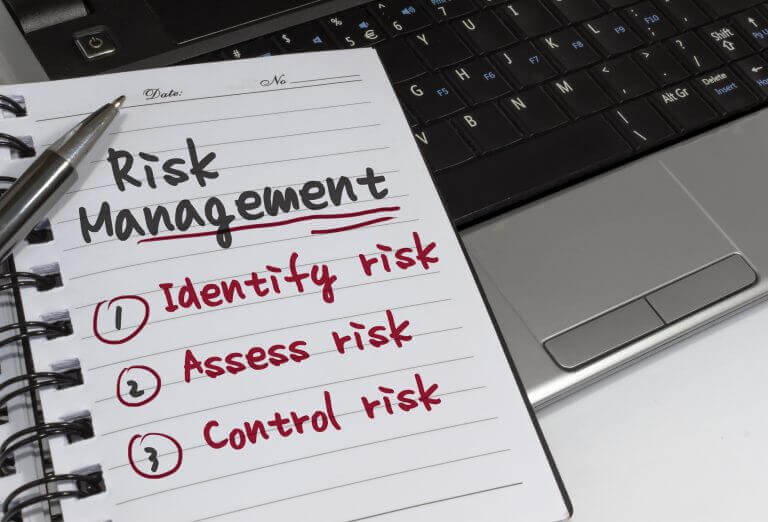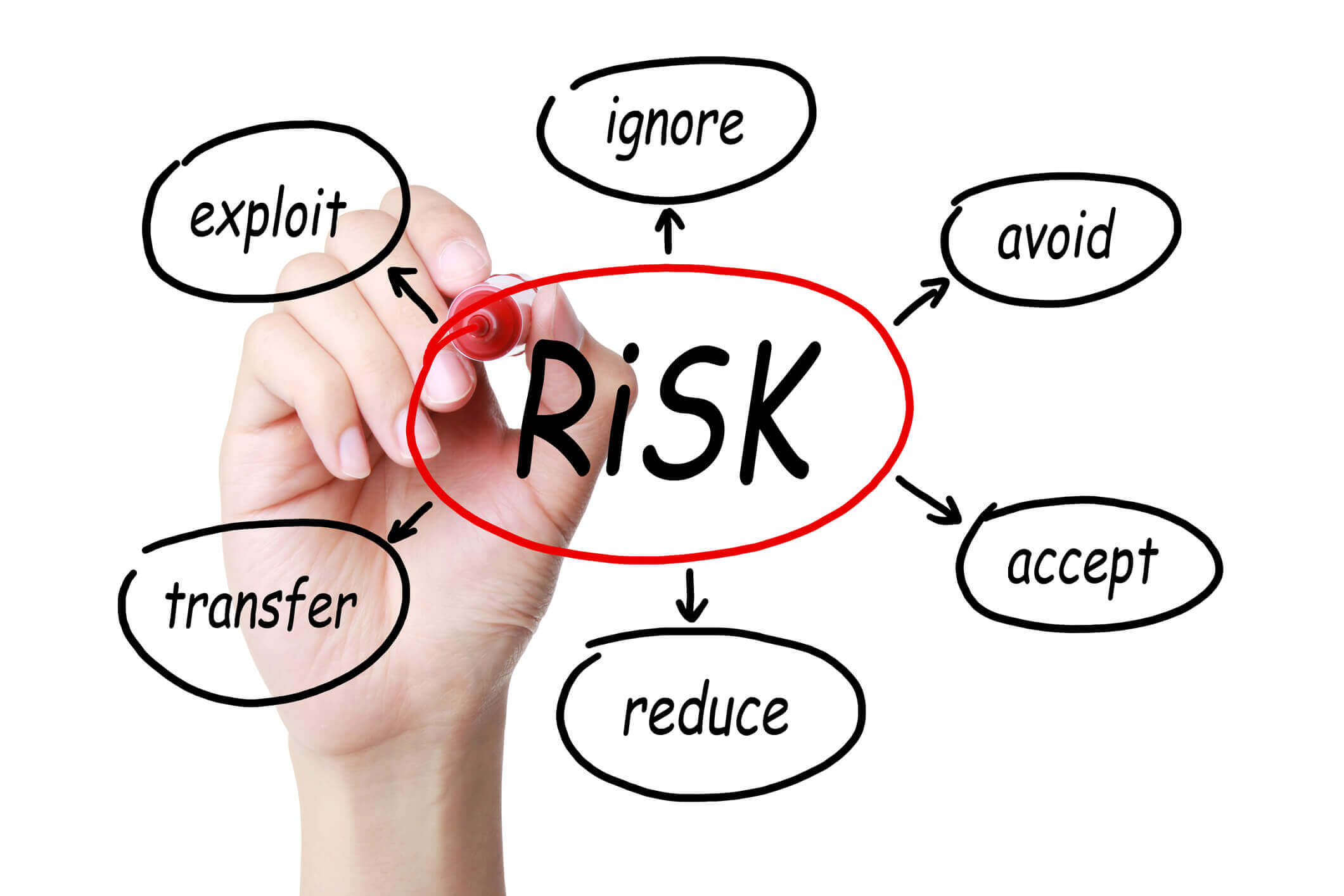
When it comes to managing risks, businesses and organisations use a risk matrix as a tool to identify, assess, and prioritise risks. A risk matrix is a visual representation of the likelihood and impact of a risk, and it helps organisations determine which risks require the most attention.
Using a risk matrix involves several steps, and the third step is crucial in evaluating the risks.
The third step when using a risk matrix is risk evaluation. This step involves assigning a level of risk to each identified risk. The risk level is determined by the intersection of the likelihood and impact of the risk.
The likelihood and impact are usually represented on a scale of 1 to 5, with 1 being the lowest and 5 being the highest. Once the likelihood and impact are determined, the risk level is assigned, and the risks are prioritised accordingly.
Effective risk evaluation is crucial in determining which risks require the most attention and resources. It helps organisations focus on the most significant risks and develop strategies to mitigate them. The risk evaluation step is also essential in communicating the risks to stakeholders and decision-makers.
By clearly identifying and evaluating risks, organisations can make informed decisions and take appropriate actions to manage risks.
Key Takeaways
- The third step when using a risk matrix is risk evaluation, which involves assigning a level of risk to each identified risk.
- Risk evaluation helps organisations focus on the most significant risks and develop strategies to mitigate them.
- Effective risk evaluation is crucial in communicating the risks to stakeholders and decision-makers, enabling informed decisions and appropriate actions to manage risks.
Understanding Risk Matrices
Defining Risk Matrix
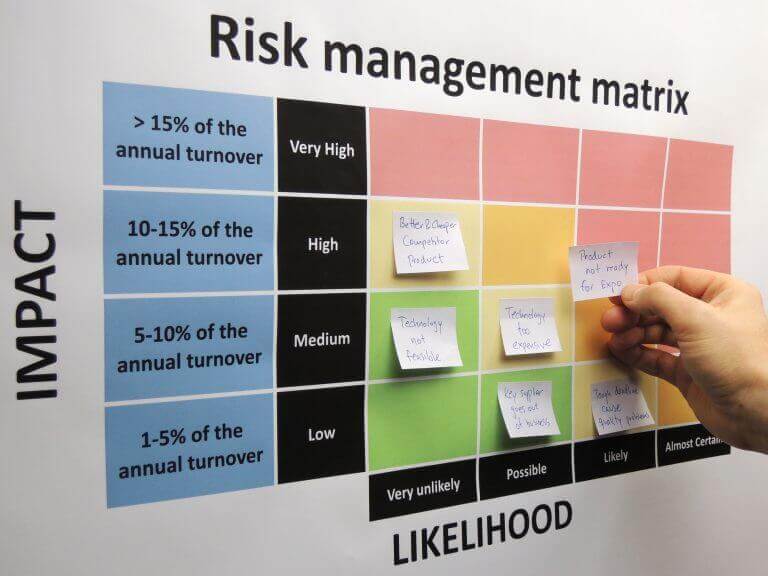
A risk matrix is a tool used in risk assessment to evaluate the likelihood and impact of potential risks. It is a graphical representation of the likelihood and severity of risks, with likelihood plotted on one axis and impact on the other. The matrix is divided into different zones, each representing a different level of risk. The risk matrix is a useful tool for visualising and prioritising risks, helping you to determine which risks require the most attention.
Importance in Risk Assessment
The risk matrix is an important tool in risk assessment, as it provides a structured approach to identifying and prioritising risks. By evaluating the likelihood and impact of potential risks, you can determine which risks require the most attention and allocate resources accordingly. The risk matrix also helps you to communicate risk information to stakeholders, as it provides a clear and concise visual representation of the risks.
When using a risk matrix, the third step is to evaluate the probability and severity of each risk. Probability refers to the likelihood of the risk occurring, while severity refers to the impact of the risk if it does occur. By evaluating the probability and severity of each risk, you can determine which risks require the most attention and develop appropriate risk management strategies.
In summary, a risk matrix is a useful tool for visualising and prioritising risks. The third step in using a risk matrix is to evaluate the probability and severity of each risk. By doing so, you can determine which risks require the most attention and develop appropriate risk management strategies.
Preparation for Risk Assessment
When preparing for a risk assessment using a risk matrix, you need to follow a few steps to ensure that you have everything you need to carry out the assessment effectively. This section will outline the three key steps involved in preparing for a risk assessment.
Identifying Risks
The first step in preparing for a risk assessment is to identify the risks that you need to assess. This involves looking at all the different aspects of your project or activity and identifying any potential hazards that could lead to harm or injury. You should involve all relevant stakeholders in this process to ensure that you have a comprehensive list of risks to assess.
Determining Risk Criteria
Once you have identified the risks, you need to determine the criteria that you will use to assess them. This involves deciding on the likelihood and severity of each risk and using this information to categorise them into different levels of risk. You can use a risk matrix to help you with this process, which will enable you to visualise the different levels of risk.
Gathering Resources
The final step in preparing for a risk assessment is to gather all the resources that you will need to carry out the assessment. This includes any relevant documentation, such as risk assessment templates or guidelines, as well as any equipment or tools that you will need to use. You should also ensure that all relevant stakeholders are aware of the assessment and have been provided with any necessary training to ensure that they can participate effectively.
By following these three key steps, you can ensure that you are well-prepared for your risk assessment and have everything you need to carry it out effectively. Remember to involve all relevant stakeholders in the process and use a risk matrix to help you categorise the different levels of risk accurately.
Step One: Risk Identification
When using a risk matrix, the first step is to identify the potential risks that may arise during a project or process. This step is crucial as it allows you to understand the risks that may impact the project and to develop strategies to mitigate them.
Brainstorming Potential Risks
Brainstorming is an effective way to identify potential risks. It involves gathering a group of individuals who have experience in the project or process and discussing the potential risks that may arise. This can be done in a structured or unstructured manner. You can use a whiteboard or flipchart to capture the ideas generated during the brainstorming session.
It is important to encourage everyone to contribute their ideas, no matter how small or insignificant they may seem. This can help to identify risks that may have been overlooked if only a few individuals were involved in the process.
Utilising Risk Assessment Matrix
Once the potential risks have been identified, the next step is to assess their likelihood and impact. This is where a risk assessment matrix comes in handy. A risk assessment matrix is a tool that helps to evaluate the likelihood and impact of a risk.
The matrix is divided into different categories based on the likelihood and impact of the risk. The likelihood is usually measured on a scale of 1 to 5, with 1 being the least likely and 5 being the most likely. The impact is measured on a similar scale, with 1 being the least impact and 5 being the most impact.
By using a risk assessment matrix, you can identify the risks that are most likely to occur and have the greatest impact on the project. This helps you to focus your resources on mitigating these risks.
In conclusion, identifying potential risks and assessing their likelihood and impact is the first step in using a risk matrix. Brainstorming is an effective way to identify potential risks, and a risk assessment matrix can help to evaluate the likelihood and impact of a risk.
Step Two: Risk Analysis
In the previous step of the risk management process, you identified potential risks that could affect your project. The next step is to assess the identified risks and determine their probability and severity. This step is critical as it helps you to prioritise risks and allocate resources accordingly.
Assessing Probability and Severity
To assess the probability and severity of each identified risk, you will need to consider the likelihood of the risk occurring and the potential impact it could have on your project. Probability is the likelihood of the risk occurring, while severity is the impact the risk could have on your project.
You can use a probability and severity matrix to assess the probability and severity of each identified risk. This matrix is a tool that helps you to visualise the likelihood and impact of each risk. The matrix typically uses a scale of 1 to 5 to rate the probability and severity of each risk. You can then use the matrix to determine the overall risk rating for each risk.
Categorising Risks
Once you have assessed the probability and severity of each identified risk, you can categorise the risks based on their overall risk rating. This categorisation helps you to prioritise the risks and allocate resources accordingly.
Typically, risks are categorised into three categories: high, medium, and low. High risks are those that have a high probability and severity rating and could have a significant impact on your project. Medium risks are those that have a moderate probability and severity rating and could have a moderate impact on your project. Low risks are those that have a low probability and severity rating and could have a minor impact on your project.
By categorising risks into these categories, you can focus your attention on the high and medium risks and allocate resources accordingly. This approach ensures that you are focusing your resources on the most critical risks and minimising the impact of those risks on your project.
In summary, the second step in using a risk matrix is to assess the identified risks and determine their probability and severity. You can use a probability and severity matrix to visualise the likelihood and impact of each risk. Once you have assessed the risks, you can categorise them into high, medium, and low risks to prioritise them and allocate resources accordingly.
Step Three: Risk Evaluation
After identifying and assessing the risks using a risk matrix, the third step is to evaluate the risks. This step involves interpreting the risk matrix and prioritising the risks based on their severity.
Interpreting the Risk Matrix
Interpreting the risk matrix involves looking at the intersection of the likelihood and consequence scores. The risk matrix typically has a colour code that indicates the level of risk. For example, red could indicate high risk, yellow could indicate moderate risk, and green could indicate low risk.
When interpreting the risk matrix, you should consider the likelihood and consequence scores for each risk. A risk with a high likelihood and high consequence score is considered a high-risk item. Conversely, a risk with a low likelihood and low consequence score is considered a low-risk item.
Prioritising Risks
Prioritising risks involves ranking them based on their severity. This step is crucial since it helps you determine which risks to address first. When prioritising risks, you should consider the likelihood and consequence scores for each risk.
One way to prioritise risks is to use a risk register. A risk register is a tool that helps you track and manage risks. It typically includes information such as the risk description, likelihood score, consequence score, risk rating, and mitigation strategy.
Another way to prioritise risks is to use a risk matrix. A risk matrix can help you visualise and prioritise risks based on their severity. By using a risk matrix, you can quickly identify high-risk items that require immediate attention.
In conclusion, risk evaluation is a critical step in the risk management process. It involves interpreting the risk matrix and prioritising risks based on their severity. By following these steps, you can effectively manage risks and minimise their impact on your project or organisation.
Step Four: Risk Mitigation
Once you have identified and assessed the risks using a risk matrix, the next step is to mitigate them. Risk mitigation involves developing action plans and implementing risk controls to reduce the likelihood or impact of the risks.
Developing Action Plans
The first step in risk mitigation is to develop action plans. Action plans outline the steps that need to be taken to reduce the likelihood or impact of the risks. These plans should be specific, measurable, achievable, relevant, and time-bound (SMART).
When developing action plans, it is important to involve all stakeholders who are affected by the risks. This includes employees, customers, suppliers, and other third parties. By involving all stakeholders, you can ensure that the action plans are effective and that everyone is committed to implementing them.
Implementing Risk Controls
The next step in risk mitigation is to implement risk controls. Risk controls are measures that are put in place to reduce the likelihood or impact of the risks. There are several types of risk controls, including:
- Preventive controls: These controls are designed to prevent the risks from occurring in the first place. For example, installing fire alarms and sprinklers in a building is a preventive control that reduces the likelihood of a fire.
- Detective controls: These controls are designed to detect the risks when they occur. For example, installing security cameras in a store is a detective control that helps to identify shoplifting.
- Corrective controls: These controls are designed to correct the risks when they occur. For example, having a backup generator in case of a power outage is a corrective control that reduces the impact of the outage.
When implementing risk controls, it is important to monitor their effectiveness and adjust them as necessary. This will ensure that the controls remain effective over time and that the risks are adequately mitigated.
In summary, risk mitigation involves developing action plans and implementing risk controls to reduce the likelihood or impact of the risks. By following a structured approach to risk mitigation, you can ensure that your business is prepared for potential risks and that you have the necessary controls in place to manage them.
Step Five: Risk Monitoring
After you have identified and assessed the risks using a risk matrix, the next step is to monitor the risks. Risk monitoring is a continuous process that involves tracking the identified risks and reviewing the risk management plan to ensure that it is effective.
Tracking Risk Metrics
One way to monitor risks is by tracking risk metrics. These are quantitative measurements that help you to understand the level of risk associated with a particular activity or project. Some common risk metrics include:
- Likelihood of the risk occurring
- Impact of the risk if it does occur
- Severity of the risk
- Probability of the risk occurring
- Frequency of the risk occurring
By tracking these metrics, you can identify trends and patterns in the risks, which can help you to take proactive measures to mitigate or eliminate them.
Reviewing Risk Management Plan
Another important aspect of risk monitoring is reviewing the risk management plan. This involves evaluating the effectiveness of the plan and identifying any areas that need improvement.
During the review process, you should consider the following:
- Are the risk management strategies effective?
- Are the risk management procedures being followed?
- Are the risk metrics being tracked accurately?
- Are the risk mitigation measures being implemented as planned?
- Are there any new risks that need to be added to the risk matrix?
By reviewing the risk management plan regularly, you can ensure that it remains effective and relevant to the changing needs of the project or activity.
Overall, risk monitoring is an essential part of the risk management process. By tracking risk metrics and reviewing the risk management plan, you can ensure that your project or activity remains on track and that any potential risks are identified and mitigated before they become a problem.
Communicating with Stakeholders
When using a risk matrix, it is important to communicate effectively with your key stakeholders. This can help ensure that everyone involved understands the risks and can make informed decisions. There are two main ways to communicate with stakeholders: reporting and engaging.
Reporting to Key Stakeholders
Reporting is the process of providing information to stakeholders about the risks identified using the risk matrix. This can involve creating reports that summarise the risks, their likelihood, and potential impact. Reports should be easy to understand and should provide stakeholders with the information they need to make informed decisions.
When reporting to key stakeholders, it is important to use clear and concise language. Avoid using technical jargon or acronyms that stakeholders may not be familiar with. Instead, use plain language and provide examples to help stakeholders understand the risks.
Engaging with Enterprise
Engaging with enterprise involves working with stakeholders to develop strategies for managing the risks identified using the risk matrix. This can involve holding workshops or meetings to discuss the risks and potential solutions. It is important to involve stakeholders in the decision-making process to ensure that everyone is on board with the chosen strategy.
When engaging with enterprise, it is important to be open and transparent. Provide stakeholders with all the information they need to make informed decisions, including the risks, potential impact, and possible solutions. Be willing to listen to feedback and be prepared to make changes to the strategy if necessary.
In summary, communicating with stakeholders is a critical component of using a risk matrix effectively. By reporting to key stakeholders and engaging with enterprise, you can ensure that everyone involved understands the risks and can make informed decisions.
Integrating Risk Management into Business Strategy
When it comes to integrating risk management into business strategy, there are several steps that you need to take. One of these steps is using a risk matrix. The risk matrix is a tool that helps you to identify and assess risks in a structured and systematic way.
Aligning with Business Objectives
The first step in integrating risk management into business strategy is to align your risk management objectives with your business objectives. This means that you need to identify and understand the risks that could impact your business objectives. Once you have identified these risks, you can then develop a risk management strategy that is aligned with your business objectives.
Considering Strategic and Operational Risks
The second step in integrating risk management into business strategy is to consider both strategic and operational risks. Strategic risks are risks that could impact your business strategy, while operational risks are risks that could impact your day-to-day operations. By considering both types of risks, you can develop a comprehensive risk management strategy that covers all aspects of your business.
When using a risk matrix, the third step is to assess the likelihood and impact of each identified risk. This involves assigning a score to each risk based on its likelihood and impact. Once you have assessed the risks, you can then develop risk response strategies that are appropriate for each risk.
In conclusion, integrating risk management into business strategy is an essential part of running a successful business. By using a risk matrix and considering both strategic and operational risks, you can develop a comprehensive risk management strategy that is aligned with your business objectives.
Adapting to External and Internal Factors
When using a risk matrix, adapting to external and internal factors is the third step that you need to take. This step is crucial as it helps you to identify and address potential risks that may impact your business. In this section, we will explore the two key aspects of this step, which are addressing external threats and opportunities and strengthening internal controls and audit.
Addressing External Threats and Opportunities
External factors such as regulatory changes, market trends, and economic conditions can pose significant risks to your business. Therefore, it is essential to identify these factors and evaluate their potential impact on your business. You can use a PESTLE analysis to identify external factors that may affect your business. PESTLE stands for Political, Economic, Social, Technological, Legal, and Environmental factors. Once you have identified these factors, you can use a risk matrix to assess their likelihood and impact on your business.
To address external threats and opportunities, you need to develop strategies that will help you to mitigate risks and take advantage of opportunities. For example, if a regulatory change is likely to impact your business, you may need to adjust your operations to comply with the new regulations. Alternatively, if a new market trend presents an opportunity, you may need to adjust your marketing strategy to take advantage of it.
Strengthening Internal Controls and Audit
Internal controls and audit are critical for managing risks within your business. Internal controls are processes and procedures that are put in place to ensure that your business operates efficiently and effectively. Audit is the process of reviewing and testing these processes and procedures to ensure that they are working as intended.
To strengthen internal controls and audit, you need to identify potential weaknesses in your processes and procedures. You can use a risk matrix to assess the likelihood and impact of these weaknesses. Once you have identified weaknesses, you can develop strategies to address them. For example, if you identify a compliance risk, you may need to implement additional controls to ensure that you are complying with relevant regulations.
In conclusion, adapting to external and internal factors is a crucial step when using a risk matrix. By addressing external threats and opportunities and strengthening internal controls and audit, you can identify and mitigate potential risks that may impact your business.
Utilising Digital Tools
When it comes to using a risk matrix, there are several digital tools that can help you manage and analyse risks more efficiently. In this section, we will explore two popular tools that you can use to make the most of your risk management process.
Risk Management Software
One of the most effective ways to utilise digital tools for risk management is to use specialised software. There are many software options available that can help you create, manage, and analyse your risk matrix. Some popular options include:
- Risk Management Software
- Risk Management Studio
- Risk Management Solution
These software options offer a wide range of features that can help you streamline your risk management process. For example, they can help you identify and prioritise risks, assign risk owners, and track risk mitigation activities. In addition, they often come with built-in reporting tools that can help you communicate your risk analysis results to stakeholders.
Spreadsheets for Risk Analysis
Another popular tool for risk analysis is spreadsheets. Programs like Excel and Google Sheets offer a simple and cost-effective way to create and manage your risk matrix. With spreadsheets, you can easily create tables and charts that can help you visualise your risk analysis results.
When using spreadsheets for risk analysis, it’s important to keep in mind that they have some limitations. For example, they are not as powerful as specialised risk management software when it comes to identifying and prioritising risks. However, they can still be a valuable tool for small to medium-sized organisations that don’t have the budget for specialised software.
In conclusion, digital tools can be a valuable asset when it comes to risk management. Whether you choose to use specialised software or spreadsheets, these tools can help you streamline your risk management process and communicate your risk analysis results more effectively.
Continual Improvement of Risk Management
When it comes to risk management, it’s essential to have a process in place that allows you to continually improve and refine your approach. This is where the concept of continuous improvement comes into play. By regularly reviewing your risk management process and making adjustments as necessary, you can ensure that you’re always working towards the most effective and efficient approach possible.
Learning from Past Incidents
One of the most critical aspects of continuous improvement in risk management is learning from past incidents. Whenever an incident occurs, it’s essential to conduct a thorough review of what happened, why it happened, and what could have been done differently to prevent it. By doing this, you can identify any weaknesses or flaws in your current risk management approach and make the necessary adjustments to prevent similar incidents from occurring in the future.
Updating Risk Assessment Process
Another crucial aspect of continuous improvement in risk management is updating your risk assessment process regularly. As new information becomes available or new risks emerge, it’s essential to review and update your risk assessment process to ensure that it remains relevant and effective. This may involve updating risk matrices, revising risk assessment criteria, or incorporating new risk assessment techniques.
Overall, continual improvement is a critical component of effective risk management. By regularly reviewing and refining your approach, you can ensure that you’re always working towards the most effective and efficient approach possible, minimizing risk, and maximizing your chances of success.
Frequently Asked Questions
How do you determine the probability and severity of risks in a risk matrix?
When using a risk matrix, it is important to determine the probability and severity of risks to assess their overall impact. Probability refers to the likelihood of an event occurring, while severity refers to the extent of harm that could result from the event. To determine the probability and severity of risks, you can use a range of scales, such as a 1-5 or 1-10 scale, depending on your specific needs.
What is the process for calculating risk using a risk matrix?
To calculate risk using a risk matrix, you need to first identify the potential risks and their associated probability and severity levels. Once you have this information, you can plot the risks on the matrix, using the probability and severity scales to determine the appropriate risk level. The resulting risk level can then be used to prioritize risks and develop appropriate risk management strategies.
Can you provide an example of a risk matrix in use?
One example of a risk matrix in use is in the field of health and safety, where it is often used to assess workplace hazards. In this context, the risk matrix might include categories such as “extreme”, “high”, “moderate”, “low” and “insignificant”, with corresponding probability and severity levels for each category.
How can one create a risk matrix in Excel?
To create a risk matrix in Excel, you can use a combination of conditional formatting and data validation. First, set up a table with the probability and severity scales, and then use conditional formatting to colour-code the cells based on the resulting risk level. You can also use data validation to ensure that users enter appropriate values for probability and severity.
What are the key components to include when developing a risk matrix?
The key components to include when developing a risk matrix include the probability and severity scales, as well as the categories or levels used to categorize risks. It is also important to consider the context in which the risk matrix will be used, as this will influence the specific categories and scales that are appropriate.
After identifying risks, what is the next step in conducting a risk assessment using a matrix?
After identifying risks, the next step in conducting a risk assessment using a matrix is to determine the probability and severity of each risk and plot it on the matrix. This will enable you to prioritize risks and develop appropriate risk management strategies. It is also important to regularly review and update the risk matrix to ensure that it remains relevant and effective.