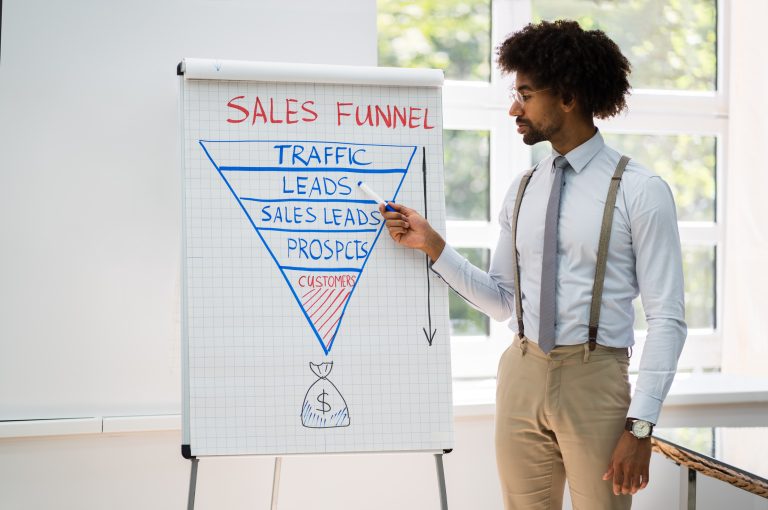
If you’re in the world of sales, you’ve probably heard the term “sales funnel” before. But what exactly is a sales funnel, and why is it so important? At its core, a sales funnel is a visual representation of the journey that a potential customer takes as they move from being aware of your product or service to making a purchase. Understanding this journey is critical to building an effective sales strategy.
The best sales funnel is one that is tailored to your specific business and industry. While there are some general best practices that apply to all sales funnels, such as clearly defining each stage of the funnel and using data to make informed decisions, the specifics of your funnel will depend on factors such as your target audience, the complexity of your product or service, and your sales goals.
In this article, we’ll explore what makes a sales funnel effective and provide tips for building a sales funnel that works for your business.
Key Takeaways
- A sales funnel is a visual representation of the journey a potential customer takes from awareness to purchase.
- The best sales funnel is tailored to your specific business and industry.
- Effective sales funnels are well-designed, data-driven, and optimized for conversion.
Understanding Sales Funnels
If you’re looking to improve your sales process, understanding sales funnels is crucial. A sales funnel is a visual representation of the customer journey from initial awareness to the final purchase. The funnel is divided into stages, and each stage represents a different level of engagement with your product or service. By understanding each stage of the funnel and the customer’s mindset at each stage, you can create a more effective sales process.
Top of the Funnel: Awareness
The top of the funnel is where you attract potential customers and create awareness of your product or service. At this stage, prospects are not yet familiar with your brand, so your goal is to grab their attention and introduce them to your offering. This is typically done through advertising, social media, or content marketing.
Middle of the Funnel: Interest and Consideration
Once you’ve captured a prospect’s attention, you need to nurture their interest in your product or service. At this stage, prospects are considering whether your offering is a good fit for their needs. You can do this by providing educational content, such as blog posts, webinars, or case studies. This helps to establish your brand as a thought leader in your industry and helps to build trust with potential customers.
Bottom of the Funnel: Decision and Action
The bottom of the funnel is where prospects are ready to make a decision and take action. At this stage, you need to provide a clear call-to-action that encourages prospects to purchase your product or service. This could be a free trial, a demo, or a discount code. The key is to make it as easy as possible for prospects to take the next step and become a customer.
Sales Funnel vs. Sales Pipeline
It’s important to note that a sales funnel is not the same as a sales pipeline. A sales funnel is focused on the customer journey and is used to guide prospects through the buying process. A sales pipeline, on the other hand, is focused on the sales process and is used to track the progress of deals through the sales cycle. While both are important, understanding the difference between the two can help you create a more effective sales process.
By understanding the different stages of the sales funnel and the customer journey, you can create a more effective sales process that guides prospects from initial awareness to final purchase. This can help to increase conversions, improve customer satisfaction, and ultimately grow your business.
The Importance of a Well-Designed Sales Funnel
A well-designed sales funnel is crucial to the success of any business. It helps you to convert leads into customers and maximise your revenue. A sales funnel is a visual representation of the customer journey from the moment they become aware of your product or service to the point of purchase and beyond. It is a step-by-step process that guides your potential customers towards making a purchase.
Conversion Rate
A well-designed sales funnel can significantly improve your conversion rate. Conversion rate is the percentage of visitors to your website or landing page who take a desired action, such as making a purchase or filling out a form. By optimising your sales funnel, you can increase the number of people who take the desired action, thereby increasing your conversion rate.
Revenue
A well-designed sales funnel can also help you to maximise your revenue. By guiding your potential customers towards making a purchase, you can increase your sales and revenue. Additionally, a well-designed sales funnel can help you to upsell and cross-sell to existing customers, thereby increasing your revenue per customer.
Goals
A well-designed sales funnel should be aligned with your business goals. Whether your goal is to increase sales, generate leads, or improve customer retention, your sales funnel should be designed to achieve that goal. By setting clear goals and designing your sales funnel accordingly, you can ensure that you are maximising your results.
Retention
A well-designed sales funnel can also help you to improve customer retention. By providing a positive customer experience and nurturing your relationship with your customers, you can encourage repeat purchases and improve customer loyalty.
Customer Experience
A well-designed sales funnel should provide a positive customer experience. This includes everything from the design of your website or landing page to the content of your emails and the quality of your customer service. By providing a positive customer experience, you can improve your conversion rate, increase customer retention, and encourage referrals.
Loyalty
A well-designed sales funnel can also help you to improve customer loyalty. By providing a positive customer experience and nurturing your relationship with your customers, you can encourage repeat purchases and improve customer loyalty. This can lead to a higher lifetime value per customer and a more sustainable business model.
Referrals
A well-designed sales funnel can also help you to generate referrals. By providing a positive customer experience and encouraging your customers to refer their friends and family, you can generate new leads and customers without spending money on advertising. This can help you to grow your business more quickly and sustainably.
In conclusion, a well-designed sales funnel is crucial to the success of any business. By optimising your sales funnel, you can improve your conversion rate, maximise your revenue, achieve your business goals, improve customer retention, provide a positive customer experience, improve customer loyalty, and generate referrals.
Building an Effective Sales Funnel
To build an effective sales funnel, you need to follow a few key steps. In this section, we’ll take a closer look at each step and how you can implement them in your sales process.
Identifying Pain Points
Before you can create an effective sales funnel, you need to identify the pain points of your potential customers. This means understanding the problems they are trying to solve and the challenges they are facing.
To identify pain points, you can use a variety of tools, including surveys, customer feedback, and social media monitoring. By understanding your customers’ pain points, you can create targeted marketing messages that resonate with them and address their specific needs.
Creating a Lead Magnet
Once you’ve identified your customers’ pain points, you can create a lead magnet that provides value and solves their problems. A lead magnet is a free resource that you offer in exchange for your customer’s contact information.
Lead magnets can take many forms, including ebooks, webinars, and whitepapers. The key is to create a resource that provides real value and addresses your customers’ pain points.
Nurturing and Conversion
Once you’ve captured your customer’s contact information, you need to nurture them and guide them through the sales funnel. This means creating a series of emails, social media posts, and other content that provides value and builds trust.
The goal of nurturing is to move your potential customers through the sales funnel and towards a conversion. This can take time, but by providing value and building trust, you can increase your conversion rates and create happy customers.
Customer Retention
Finally, it’s important to focus on customer retention. Happy customers are more likely to become repeat customers and refer others to your business.
To retain customers, you need to provide excellent customer service and continue to provide value even after the sale. This can include follow-up emails, loyalty programs, and other incentives that keep your customers engaged and happy.
By following these steps and focusing on pain points, lead magnets, nurturing, and customer retention, you can create an effective sales funnel that drives conversions and creates happy customers.
Sales Funnel Tools and Software
When it comes to creating a successful sales funnel, having the right tools and software can make all the difference. In this section, we’ll discuss some of the most popular and effective tools and software options for building and managing your sales funnel.
CRM Systems
A CRM (customer relationship management) system is an essential tool for any business looking to manage its customer interactions effectively. With a CRM system, you can keep track of leads, manage customer data, and automate your sales processes. Some of the most popular CRM systems include HubSpot, Salesforce, and Zoho.
Email Marketing Tools
Email marketing is a critical component of any successful sales funnel. With the right email marketing tools, you can create high-converting email campaigns, automate your follow-up processes, and track your results. Some of the most popular email marketing tools include ConvertKit, Mailchimp, and Aweber.
Landing Page Builders
Landing pages are an essential part of any sales funnel. They are designed to capture leads and convert them into customers. With a landing page builder, you can create high-converting landing pages quickly and easily. Some of the most popular landing page builders include Leadpages, ClickFunnels, and Unbounce.
Sales Funnel Software
Sales funnel software is designed to help you manage and optimise your sales funnel. With sales funnel software, you can track your leads, automate your sales processes, and optimise your conversion rates. Some of the most popular sales funnel software options include Kajabi, ClickFunnels, and Kartra.
In conclusion, having the right tools and software is essential for building and managing a successful sales funnel. Whether you’re looking for a CRM system, email marketing tools, landing page builders, or sales funnel software, there are plenty of options available to help you achieve your goals. Choose the tools and software that best fit your needs and budget, and start building your high-converting sales funnel today.
Optimising Your Sales Funnel
Once you have set up your sales funnel, it is essential to optimise it to ensure maximum conversion rates. Optimising your sales funnel involves analysing data, identifying insights, and making changes to improve the overall performance of your funnel.
To optimise your sales funnel, you need to track and measure its performance. This includes monitoring the number of visitors to your website, the number of leads generated, and the conversion rates at each stage of the funnel. By doing this, you can identify any bottlenecks in your funnel and make changes to improve its performance.
One way to optimise your sales funnel is by using forecasting tools. These tools can help you predict future trends and identify potential issues before they become a problem. By using forecasting tools, you can make data-driven decisions and ensure that your sales funnel is always performing optimally.
Another way to optimise your sales funnel is by gaining insights into your customers’ behaviour. By understanding your customers’ needs and preferences, you can tailor your funnel to meet their specific requirements. This can include creating personalised landing pages, offering targeted promotions, and providing relevant content to your customers.
Finally, it is essential to test and experiment with your sales funnel continually. This can involve A/B testing different elements of your funnel, such as the copy, design, or call-to-action buttons. By testing and experimenting, you can identify what works best for your customers and continually improve the performance of your sales funnel.
In conclusion, optimising your sales funnel is essential to ensure maximum conversion rates. By tracking and measuring its performance, using forecasting tools, gaining insights into your customers’ behaviour, and continually testing and experimenting, you can create a highly effective sales funnel that drives sales and revenue for your business.
Digital Marketing and Sales Funnels
When it comes to digital marketing, sales funnels are an essential component of any successful strategy. A sales funnel is a visual representation of the journey a customer takes from initial awareness to final purchase. It is a series of steps designed to guide a prospect towards making a purchase decision.
There are three main components to a sales funnel: the top of the funnel (TOFU), the middle of the funnel (MOFU), and the bottom of the funnel (BOFU). The TOFU is the awareness stage, where prospects are introduced to your brand and become aware of your product or service. The MOFU is the consideration stage, where prospects are evaluating your product or service and comparing it to competitors. The BOFU is the decision stage, where prospects are ready to make a purchase.
Social Media
Social media is a powerful tool for driving traffic to your sales funnel. By creating engaging content and sharing it on social media platforms, you can attract potential customers and guide them towards your sales funnel. Social media platforms like Facebook, Twitter, Instagram, and LinkedIn allow you to target specific audiences based on demographics, interests, and behaviours. This means you can reach the right people with the right message at the right time.
Web and Organic Search
Your website is the foundation of your digital marketing strategy. It is where prospects will land when they click on your social media posts, search engine results, or other online marketing efforts. Your website should be designed to guide prospects towards your sales funnel, with clear calls-to-action and easy navigation.
Organic search is another powerful tool for driving traffic to your sales funnel. By optimizing your website for search engines, you can attract potential customers who are actively searching for your product or service. This means you can reach people who are already interested in what you have to offer.
Content Marketing
Content marketing is the process of creating and sharing valuable, relevant, and consistent content to attract and retain a clearly defined audience. Content marketing can take many forms, including blogs, video content, podcasts, newsletters, webinars, guides, books, and educational content.
By creating high-quality content that is relevant to your target audience, you can attract potential customers and guide them towards your sales funnel. Content marketing can help you establish your brand as a thought leader in your industry, build trust with your audience, and ultimately drive sales.
Case Studies of Successful Sales Funnels
When it comes to finding the best sales funnel for your business, it can be helpful to look at case studies of successful sales funnels. By examining real-world examples, you can gain insights into what works and what doesn’t, and apply these lessons to your own business.
One example of a successful sales funnel is Netflix. Netflix uses a simple but effective sales funnel that starts with a free trial offer. By offering a free trial, Netflix is able to attract potential customers and give them a taste of what the service has to offer. Once the trial period is over, customers are prompted to sign up for a paid subscription. This approach has been highly effective for Netflix, which has grown into one of the largest streaming services in the world.
Another example of a successful sales funnel is Groupon. Groupon uses a unique approach to sales funnels, offering daily deals on products and services in local markets. By creating a sense of urgency and exclusivity, Groupon is able to attract a large number of customers who are eager to take advantage of the latest deals. This approach has been highly effective for Groupon, which has grown into a multi-billion dollar company.
Testimonials and reviews can also be a powerful tool in creating a successful sales funnel. By showcasing positive feedback from satisfied customers, businesses can build trust and credibility with potential customers. This can be especially effective for businesses that are just starting out or that are trying to establish a new brand.
In conclusion, there is no one-size-fits-all approach to creating a successful sales funnel. By examining case studies, testimonials, and reviews, you can gain insights into what works and what doesn’t, and apply these lessons to your own business. Whether you are a small business owner or a large corporation, a well-designed sales funnel can be the key to driving growth and success.
Sales Funnels for Different Industries
When it comes to creating a sales funnel, there is no one-size-fits-all solution. Different industries have different target audiences and unique sales processes, which require tailored sales funnels to maximise conversions. In this section, we’ll take a look at sales funnels for different industries, including B2B, SaaS, e-commerce, and affiliate marketing.
B2B Sales Funnels
B2B sales funnels are designed to target businesses rather than individual consumers. The sales process is typically longer and more complex, and involves multiple decision-makers. A successful B2B sales funnel should focus on building relationships with potential clients, providing them with valuable information, and addressing their pain points.
Some key components of a B2B sales funnel include:
- Lead magnet: Offer a valuable resource in exchange for contact information.
- Email sequence: Nurture leads with targeted emails that provide value and build trust.
- Webinars: Host webinars that provide in-depth information about your product or service.
- Consultation: Offer a free consultation to qualified leads to discuss their needs and how your product or service can help.
SaaS Sales Funnels
SaaS (Software as a Service) sales funnels are designed to target businesses and individuals who are looking for cloud-based software solutions. The sales process is typically shorter and more straightforward than B2B sales funnels, and involves a free trial or freemium model to encourage sign-ups.
Some key components of a SaaS sales funnel include:
- Landing page: Create a landing page that highlights the benefits of your software and encourages sign-ups.
- Free trial or freemium model: Offer a free trial or freemium model to encourage sign-ups and allow users to try out your software.
- Onboarding emails: Send targeted emails to new users to help them get started and maximise engagement.
- Upsell: Offer premium features or additional services to users who have signed up for your software.
E-commerce Sales Funnels
E-commerce sales funnels are designed to target individual consumers who are looking to purchase products online. The sales process is typically shorter and more straightforward than B2B sales funnels, and involves a focus on user experience and product recommendations.
Some key components of an e-commerce sales funnel include:
- Landing page: Create a landing page that highlights your products and encourages purchases.
- Product recommendations: Use data and algorithms to recommend products to users based on their browsing and purchase history.
- Abandoned cart emails: Send targeted emails to users who have abandoned their cart to encourage them to complete their purchase.
- Upsell: Offer related products or premium features to users who have made a purchase.
Affiliate Marketing Funnels
Affiliate marketing funnels are designed to target individual consumers who are looking for product recommendations and reviews. The sales process involves building trust with potential customers and providing them with valuable information about products.
Some key components of an affiliate marketing funnel include:
- Blog or website: Create a blog or website that provides valuable information about products and includes affiliate links.
- Lead magnet: Offer a valuable resource in exchange for contact information.
- Email sequence: Nurture leads with targeted emails that provide value and build trust.
- Product reviews: Create in-depth product reviews that provide valuable information and encourage purchases.
Overall, the key to creating a successful sales funnel is to understand your target audience and tailor your approach to their needs and preferences. By following these guidelines, you can create a sales funnel that maximises conversions and drives revenue for your business.
Conclusion
In conclusion, the best sales funnel for your business will depend on your specific marketing strategy and goals. It is important to consider factors such as lead generation, customer relations, and follow-up emails when selecting a sales funnel that works for you.
Marketing funnels that incorporate marketing automation can be particularly effective for small businesses, as they can help streamline the sales process and improve brand awareness. Additionally, all-in-one solutions that offer features such as free trials or freemium options can be a great way to attract new customers and build a loyal following.
When selecting a sales funnel, it is also important to consider the categories of your target audience.
For example, if you are targeting creators or bloggers, a referral program or webinar software may be particularly effective.
On the other hand, if you are targeting larger businesses or enterprises, a more comprehensive solution such as Basecamp may be more appropriate.
Ultimately, the best sales funnel is one that is tailored to your specific business needs and goals. By taking the time to carefully consider your options and test different approaches, you can find a sales funnel that works for you and helps drive growth and success for your business.
Frequently Asked Questions
How do I choose the best sales funnel builder for my business?
Choosing the best sales funnel builder for your business can be a daunting task, but there are a few things you can consider to make the process easier. First, consider your budget and the features you need. Some sales funnel builders offer more advanced features, but they may come at a higher cost. Second, read reviews and compare different options to see which one best fits your needs. Finally, consider the ease of use and customer support offered by the sales funnel builder.
What are the key features to look for in a sales funnel software?
There are several key features to look for in sales funnel software. First, it should have a drag-and-drop editor that allows you to easily create and customize your sales funnel. Second, it should have integration with other tools you use, such as email marketing software and payment processors. Third, it should have analytics and reporting features that allow you to track the performance of your sales funnel. Fourth, it should have A/B testing capabilities so you can test different versions of your sales funnel to see which one performs better.
Can you recommend any free sales funnel builder software?
There are several free sales funnel builder software options available, including ClickFunnels, Leadpages, and GrooveFunnels. However, keep in mind that free options may have limited features compared to paid options.
What are some successful sales funnel examples for small businesses?
Successful sales funnel examples for small businesses include lead magnets, tripwire offers, and upsells. A lead magnet is a free resource, such as an ebook or webinar, that you offer in exchange for a visitor’s email address. A tripwire offer is a low-priced offer that is presented immediately after a lead magnet is downloaded. An upsell is a higher-priced offer that is presented after a purchase is made.
What are the essential components of a high-converting sales funnel?
The essential components of a high-converting sales funnel include a landing page, a lead magnet, a tripwire offer, an upsell, and a thank you page. The landing page should be designed to capture the visitor’s attention and encourage them to take action. The lead magnet should provide value and be relevant to your target audience. The tripwire offer and upsell should be presented in a way that is relevant to the lead magnet and provides additional value. The thank you page should confirm the purchase and provide further instructions.
How can I automate my sales funnel to save time and increase conversions?
You can automate your sales funnel by using email marketing software, automation tools, and integrations. Email marketing software can be used to send automated follow-up emails and upsell offers. Automation tools, such as Zapier, can be used to automate tasks such as adding leads to your email list or sending notifications to your team. Integrations with other tools, such as payment processors and CRM software, can also help automate your sales funnel.