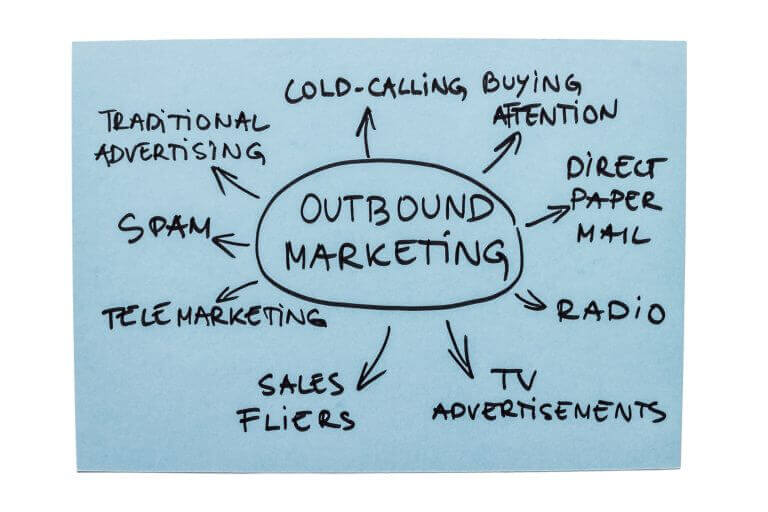
If you’re looking to promote your business online, digital marketing is a must. But what exactly is outbound digital marketing? In short, it’s a type of digital marketing that involves reaching out to potential customers directly.
In contrast to inbound marketing, which focuses on creating valuable content that draws people in, outbound marketing is all about pushing your message out to the world.
Outbound digital marketing can take many forms. Some of the most common channels include email marketing, social media advertising, and search engine marketing. Each of these channels has its own unique advantages and challenges, and it’s important to choose the right mix of channels for your business.
Key Takeaways
- Outbound digital marketing involves reaching out to potential customers directly.
- Channels for outbound marketing include email, social media, and search engine marketing.
- Strategic planning, execution, and measurement are all important aspects of successful outbound digital marketing.
Understanding Outbound Digital Marketing
Definition and Scope
Outbound digital marketing is a type of marketing strategy that involves sending promotional messages to a target audience through various channels, such as email, social media, and search engines. The goal of outbound marketing is to reach as many potential customers as possible and persuade them to take a desired action, such as making a purchase or signing up for a newsletter.
Outbound digital marketing is different from traditional outbound marketing, which typically involves interrupting a potential customer’s day with unsolicited messages, such as cold calls and direct mail. Digital outbound marketing, on the other hand, uses the internet to reach potential customers who have expressed interest in a particular product or service.
Outbound vs Inbound Marketing
Outbound digital marketing is often contrasted with inbound marketing. Inbound marketing is a strategy that involves creating valuable content that attracts potential customers to a business’s website. This content can take the form of blog posts, videos, and social media updates. The goal of inbound marketing is to establish a relationship with potential customers by providing them with helpful information and building trust.
While inbound marketing focuses on creating valuable content that attracts potential customers, outbound digital marketing focuses on delivering promotional messages directly to potential customers. Both strategies can be effective, depending on the business’s goals and target audience.
When deciding which approach to take, businesses should consider their target audience and the channels they use to consume information. For example, if a business’s target audience is primarily active on social media, outbound digital marketing through social media channels may be the most effective strategy.
In conclusion, outbound digital marketing is a valuable tool for businesses looking to reach potential customers through various channels. By understanding the differences between outbound and inbound marketing, businesses can choose the most effective strategy for their goals and target audience.
Channels of Outbound Digital Marketing
Outbound digital marketing is a type of marketing that involves pushing a message out to a target audience. In contrast to inbound marketing, where the audience comes to you, outbound marketing is proactive. There are several channels that businesses can use to reach their target audience through outbound digital marketing.
Email Marketing
Email marketing is one of the most popular channels for outbound digital marketing. It involves sending promotional messages to a list of subscribers. The key to successful email marketing is to create a compelling subject line that entices the recipient to open the email. Once the email is opened, the content should be engaging and relevant to the recipient.
Social Media Advertising
Social media advertising is another effective channel for outbound digital marketing. Platforms like Facebook, Twitter, and LinkedIn allow businesses to target specific demographics with their ads. Social media ads can be highly targeted, which means that businesses can reach their ideal audience with ease.
Display and PPC Advertising
Display and PPC advertising involves placing ads on websites and search engine results pages. These ads can be targeted to specific keywords or demographics, which makes them highly effective. Display ads can be in the form of banners or pop-ups, while PPC ads appear at the top of search engine results pages.
Content Syndication and Direct Mail
Content syndication involves distributing content to third-party websites. This can help businesses reach a wider audience and build brand awareness. Direct mail involves sending physical mail to a list of prospects. This can be an effective way to reach people who are not online.
Overall, there are many channels that businesses can use for outbound digital marketing. Each channel has its own strengths and weaknesses, so it is important to choose the right one for your business. By using a combination of channels, businesses can reach a wider audience and build brand awareness.
Strategic Planning for Outbound Marketing
Outbound marketing refers to the traditional marketing approach where businesses reach out to potential customers through various methods such as cold calling, direct mail, and advertising. While inbound marketing focuses on attracting customers through content creation and search engine optimization, outbound marketing aims to actively seek out prospects and generate leads.
Target Audience and Segmentation
Before creating an outbound marketing strategy, it is essential to identify and understand your target audience. This involves researching the demographics, interests, and pain points of your potential customers. Based on this information, you can segment your audience into specific groups and tailor your marketing messages accordingly.
Creating an Outbound Marketing Strategy
When creating an outbound marketing strategy, it is important to consider the various channels and tactics available. Some common outbound marketing channels include email marketing, telemarketing, direct mail, and advertising. It is important to choose the channels that are most effective for your target audience and budget.
To create an effective outbound marketing campaign, you should also consider the messaging and content that you will be using. Your messaging should be clear and concise, and should highlight the benefits of your product or service. You should also consider creating compelling content such as whitepapers, case studies, and webinars to generate interest and engagement.
Budgeting and Cost Analysis
Outbound marketing can be a high-cost strategy, so it is important to carefully consider your marketing budget and cost per outreach. You should also track your return on investment (ROI) to ensure that your marketing campaigns are generating leads and sales.
In conclusion, strategic planning is essential for creating an effective outbound marketing campaign. By understanding your target audience, choosing the right channels and tactics, and carefully managing your budget, you can generate leads and increase sales through outbound marketing.
Execution and Measurement
Implementing Campaigns
When it comes to executing outbound digital marketing campaigns, there are several channels to consider, such as cold calling, cold email, events, trade shows, and telemarketing. Each channel has its own advantages and disadvantages, and it is important to choose the right one for your business. For example, cold calling and telemarketing can be effective for generating leads, but they may also be perceived as intrusive by some customers. On the other hand, events and trade shows can be a great way to showcase your products and services to a targeted audience.
To ensure that your campaigns are effective, it is important to create targeted content that resonates with your audience. This can be achieved by conducting market research and understanding the pain points and needs of your target customers. Once you have created your content, you can use landing pages to direct traffic to your website and increase conversions.
Performance Metrics and ROI
Measuring the success of your outbound digital marketing campaigns is crucial to understanding what works and what doesn’t. This can be done by tracking performance metrics such as conversion rate, click-through rate, and cost per conversion. By measuring these metrics, you can identify areas for improvement and make data-driven decisions to optimise your campaigns.
It is also important to calculate the return on investment (ROI) of your campaigns to ensure that you are getting a positive return on your marketing spend. This can be done by comparing the revenue generated from your campaigns to the cost of running them. By doing so, you can determine which campaigns are most effective and allocate your budget accordingly.
Testing and Optimisation
To achieve the best results from your outbound digital marketing campaigns, it is important to test and optimise them regularly. This can involve A/B testing different versions of your content or landing pages to see which performs better. By doing so, you can identify the most effective elements of your campaigns and make data-driven decisions to optimise them further.
In conclusion, executing outbound digital marketing campaigns requires careful planning and execution. By creating targeted content, tracking performance metrics, and testing and optimising your campaigns, you can achieve measurable and immediate results for your business.
Advantages and Challenges
Benefits of Outbound Digital Marketing
Outbound digital marketing, also known as interruption marketing, is a form of marketing that involves sending messages to potential customers without their prior consent. This marketing approach can be very effective in generating immediate results, especially in the form of leads and sales. Some of the key benefits of outbound digital marketing include:
- Brand Awareness: Outbound digital marketing can help increase brand awareness by exposing your brand to a wider audience. This can be particularly beneficial for businesses that are just starting out or looking to expand their reach.
- Brand Recall: Outbound digital marketing can help improve brand recall by keeping your brand top of mind with potential customers. This can be especially important in industries where customers make purchasing decisions based on familiarity and trust.
- Immediate Results: Outbound digital marketing can generate immediate results in the form of leads and sales. This can be particularly beneficial for businesses that need to generate revenue quickly or have a short sales cycle.
Limitations and Considerations
While outbound digital marketing can be effective, it also has its limitations and considerations. Some of the key limitations and considerations include:
- Interruptive: Outbound digital marketing is often interruptive and can be perceived as aggressive or pushy by potential customers. This can lead to a negative brand perception and may even result in customers using ad blockers to avoid your messages.
- Time and Effort: Outbound digital marketing campaigns can be time-consuming and require a significant amount of effort to execute effectively. This can be challenging for businesses with limited resources or those that are not experienced in outbound digital marketing.
- Authentic Relationships: Outbound digital marketing can be less effective at building authentic relationships with potential customers than inbound marketing. This is because outbound digital marketing is often perceived as less personal and more transactional than inbound marketing.
Overall, outbound digital marketing can be an effective way to generate immediate results and increase brand awareness and recall. However, it is important to consider the limitations and considerations of this approach before implementing it in your marketing strategy.
Future Trends and Evolutions
Outbound digital marketing is constantly evolving, and businesses must keep up with the latest trends to stay ahead of the competition. In this section, we will explore some of the future trends and evolutions of outbound digital marketing.
Adapting to Consumer Behaviour
Consumer behaviour is constantly changing, and businesses must adapt their outbound digital marketing strategies to keep up with these changes. One of the most significant changes in consumer behaviour in recent years is the increasing use of mobile devices to access the internet. As a result, businesses must ensure that their outbound digital marketing strategies are mobile-friendly.
Another trend in consumer behaviour is the increasing use of voice search. Businesses must optimise their outbound digital marketing strategies for voice search to ensure that they appear in the search results when users search for information using voice commands.
Technological Advancements
Technological advancements are also driving the evolution of outbound digital marketing. One of the most significant technological advancements in recent years is the increasing use of artificial intelligence (AI). AI can be used to automate many outbound digital marketing tasks, such as lead generation and customer segmentation.
Another technological advancement that is driving the evolution of outbound digital marketing is the increasing use of chatbots. Chatbots can be used to provide customers with instant support and assistance, which can improve customer satisfaction and loyalty.
In conclusion, outbound digital marketing is constantly evolving, and businesses must keep up with the latest trends and technological advancements to stay ahead of the competition. By adapting to changes in consumer behaviour and embracing new technologies, businesses can develop more effective outbound digital marketing strategies that drive results.
Frequently Asked Questions
What are the primary strategies involved in outbound digital marketing?
Outbound digital marketing strategies are designed to reach out to potential customers and engage them with your brand. The primary strategies involved in outbound digital marketing include email marketing, online advertising, social media advertising, and direct mail campaigns. These strategies are used to push your message out to a wider audience, with the goal of generating leads and increasing sales.
How do outbound digital marketing tactics differ from inbound methods?
Outbound digital marketing tactics differ from inbound methods in that they are more focused on pushing your message out to a wider audience, rather than attracting customers to your brand. Inbound marketing strategies, on the other hand, are designed to attract customers to your brand through content marketing, search engine optimisation, and other techniques.
Could you provide examples of tools commonly used in outbound digital marketing?
Some of the most commonly used tools in outbound digital marketing include email marketing software, social media advertising platforms, and online advertising networks like Google Ads and Facebook Ads. Direct mail campaigns can also be an effective outbound marketing tool, as can telemarketing and cold calling.
In what ways can outbound digital marketing channels be effectively utilised?
Outbound digital marketing channels can be effectively utilised by targeting your message to the right audience, using engaging and compelling content, and tracking your results to refine your strategy over time. It’s important to use a multichannel approach, combining different outbound marketing tactics to reach a wider audience and generate more leads.
What are the key differences between outbound and inbound marketing?
The key difference between outbound and inbound marketing is the way in which they reach out to potential customers. Outbound marketing is more focused on pushing your message out to a wider audience, while inbound marketing is more focused on attracting customers to your brand through content marketing, search engine optimisation, and other techniques.
How does one measure the success of an outbound digital marketing campaign?
The success of an outbound digital marketing campaign can be measured in a number of ways, including the number of leads generated, the conversion rate of those leads, and the return on investment (ROI) of your marketing spend. It’s important to track your results over time and refine your strategy based on what works and what doesn’t.