If you’re a marketer, you’ve probably heard the terms “outbound marketing” and “inbound marketing.” Outbound marketing is the traditional approach to marketing that involves pushing advertising messages to a broad audience, such as through TV commercials, billboards, and cold calling.
Inbound marketing, on the other hand, is a newer approach that involves creating valuable content that attracts potential customers to your brand, such as through blog posts, social media updates, and email newsletters.
But where does social media fit into this equation? Is social media outbound marketing or inbound marketing? The answer is not as straightforward as you may think. While social media can be used for both inbound and outbound marketing, it’s important to understand the nuances of each approach and how social media can be leveraged to achieve your marketing goals.
Understanding the role of social media in outbound marketing is essential for any marketer looking to maximise their ROI. Social media can be a powerful tool for targeting specific audiences with paid advertising, such as through Facebook Ads or LinkedIn Ads.
By creating highly targeted ads that are served to users based on their interests, behaviours, and demographics, you can reach your ideal customers where they are most likely to be found.
However, it’s important to ensure that your ads are relevant, engaging, and valuable to your audience, or else you risk being seen as spammy or intrusive.
Understanding Outbound Marketing
Outbound marketing is a traditional marketing approach that involves pushing a message out to a large audience in the hopes of generating interest and leads. This method is often referred to as “interruption marketing” because it interrupts people’s daily lives with advertisements. It is sometimes also called “push marketing” because it involves pushing a message out to a large audience.
Defining Outbound Marketing
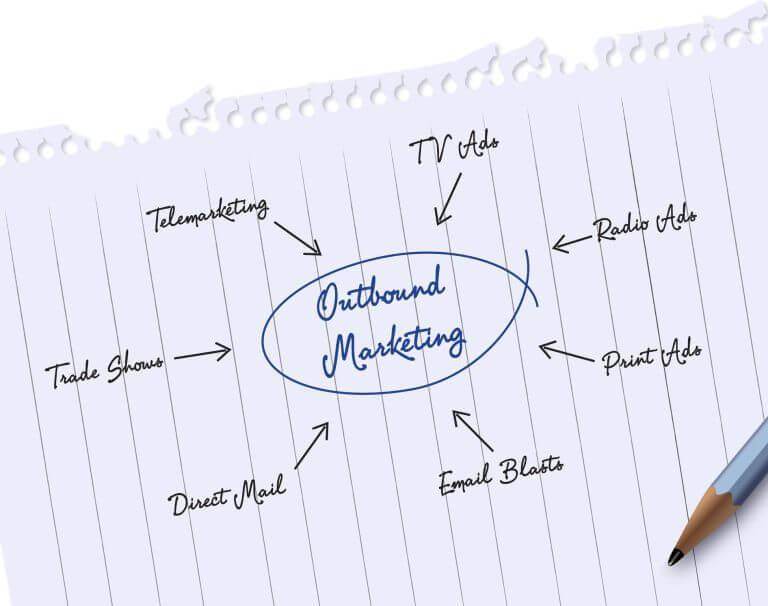
Outbound marketing includes a variety of tactics such as television and radio ads, print ads, billboards, direct mail, telemarketing, and cold calling. These methods are often expensive and can be difficult to track the return on investment.
Outbound marketing is often used to reach a broad audience and generate leads quickly. However, it can be seen as intrusive and annoying to some people. As a result, many companies have shifted towards inbound marketing.
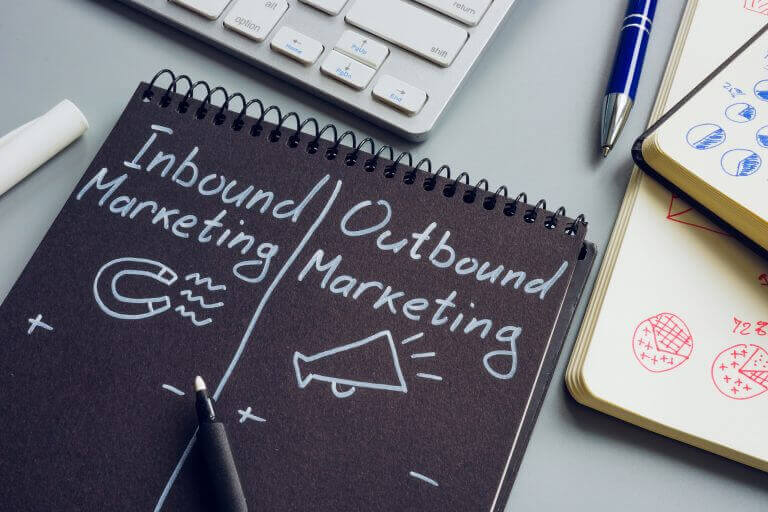
Outbound vs Inbound Marketing
Inbound marketing is the opposite of outbound marketing. It focuses on creating valuable content that attracts potential customers to a company’s website or social media pages. This method is often referred to as “permission marketing” because it involves getting permission from people to market to them.
Inbound marketing includes tactics such as content marketing, search engine optimization, social media marketing, and email marketing. These methods are often less expensive than outbound marketing and can provide a higher return on investment.
In comparison to outbound marketing, inbound marketing is more customer-centric and focuses on building relationships with potential customers. It is often seen as a more effective and less intrusive way of marketing.
In conclusion, outbound marketing and inbound marketing are two different approaches to marketing. Outbound marketing involves pushing a message out to a large audience, while inbound marketing focuses on creating valuable content that attracts potential customers to a company’s website or social media pages. Each approach has its own advantages and disadvantages, and companies should consider their target audience and marketing goals when deciding which approach to use.
The Role of Social Media in Outbound Marketing
Social media has become a significant platform for outbound marketing campaigns. In recent years, social media has grown to be a powerful tool for businesses to reach their target audience. By leveraging social media platforms, businesses can reach a large number of people, create brand awareness, and generate leads.
Social Media as an Outbound Platform
Social media platforms such as Facebook, Twitter, Instagram, and LinkedIn provide businesses with an opportunity to communicate with their target audience directly. Social media is an excellent platform for outbound marketing because it allows businesses to create and share content that is relevant to their target audience.
Businesses can use social media to promote their products or services by creating engaging content and sharing it with their followers. Social media ads, particularly Facebook ads, are an effective way to reach a large audience quickly. You can create and run ads on Facebook that target specific demographics, interests, and behaviours. This means you can tailor your ads to reach the people who are most likely to be interested in your products or services.
Integrating Social Media with Traditional Outbound Methods
Integrating social media with traditional outbound methods can be an effective way to increase the reach and effectiveness of outbound marketing campaigns. For example, businesses can use social media to promote their email marketing campaigns. By sharing links to your email sign-up form on social media, you can encourage your followers to subscribe to your email list.
Social media can also be used to promote events and webinars. By creating an event on Facebook or LinkedIn, businesses can reach a large number of people quickly. You can also use social media to promote your event by creating engaging content that encourages people to attend.
In conclusion, social media has become an essential tool for businesses to reach their target audience with outbound marketing campaigns. By using social media platforms, businesses can create engaging content, run targeted ads, and integrate social media with traditional outbound methods to increase the reach and effectiveness of their campaigns.
Audience Targeting on Social Media
Social media is a powerful tool for reaching out to your target audience. By leveraging social media platforms, businesses can connect with customers and promote their brand. However, to make the most of social media marketing, it is important to understand how to target your audience effectively.
Identifying the Target Audience
The first step in targeting your audience on social media is to identify who your target audience is. This involves understanding the demographics, interests, and behaviours of your ideal customers. You can use tools like Facebook Insights and Twitter Analytics to gain insights into your audience.
Once you have identified your target audience, you can tailor your social media content to meet their needs. This can include creating content that is relevant to their interests, sharing industry news and trends, and engaging with them through comments and direct messages.
Customisation and Targeted Advertising
Customisation and targeted advertising are two effective ways to target your audience on social media. Customisation involves tailoring your content to specific segments of your audience based on their interests, behaviours, and demographics. For example, you could create different versions of your content for different age groups or geographic locations.
Targeted advertising involves using social media advertising platforms to reach specific segments of your audience. This can include targeting users based on their interests, behaviours, and demographics. For example, you could target users who have previously engaged with your brand or users who have shown an interest in your industry.
By targeting your audience effectively on social media, you can increase engagement, build brand awareness, and drive conversions.
Content Creation for Outbound Marketing
Outbound marketing is a marketing technique that involves pushing your message out to a wider audience. This can be done through various channels, including social media, email, and advertising. One of the most important aspects of outbound marketing is content creation. In this section, we will discuss how to create effective content for outbound marketing.
Crafting Effective Content
The first step in creating effective content for outbound marketing is to understand your target audience. You need to know who they are, what they’re interested in, and what their pain points are. Once you have this information, you can create content that speaks directly to them. This will help to increase engagement and ROI.
Another important aspect of crafting effective content is to make sure that it is visually appealing. This means using images, videos, and other multimedia elements to make your content more engaging. Videos, in particular, are a great way to increase engagement and brand awareness.
Content Optimisation for Better Reach
Once you have created your content, it’s important to optimise it for better reach. This means making sure that it is easily shareable and that it is optimised for search engines. Here are a few tips to help you optimise your content:
- Use relevant keywords in your content to help it rank higher in search engine results.
- Make sure that your content is easily shareable by including social media sharing buttons on your website.
- Use eye-catching headlines and subheadings to make your content more appealing.
- Break up your content into smaller, more manageable chunks to make it easier to read.
By following these tips, you can create content that is not only engaging but also optimised for better reach. This will help to increase engagement, brand awareness, and ultimately, ROI.
Maximising ROI Through Social Media Outbound Strategies
If you want to maximise your ROI through social media outbound strategies, you need to focus on analysing cost-effectiveness and conversion rate optimisation. By doing so, you can ensure that your social media marketing strategy is effective and efficient.
Analysing Cost-Effectiveness
To maximise ROI, you need to ensure that your social media outbound marketing is cost-effective. That means you need to carefully monitor your expenses and ensure that you are getting the most out of your investment. You can do this by tracking your costs and comparing them to your returns.
One way to track your expenses is to create a spreadsheet that includes all of your social media marketing costs, such as advertising fees, content creation costs, and employee salaries. You can then compare these costs to your returns, such as website traffic, leads, and sales. This will help you determine which social media platforms and strategies are the most cost-effective.
Conversion Rate Optimisation
Conversion rate optimisation (CRO) is the process of improving the percentage of website visitors who take a desired action, such as making a purchase or filling out a form. By improving your conversion rate, you can increase your ROI and get more out of your social media marketing efforts.
To improve your conversion rate, you need to focus on creating high-quality content that is relevant to your target audience. You should also ensure that your website is user-friendly and easy to navigate. You can use A/B testing to determine which content and design elements are the most effective at converting visitors into customers.
In conclusion, to maximise your ROI through social media outbound strategies, you need to focus on analysing cost-effectiveness and conversion rate optimisation. By doing so, you can ensure that your social media marketing strategy is effective and efficient.
Assessing the Impact of Outbound Marketing
When it comes to assessing the impact of outbound marketing, there are several metrics that you can use to evaluate the effectiveness of your campaigns. By measuring brand awareness and recall, as well as evaluating sales and lead generation, you can get a better understanding of how your outbound marketing efforts are performing.
Measuring Brand Awareness and Recall
One of the most important metrics to consider when assessing the impact of outbound marketing is brand awareness. This refers to how well your target audience knows your brand and what it stands for. By measuring brand awareness, you can determine whether your outbound marketing efforts are making a difference in how people perceive your brand.
To measure brand awareness, you can use a variety of tools, such as surveys, social media analytics, and website traffic data. By tracking metrics such as social media engagement, website traffic, and search engine rankings, you can get a better sense of how well your outbound marketing campaigns are resonating with your target audience.
Another important metric to consider is brand recall. This refers to how easily your target audience can remember your brand when prompted. By measuring brand recall, you can determine whether your outbound marketing efforts are making a lasting impression on your target audience.
Evaluating Sales and Lead Generation
In addition to measuring brand awareness and recall, it’s also important to evaluate the impact of outbound marketing on sales and lead generation. After all, the ultimate goal of outbound marketing is to drive revenue and grow your business.
To evaluate the impact of outbound marketing on sales and lead generation, you can track metrics such as conversion rates, customer acquisition costs, and revenue growth. By comparing these metrics before and after launching your outbound marketing campaigns, you can get a better sense of how effective your efforts have been.
Ultimately, assessing the impact of outbound marketing requires a combination of quantitative and qualitative data. By tracking metrics such as brand awareness, recall, sales, and lead generation, you can get a comprehensive understanding of how your outbound marketing campaigns are performing.
Comparative Analysis of Marketing Channels
Traditional vs Digital Outbound Channels
When it comes to outbound marketing, traditional channels such as direct mail, radio ads, TV commercials, and cold calls have been the norm for decades. However, with the advent of digital marketing, these channels are slowly losing their appeal. Digital outbound channels such as social media, email marketing, search engines, and display ads are becoming increasingly popular due to their cost-effectiveness and wider reach.
While traditional outbound channels can still be effective, they are often more expensive and have limited reach compared to digital channels. For example, TV commercials can be very expensive to produce and air, and may only reach a limited audience. In contrast, social media platforms such as Facebook, Twitter, and Instagram offer a cost-effective way to reach a wider audience.
Effectiveness of Social Media in Comparison to Other Channels
Social media is one of the most popular digital outbound channels, and for good reason. It offers a cost-effective way to reach a large audience and engage with them in real-time. Social media platforms also offer a range of targeting options, allowing you to reach your ideal audience based on demographics, interests, and behaviours.
Compared to other outbound channels, social media can be more effective in terms of engagement and conversion rates. For example, email marketing has been a popular outbound channel for years, but it can be difficult to get people to open and read your emails. In contrast, social media posts are more likely to be seen and engaged with, especially if they are visually appealing and offer value to the audience.
Overall, while traditional outbound channels can still be effective, digital outbound channels such as social media are becoming increasingly popular due to their cost-effectiveness and wider reach. When deciding which channels to use for your outbound marketing efforts, it’s important to consider your target audience, budget, and goals to determine which channels will be most effective for your business.
Challenges and Considerations in Outbound Marketing
Outbound marketing can be an effective way to reach a large audience, but it is not without its challenges. In this section, we will explore two key considerations when it comes to outbound marketing: privacy and audience reception, and balancing investment and returns.
Privacy and Audience Reception
One of the biggest challenges with outbound marketing is ensuring that your message is received well by your audience. Many people are increasingly concerned about their privacy, and may be put off by unsolicited marketing messages. This is particularly true in the case of emails and phone calls, which can be seen as intrusive.
To overcome this challenge, it is important to be transparent about your intentions and to ensure that you are targeting the right audience. This means that you should only send marketing messages to people who have opted in to receive them, and that you should provide an easy way for people to opt out if they no longer wish to receive your messages.
Balancing Investment and Returns
Outbound marketing can be expensive, particularly if you are using traditional methods such as print advertising or direct mail. This means that you need to carefully consider the return on investment (ROI) that you can expect from your marketing efforts.
To maximise your ROI, it is important to focus on building authentic relationships with your audience. This means that you should aim to provide value through your marketing messages, rather than simply promoting your products or services. By doing this, you can build trust with your audience and increase the likelihood that they will take action as a result of your marketing efforts.
Overall, outbound marketing can be an effective way to reach a large audience, but it is important to consider the challenges and limitations of this approach. By focusing on privacy and audience reception, and balancing investment and returns, you can maximise the effectiveness of your outbound marketing efforts.
Future Trends in Outbound Marketing
As technology continues to evolve, outbound marketing strategies are also changing. In the coming years, we can expect to see new technologies and platforms that will change the way businesses approach outbound marketing.
Evolving Technologies and Platforms
One of the most significant trends in outbound marketing is the increasing use of social media platforms. Social media has become an essential tool for businesses to reach their target audience. The popularity of social media platforms such as Facebook, Twitter, and Instagram has made it easier for businesses to connect with their customers.
Another trend is the use of search engine optimization (SEO) to improve the visibility of websites and content. SEO is a cost-effective way to drive traffic to your website and improve your search engine rankings. As search engines continue to evolve, businesses will need to adapt their SEO strategies to stay ahead of the competition.
Adapting to Consumer Behaviour Changes
The way consumers interact with businesses is also changing. Consumers are becoming more tech-savvy and are using multiple devices to access information. This means that businesses need to adapt their outbound marketing strategies to reach consumers on different platforms and devices.
Another trend is the increasing use of personalised outbound marketing. Consumers are more likely to respond to marketing messages that are tailored to their interests and preferences. This means that businesses will need to collect data on their customers to create personalised marketing campaigns.
In conclusion, the future of outbound marketing will be shaped by evolving technologies and changing consumer behaviour. Businesses that adapt to these trends will be able to reach their target audience more effectively and stay ahead of the competition.
Conclusion
In conclusion, social media can be used for both inbound and outbound marketing campaigns. Outbound marketing is a traditional marketing approach where businesses push their message out to a large audience. On the other hand, inbound marketing is a more modern approach where businesses attract customers through content creation and engagement.
Social media can be used for both inbound and outbound marketing campaigns. For outbound marketing, social media can be used to push out messages to a large audience. However, this approach may not be effective in building customer loyalty. Inbound marketing, on the other hand, can help businesses build customer loyalty by creating content that is relevant and valuable to their audience.
A complete guide to social media marketing can help businesses understand how to use social media for both inbound and outbound marketing campaigns. By understanding the benefits and drawbacks of each approach, businesses can develop a solution that works best for them.
In conclusion, social media can be a valuable tool for businesses looking to improve their marketing efforts. By understanding the differences between inbound and outbound marketing, businesses can develop campaigns that are effective in building customer loyalty and driving sales.
Frequently Asked Questions
What distinguishes inbound marketing from outbound marketing?
Inbound marketing is a customer-centric approach that aims to draw in potential customers by creating valuable content that aligns with their interests and needs. This approach focuses on building long-term relationships with customers by providing them with helpful information and fostering engagement. On the other hand, outbound marketing is a more traditional approach that involves pushing marketing messages out to a broad audience in hopes of generating interest. This approach is often interruptive and can be seen as intrusive by some consumers.
Can social media platforms be utilised for outbound marketing strategies?
Yes, social media platforms can be utilised for outbound marketing strategies. However, the effectiveness of outbound marketing on social media platforms is debated. Some argue that social media platforms are better suited for inbound marketing tactics, such as building relationships and engaging with customers. Others argue that social media platforms can be effectively used for outbound marketing tactics, such as paid advertising and direct messaging.
What are some clear examples of outbound marketing tactics?
Some clear examples of outbound marketing tactics include television and radio advertisements, direct mail campaigns, telemarketing, and billboards. These tactics are designed to reach a broad audience and generate interest in a product or service.
How does social media fit into the paradigm of inbound versus outbound marketing?
Social media can fit into both the inbound and outbound marketing paradigms. Social media platforms can be used to attract potential customers through inbound marketing tactics, such as creating engaging content and building relationships with followers. However, social media platforms can also be used for outbound marketing tactics, such as paid advertising and direct messaging.
Is Facebook considered a platform for inbound or outbound marketing techniques?
Facebook can be considered a platform for both inbound and outbound marketing techniques. Businesses can use Facebook to create engaging content and build relationships with followers, which is an inbound marketing tactic. However, businesses can also use Facebook for outbound marketing tactics, such as paid advertising and direct messaging.
What role does email marketing play in outbound marketing campaigns?
Email marketing is a popular outbound marketing tactic that involves sending marketing messages directly to a list of subscribers. This tactic can be effective for generating interest and driving conversions. However, it is important to ensure that email marketing campaigns are targeted and relevant to the recipient to avoid being seen as spam.