Market penetration is a growth strategy that involves increasing a company’s market share in an existing market. It is one of the four growth strategies in the Ansoff Matrix, a strategic planning tool that helps businesses determine their product and market growth strategy.
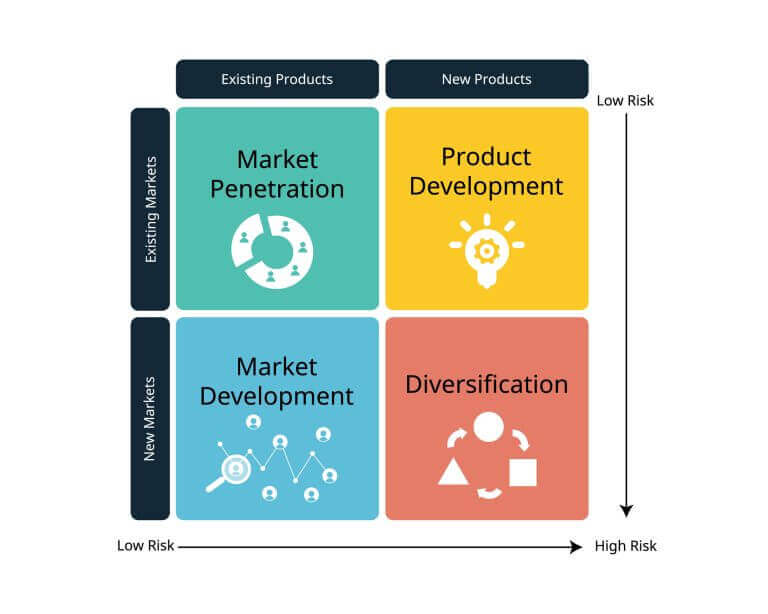
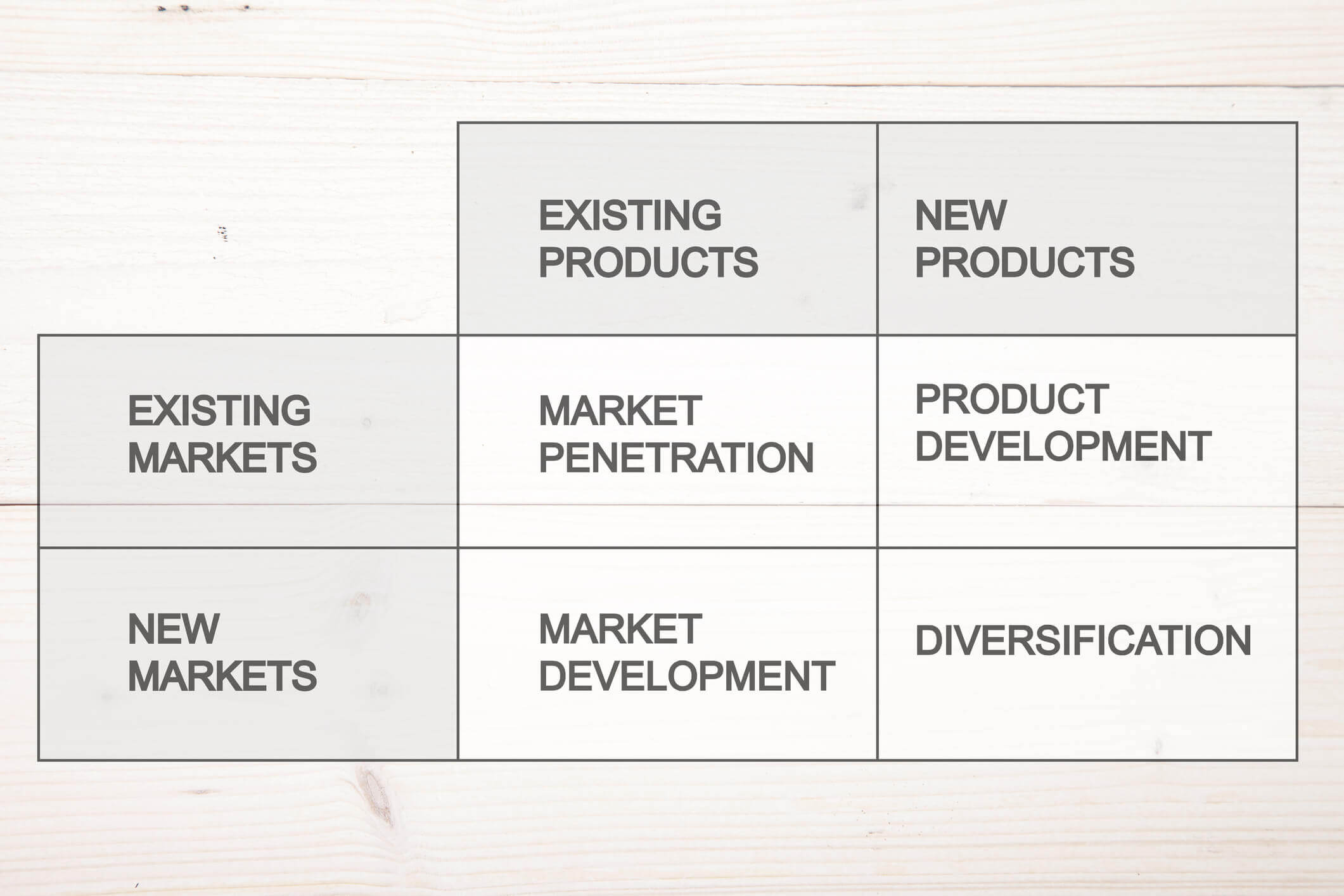
The Ansoff Matrix consists of four quadrants, including market penetration, market development, product development, and diversification.
Market penetration is the least risky of the four growth strategies in the Ansoff Matrix. It involves increasing sales of existing products to existing customers through tactics such as price adjustments, promotional campaigns, and distribution channel optimization.
The goal of market penetration is to increase a company’s market share in a specific market, which can lead to increased revenue and profitability.
Understanding the Ansoff Matrix is essential to effectively implementing market penetration. The Ansoff Matrix can help businesses assess their market penetration potential, implement market penetration tactics, and identify challenges and considerations in the process.
By using the Ansoff Matrix, businesses can determine which growth strategy is most suitable for their current situation and create a roadmap for their future growth.
Key Takeaways
- Market penetration is a growth strategy that involves increasing a company’s market share in an existing market.
- The Ansoff Matrix is a strategic planning tool that helps businesses determine their product and market growth strategy.
- Market penetration is the least risky of the four growth strategies in the Ansoff Matrix and involves increasing sales of existing products to existing customers through tactics such as price adjustments, promotional campaigns, and distribution channel optimization.
Understanding the Ansoff Matrix
Origins and Creator
The Ansoff Matrix, also known as the Product/Market Expansion Grid, is a strategic framework developed by H. Igor Ansoff in 1957. Ansoff was a Russian-American mathematician and business theorist who sought to provide a systematic approach to strategic planning. The matrix is designed to help businesses identify growth opportunities by analyzing their current products and markets and determining the best way to expand.
Core Concepts
The Ansoff Matrix consists of four growth strategies: Market Penetration, Market Development, Product Development, and Diversification. Each strategy represents a different approach to expanding a business.
Matrix Components
The Ansoff Matrix is made up of two axes: Product and Market. The Product axis represents the types of products a company offers, while the Market axis represents the types of markets a company serves. The four growth strategies are then plotted on the matrix based on their focus on either existing or new products and markets.
Market Penetration is the strategy of increasing sales of existing products in existing markets. This can be achieved through tactics such as increasing advertising, lowering prices, or improving distribution channels. Market Development is the strategy of expanding into new markets with existing products. This can be achieved by identifying new customer segments or entering new geographic regions.
Product Development is the strategy of creating new products for existing markets. This can be achieved by conducting market research to identify unmet needs or by improving existing products. Finally, Diversification is the strategy of creating new products for new markets. This can be achieved by entering entirely new industries or by acquiring companies in complementary industries.
In summary, the Ansoff Matrix is a powerful tool for businesses looking to identify growth opportunities. By analyzing their current products and markets and determining the best way to expand, businesses can make informed decisions about where to invest their resources.
Market Penetration Explained
Definition and Objective
Market penetration is a growth strategy that aims to increase a company’s market share in an existing market with existing products. The objective of market penetration is to attract more customers, increase sales and revenue, and ultimately gain a competitive advantage over rivals.
Market penetration is a common strategy used by companies to achieve growth without introducing new products or entering new markets. It is a low-risk strategy that can be achieved by adjusting the marketing mix, such as pricing strategy, advertising, and promotions, to increase customer loyalty and attract new customers.
Strategies for Penetration
There are several strategies that companies can use to penetrate a market. One strategy is to adjust the pricing strategy to attract more customers. This can be achieved by offering discounts, special offers, or loyalty programs. Another strategy is to improve the marketing mix, such as advertising, promotions, and product placement, to increase brand awareness and attract new customers.
Companies can also improve customer loyalty by providing excellent customer service and creating a positive customer experience. This can be achieved by providing after-sales support, offering warranties, and responding to customer feedback.
Measuring Market Share
Measuring market share is an important aspect of market penetration. It is the percentage of total sales in a market that a company has. Companies can measure market share by dividing their total sales by the total sales of the market.
Measuring market share is important because it helps companies to understand their position in the market and identify opportunities for growth. Companies can use this information to adjust their marketing mix and improve their competitive advantage over rivals.
In conclusion, market penetration is a growth strategy that can help companies to increase their market share, attract more customers, and ultimately gain a competitive advantage over rivals. By adjusting the marketing mix, improving customer loyalty, and measuring market share, companies can achieve growth without introducing new products or entering new markets.
Assessing Market Penetration Potential
To assess the potential of market penetration, you need to analyze your company’s internal and external environment. This will help you identify your strengths, weaknesses, opportunities, and threats (SWOT Analysis) and evaluate the political, economic, social, technological, legal, and environmental factors (PESTLE Analysis) that may affect your business. You also need to analyze the competitive forces in the industry (Porter’s Five Forces) to identify the level of competition, customer needs, and demand for your products or services.
SWOT Analysis
A SWOT analysis is a useful tool for assessing your company’s internal environment. It helps you identify your strengths, weaknesses, opportunities, and threats. Strengths and weaknesses are internal factors that you can control, while opportunities and threats are external factors that you cannot control. You can use a SWOT analysis to identify areas where you need to improve and areas where you can capitalize on your strengths.
PESTLE Analysis
A PESTLE analysis is a useful tool for assessing the external environment. It helps you evaluate the political, economic, social, technological, legal, and environmental factors that may affect your business. You can use a PESTLE analysis to identify opportunities and threats in the market and to develop strategies that will help you capitalize on opportunities and mitigate threats.
Porter’s Five Forces
Porter’s Five Forces is a useful tool for analyzing the competitive forces in the industry. It helps you identify the level of competition, customer needs, and demand for your products or services. The five forces are the threat of new entrants, the bargaining power of suppliers, the bargaining power of buyers, the threat of substitute products or services, and the intensity of competitive rivalry. You can use Porter’s Five Forces to identify areas where you need to improve and areas where you can capitalize on your strengths.
By conducting market research and analyzing your company’s internal and external environment using SWOT analysis, PESTLE analysis, and Porter’s Five Forces, you can assess the potential of market penetration. This will help you identify your target audience and develop strategies that will help you increase your market share and profitability.
Implementing Market Penetration
When implementing a market penetration strategy, there are several key factors to consider. This section will cover the marketing planning, resource allocation, and risk management aspects of implementing a market penetration strategy.
Marketing Planning
Marketing planning is a critical component of implementing a market penetration strategy. This involves identifying the target market, understanding customer needs and preferences, and developing a marketing mix that meets those needs.
One effective approach to marketing planning is to use the 4 Ps of marketing: product, price, promotion, and place. By carefully considering each of these elements, you can develop a marketing plan that is tailored to your target market and maximises your chances of success.
Resource Allocation
Resource allocation is another important consideration when implementing a market penetration strategy. This involves determining what resources you will need to successfully penetrate the market, and allocating those resources in the most effective way possible.
Some key resources to consider include personnel, budget, and time. By carefully allocating these resources, you can ensure that you have the necessary tools and support to achieve your marketing objectives.
Risk Management
Risk management is an essential component of any marketing strategy, and particularly important when implementing a market penetration strategy. This involves identifying potential risks and developing strategies to mitigate those risks.
Some key risks to consider when implementing a market penetration strategy include competition, changing customer needs and preferences, and economic factors. By carefully considering these risks and developing appropriate risk management strategies, you can minimise the potential impact of these risks on your marketing efforts.
In summary, implementing a market penetration strategy requires careful planning and resource allocation, as well as effective risk management strategies. By taking these factors into account, you can maximise your chances of success and achieve your marketing objectives.
Challenges and Considerations in Market Penetration
Expanding your business through market penetration can be a great way to increase your market share and profitability. However, it is important to be aware of the challenges and considerations that come with this strategy.
Market Saturation
One of the biggest challenges in market penetration is market saturation. This occurs when the market is already flooded with similar products or services, making it difficult to gain a foothold. In such a scenario, you may need to differentiate your product or service from the competition by offering unique features or benefits that appeal to your target audience.
Regulatory Hurdles
Regulatory hurdles can also pose a significant challenge to market penetration. Different countries have different regulations, and it is important to ensure that you comply with all relevant laws and regulations. Failure to do so can result in hefty fines and damage to your reputation. Therefore, it is important to thoroughly research the regulatory requirements of the markets you plan to enter.
Cultural Factors
Cultural factors can also play a role in market penetration. Different cultures have different values, beliefs, and preferences, which can influence consumer behaviour. Therefore, it is important to understand the cultural differences between your existing market and the foreign market you plan to enter. This will help you tailor your marketing message and approach to better resonate with your target audience.
In addition to these challenges, you may also need to consider factors such as existing markets and competition. Conducting thorough market research and analysis can help you identify potential challenges and develop strategies to overcome them.
Other Growth Strategies in the Ansoff Matrix
Apart from Market Penetration, the Ansoff Matrix also includes three other growth strategies that companies can use to expand their business. These strategies are Product Development, Market Development, and Diversification.
Product Development
Product Development is a growth strategy that involves creating new products or modifying existing products to meet the needs of existing customers. This strategy is used when a company wants to expand its product line or improve its existing products. By developing new products, a company can increase its revenue and market share.
Market Development
Market Development is a growth strategy that involves expanding into new markets. This strategy is used when a company has saturated its existing markets and wants to find new customers. Market Development can be achieved by finding new geographic areas to sell products or by finding new customer segments to target.
Diversification
Diversification is a growth strategy that involves entering new markets with new products. This strategy is used when a company wants to reduce its dependence on existing products or markets. Diversification can be achieved through Related Diversification or Unrelated Diversification.
Related Diversification
Related Diversification is a growth strategy that involves entering new markets that are related to the company’s existing markets. This strategy is used when a company wants to leverage its existing capabilities and resources to enter new markets. Related Diversification can be achieved by developing new products that are related to existing products or by entering new geographic areas that are related to existing markets.
Unrelated Diversification
Unrelated Diversification is a growth strategy that involves entering new markets that are not related to the company’s existing markets. This strategy is used when a company wants to enter new markets that have the potential for high growth and profitability. Unrelated Diversification can be achieved by developing new products that are not related to existing products or by entering new geographic areas that are not related to existing markets.
In conclusion, by using the Ansoff Matrix, companies can choose the most appropriate growth strategy to achieve their business goals. Whether it is through Product Development, Market Development, Diversification, or Market Penetration, companies can expand their business and increase their revenue and market share.
Case Studies and Real-World Examples
Market penetration is one of the four strategies in the Ansoff Matrix that businesses can use to grow their customer base and increase revenue. It involves selling more of the same products or services to existing customers in the same market. This strategy is often used when a business has a strong customer base and wants to increase its market share.
One example of successful market penetration is Amazon’s loyalty scheme, Amazon Prime. By offering free delivery and exclusive deals to its existing customers, Amazon has been able to increase its revenue and brand loyalty. This has also helped Amazon to attract new customers who are interested in the benefits of Amazon Prime.
Another example of market penetration is McDonald’s. The fast-food giant has been able to grow its business by introducing new products and promotions to its existing customer segments. For example, McDonald’s introduced the McRib sandwich as a limited-time offer to attract new customers and increase sales to existing customers. This strategy has helped McDonald’s to grow its business and increase brand equity.
Real-world examples of market penetration can be seen in many industries. For instance, car manufacturers often introduce new models or upgrades to existing models to attract new customers and increase sales to existing customers. Similarly, software companies offer upgrades and new features to their existing customers to increase revenue and customer loyalty.
In conclusion, market penetration is an effective strategy for businesses looking to grow their customer base and increase revenue. By selling more of the same products or services to existing customers in the same market, businesses can increase brand loyalty, attract new customers, and grow their business. Real-world examples like Amazon, McDonald’s, car manufacturers, and software companies demonstrate the effectiveness of this strategy in various industries.
Conclusion
In conclusion, Market Penetration is one of the four strategic directions of the Ansoff Growth Matrix, which is a valuable tool for businesses looking to expand their operations. As a part of the Product/Market Expansion Grid, it involves increasing the market share of existing products in existing markets.
Market Penetration is a cost-effective way of growing a business, as it involves leveraging existing products and markets. This can be achieved through tactics such as increasing advertising, reducing prices, improving product quality, and increasing distribution channels.
However, Market Penetration is not always the best strategy for every business. It may not be effective for businesses that have already saturated their existing markets, or for those that are looking to innovate and introduce new products.
In such cases, businesses may need to explore other strategic directions, such as Product Development, Market Development, or Diversification. It is important for businesses to carefully evaluate their goals and resources before deciding on a strategic direction.
Overall, the Ansoff Growth Matrix is a valuable tool for businesses looking to expand their operations. By identifying the most appropriate strategic direction, businesses can achieve their growth objectives and stay ahead of the competition. Whether it involves innovation, partnering with other businesses, or simply increasing market share, the Ansoff Growth Matrix provides a clear framework for success.
Frequently Asked Questions
How can a company increase its market share using the market penetration approach in the Ansoff Matrix?
The market penetration approach in the Ansoff Matrix involves increasing a company’s market share by selling more of its existing products or services to its current customers. To achieve this, a company can use various tactics such as increasing advertising, offering discounts, improving customer service, and enhancing product quality. By doing so, a company can increase its market share, boost customer loyalty, and ultimately, increase profits.
What are the primary risks and benefits of focusing on market penetration within the Ansoff Matrix framework?
One of the primary benefits of focusing on market penetration is that it allows a company to increase its market share without incurring significant costs associated with developing new products or entering new markets. Additionally, market penetration can help a company establish a strong foothold in its current market and build brand loyalty among customers.
However, there are also risks associated with market penetration. For example, if a company focuses solely on selling to its existing customers, it may miss out on opportunities to reach new customers and expand its market share. Additionally, intense competition in the market may make it difficult for a company to increase its market share through market penetration alone.
Can you provide a practical example of a successful market penetration strategy from the Ansoff Matrix?
A practical example of a successful market penetration strategy is Apple’s iPhone. Apple has been able to increase its market share by selling more iPhones to its existing customers through various tactics such as offering trade-in discounts, launching new models, and improving product quality. By doing so, Apple has been able to establish a strong foothold in the smartphone market and build brand loyalty among its customers.
In what ways does market penetration differ from the diversification strategy in the Ansoff Matrix?
Market penetration involves selling more of existing products or services to current customers, while diversification involves developing new products or entering new markets. Market penetration is a less risky strategy than diversification, as it involves expanding within an existing market and leveraging existing customer relationships. Diversification, on the other hand, requires significant investment in research and development, marketing, and distribution to enter new markets.
How does the Ansoff Matrix guide a business in developing a market penetration plan?
The Ansoff Matrix provides a framework for businesses to develop a market penetration plan by identifying the four potential growth strategies available to a company: market penetration, market development, product development, and diversification. By focusing on market penetration, a company can use the Ansoff Matrix to develop a plan that involves selling more of its existing products or services to its current customers.
What assessment criteria should a business consider when evaluating market penetration opportunities according to the Ansoff Matrix?
When evaluating market penetration opportunities, a business should consider various factors such as market size, customer demographics, competition, pricing, and distribution channels. By assessing these factors, a company can determine the potential for growth through market penetration and develop a plan that maximizes its chances of success.