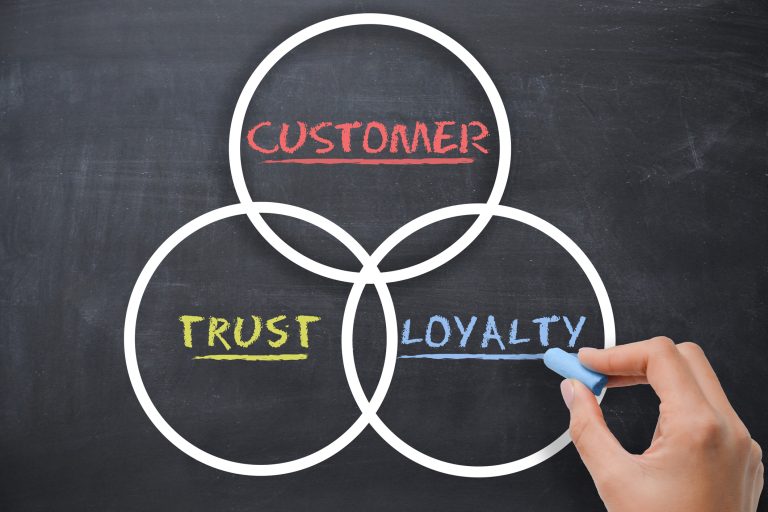
Measuring customer loyalty is an essential part of any business strategy. It is crucial to understand how loyal your customers are to your brand, products, or services, as loyal customers are more likely to purchase from you again and recommend you to others. Measuring customer loyalty helps you identify areas where you need to improve, so you can retain your current customers and attract new ones.
There are many ways to measure customer loyalty, and it’s important to find the right method for your business. Some methods include customer satisfaction surveys, net promoter score (NPS), repeat purchase rate, and customer lifetime value (CLV). Each method has its strengths and weaknesses, and it’s essential to choose the right one for your business.
Key Takeaways
- Measuring customer loyalty is crucial for any business strategy.
- There are various methods to measure customer loyalty, such as customer satisfaction surveys and NPS.
- It’s important to choose the right method for your business to identify areas where you need to improve and retain your current customers.
Understanding Customer Loyalty
Customer loyalty is a critical component of any successful business. It refers to the degree to which customers are committed to a particular brand, product, or service. Loyal customers are more likely to make repeat purchases and recommend the brand to others. As a result, measuring customer loyalty is essential for businesses that want to improve customer retention and increase profits.
Loyalty can be measured in several ways, including attitudinal and behavioural loyalty. Attitudinal loyalty refers to the customer’s emotional attachment to the brand, while behavioural loyalty refers to the customer’s actual purchase behaviour. Both types of loyalty are important to measure, as they provide different insights into the customer’s relationship with the brand.
To measure customer loyalty, it’s essential to understand the factors that influence it. These factors include the customer’s expectations, the brand’s reputation, and the level of trust the customer has in the brand. Understanding these factors can help businesses identify areas where they can improve the customer experience and build stronger relationships with their customers.
One way to measure customer loyalty is through the Net Promoter Score (NPS). The NPS is a simple survey that asks customers how likely they are to recommend the brand to others on a scale of 0-10. Customers who score 9 or 10 are considered promoters, while those who score 0-6 are considered detractors. The NPS is calculated by subtracting the percentage of detractors from the percentage of promoters. A higher NPS indicates higher levels of customer loyalty.
Another way to measure customer loyalty is through customer retention rates. This metric measures the percentage of customers who continue to use the brand’s product or service over time. High retention rates indicate strong customer loyalty, while low retention rates suggest that customers are not committed to the brand.
In conclusion, measuring customer loyalty is essential for businesses that want to improve customer retention and increase profits. Understanding the factors that influence customer loyalty and using metrics like the NPS and retention rates can help businesses identify areas where they can improve the customer experience and build stronger relationships with their customers.
Importance of Customer Loyalty
Customer loyalty is crucial for the success of any business. It refers to the willingness of customers to keep coming back to your business and make repeat purchases. Loyal customers are not only more likely to purchase from you again, but they are also more likely to recommend your business to others, which can help you attract new customers and grow your business.
Building customer loyalty is important for several reasons. Firstly, it helps you retain customers and reduce customer churn. When customers are loyal to your business, they are less likely to switch to a competitor, which can help you maintain a stable customer base. This is particularly important in industries where there is a lot of competition.
Secondly, customer loyalty can help you increase customer lifetime value (CLV). CLV is the total amount of money a customer is expected to spend on your products or services over their lifetime. By increasing customer loyalty, you can encourage customers to make more repeat purchases, which can increase their CLV and ultimately boost your revenue.
Thirdly, loyal customers can also help you reduce marketing costs. When customers are loyal to your business, they are more likely to refer others to your business through word-of-mouth marketing. This can help you attract new customers without having to spend a lot of money on advertising.
To measure customer loyalty, there are several customer loyalty metrics that you can use, such as customer retention rate, repeat purchase rate, and net promoter score (NPS). These metrics can help you understand how loyal your customers are and identify areas where you can improve your customer loyalty.
In summary, customer loyalty is important for the long-term success of any business. By building customer loyalty, you can retain customers, increase CLV, reduce marketing costs, and ultimately boost your revenue. To measure customer loyalty, you can use various customer loyalty metrics to gain insights into your customers’ loyalty levels and identify areas for improvement.
Measuring Customer Loyalty
To measure customer loyalty, there are several methods that businesses use to determine how likely their customers are to return and continue doing business with them. Here are three common methods:
Net Promoter Score (NPS)
NPS is a widely used method to measure customer loyalty. It is a simple survey that asks customers how likely they are to recommend a business to a friend or colleague. Customers are asked to rate their likelihood on a scale of 0 to 10, with 0 being not at all likely and ten being extremely likely. Customers who rate 9 or 10 are considered promoters, those who rate 7 or 8 are considered passives, and those who rate 0 to 6 are considered detractors.
To calculate the NPS, subtract the percentage of detractors from the percentage of promoters. The resulting score ranges from -100 to 100. A higher score indicates that a business has more promoters than detractors, which means higher customer loyalty.
Customer Loyalty Index (CLI)
The CLI is a more comprehensive method of measuring customer loyalty. It takes into account several factors, such as customer satisfaction, likelihood to recommend, and likelihood to repurchase. The CLI is calculated by asking customers to rate their experience with a business on a scale of 1 to 10, with 10 being the highest rating.
To calculate the CLI, add up the scores and divide by the number of respondents. A higher score indicates higher customer loyalty.
Retention Rate
Retention rate is the percentage of customers who continue to do business with a company over a period of time. It is a good indicator of customer loyalty because it shows how many customers are returning to do business with a company. To calculate the retention rate, divide the number of customers who continue to do business with a company by the total number of customers.
Businesses can use these methods to measure customer loyalty and identify areas where they need to improve. By understanding their NPS, CLI, and retention rate, businesses can take steps to increase customer loyalty and improve their bottom line.
Leveraging AI in Customer Loyalty Measurement
Artificial Intelligence (AI) has revolutionized the way businesses operate, and customer loyalty measurement is no exception. AI-powered tools can help you track and measure customer loyalty more accurately, quickly, and efficiently, giving you a competitive edge in today’s market.
One way AI can help measure customer loyalty is through sentiment analysis. By analyzing customer feedback, AI algorithms can determine the sentiment behind each comment, whether it’s positive, negative, or neutral. This information can help you understand how customers feel about your brand and identify areas for improvement.
Another way AI can help measure customer loyalty is through predictive modelling. By analyzing customer behaviour and purchase history, AI algorithms can predict which customers are most likely to remain loyal to your brand and which are at risk of churning. This information can help you develop targeted retention strategies to keep your most valuable customers coming back.
AI-powered customer service is another way to increase customer loyalty. AI chatbots can provide 24/7 support to customers, answering their questions and resolving their issues quickly and efficiently. This can help improve the overall customer experience, leading to increased loyalty and retention.
Finally, AI can also help you conduct research to better understand your customers and their needs. By analyzing customer data, AI algorithms can identify patterns and trends that can help you develop more effective loyalty programs and marketing campaigns.
In conclusion, leveraging AI in customer loyalty measurement can provide businesses with valuable insights into customer behaviour and sentiment, enabling them to develop more effective retention strategies. By using AI-powered tools to track and measure customer loyalty, businesses can gain a competitive edge in today’s market and improve the overall customer experience.
Building a Successful Loyalty Program
When it comes to building a successful customer loyalty program, there are a few key factors to consider. In this section, we’ll take a look at two popular methods for building customer loyalty: the point system and the reward program.
Point System
A point system is a popular method for building customer loyalty. In this system, customers earn points for making purchases or taking other actions that you want to encourage. These points can then be redeemed for rewards or discounts on future purchases.
To build a successful point system, you’ll need to consider a few key factors. First, you’ll need to determine how many points customers will earn for each action. This will depend on the value of the action and the value of the rewards you’ll be offering.
You’ll also need to decide how customers will be able to redeem their points. Will they be able to redeem them for discounts on future purchases, or will they be able to redeem them for other rewards, such as vouchers or free products?
Finally, you’ll need to consider how you’ll track and manage the point system. This may involve using a software platform that can track customer activity and point balances, or it may involve manually tracking points and rewards.
Reward Program
Another popular method for building customer loyalty is the reward program. In this system, customers earn rewards for making purchases or taking other actions that you want to encourage. These rewards may be in the form of discounts, vouchers, free products, or other incentives.
To build a successful reward program, you’ll need to consider a few key factors. First, you’ll need to determine what types of rewards you’ll be offering. Will there be discounts on future purchases, vouchers for free products, or other incentives?
You’ll also need to decide how customers will be able to earn rewards. Will they earn rewards for every purchase, or will they need to reach certain milestones or make a certain number of purchases before earning rewards?
Finally, you’ll need to consider how you’ll track and manage the reward program. This may involve using a software platform that can track customer activity and reward balances, or it may involve manually tracking rewards and incentives.
Overall, building a successful customer loyalty program requires careful planning and attention to detail. By considering these key factors and tailoring your loyalty program to the needs and preferences of your customers, you can create a program that builds lasting loyalty and drives repeat business.
Role of Products and Services in Customer Loyalty
The quality of products and services is a crucial factor in determining customer loyalty. Customers are more likely to stay loyal to a brand that consistently delivers high-quality products and services that meet their needs and expectations. In fact, research has shown that product quality is the most important factor in determining customer satisfaction and loyalty.
To measure customer loyalty, it is important to evaluate the quality of your products and services. This can be done by monitoring customer feedback, conducting surveys, and analyzing sales data. By understanding what your customers like and dislike about your products and services, you can identify areas for improvement and make necessary changes to enhance quality.
New product development is also an important aspect of maintaining customer loyalty. Customers are always looking for new and innovative products that meet their changing needs and preferences. By introducing new products that are of high quality and offer unique features, you can keep your customers engaged and interested in your brand.
In addition to product quality, the quality of your customer service is also a critical factor in building customer loyalty. Customers expect prompt and courteous service that meets their needs and resolves any issues they may have. By providing exceptional customer service, you can build trust and loyalty with your customers.
Overall, the role of products and services in customer loyalty cannot be overstated. By delivering high-quality products and services and providing exceptional customer service, you can build a loyal customer base that will continue to support your brand for years to come.
Influence of Customer Service on Customer Loyalty
Customer service plays a crucial role in building customer loyalty. Positive interactions with agents and great customer service can lead to customers feeling valued and appreciated, which in turn can increase their loyalty to a brand. Providing personalised experiences can also help to build customer loyalty by showing customers that you understand their needs and preferences.
When it comes to measuring customer loyalty, customer service metrics can provide valuable insights. For example, measuring customer satisfaction with customer service interactions can help to identify areas for improvement and ensure that customers are receiving the best possible experience.
Another important metric to consider is the Net Promoter Score (NPS), which measures how likely customers are to recommend your brand to others. Customer service interactions can have a significant impact on NPS, as customers who have positive experiences are more likely to recommend your brand to others.
It is also important to consider the role of customer service in retaining customers. Providing great customer service can help to reduce customer churn and increase customer lifetime value, as satisfied customers are more likely to continue doing business with your brand.
Overall, customer service is a key factor in building and maintaining customer loyalty. By providing great customer service and personalised experiences, you can help to ensure that your customers feel valued and appreciated, which can lead to increased loyalty and improved business outcomes.
Impact of Marketing Strategies on Customer Loyalty
The success of any business depends on customer loyalty. Loyal customers are more likely to make repeat purchases and recommend your brand to others. Marketing strategies play a crucial role in building customer loyalty. Here are some ways marketing strategies can impact customer loyalty:
Brand Engagement
Brand engagement is essential for building customer loyalty. When customers feel connected to your brand, they are more likely to remain loyal. You can engage with your customers through social media, email marketing, and other channels. By providing valuable content, responding to customer feedback, and creating a sense of community, you can build strong relationships with your customers.
Upsell and Cross-Sell
Upselling and cross-selling are effective marketing strategies that can increase customer loyalty. When customers feel that you understand their needs and offer relevant products or services, they are more likely to remain loyal. By analysing customer data, you can identify opportunities for upselling and cross-selling. For example, if a customer frequently buys a particular product, you can recommend complementary products or services.
Word-of-Mouth Marketing
Word-of-mouth marketing is a powerful tool for building customer loyalty. When customers recommend your brand to others, it creates a sense of trust and credibility. Positive reviews and testimonials can also encourage new customers to try your products or services. By providing exceptional customer service and delivering high-quality products, you can encourage word-of-mouth marketing.
Marketing Teams
Marketing teams play a critical role in building customer loyalty. By understanding customer needs and preferences, marketing teams can develop effective marketing strategies. Collaborating with other departments, such as customer service and sales, can also help to ensure a seamless customer experience.
In conclusion, marketing strategies can have a significant impact on customer loyalty. By engaging with your customers, offering relevant products and services, and encouraging word-of-mouth marketing, you can build strong relationships with your customers. Collaborating with other departments and analysing customer data can also help to develop effective marketing strategies.
Customer Loyalty in Different Sectors
Customer loyalty is essential in every sector, and it is crucial to measure it accurately. In this section, we will discuss customer loyalty in two different sectors: retail and insurance.
Retail Sector
In the retail sector, customer loyalty is often measured by the frequency of purchases, the amount spent, and the number of products purchased. Retailers use various techniques to increase customer loyalty, such as loyalty programs, discounts, and personalised offers.
Organisations in the retail sector often use Net Promoter Score (NPS) to measure customer loyalty. NPS is a metric that measures the willingness of customers to recommend a company’s products or services to others. NPS is calculated by subtracting the percentage of detractors (customers who would not recommend the company) from the percentage of promoters (customers who would recommend the company).
Retailers also use customer satisfaction surveys to measure customer loyalty. These surveys ask customers about their experience with the company and its products or services. Retailers use this feedback to identify areas for improvement and to develop strategies to increase customer loyalty.
Insurance Sector
In the insurance sector, customer loyalty is often measured by the number of policies held by the customer, the length of time the customer has been with the company, and the number of claims made.
Insurance companies use various techniques to increase customer loyalty, such as loyalty programs, discounts, and personalised offers. They also use customer satisfaction surveys to measure customer loyalty. These surveys ask customers about their experience with the company, the claims process, and the quality of service provided.
Organisations in the insurance sector also use NPS to measure customer loyalty. NPS is particularly useful in the insurance sector as customers often only interact with the company when they make a claim. NPS allows insurance companies to identify areas for improvement and to develop strategies to increase customer loyalty.
In conclusion, measuring customer loyalty is essential in every sector. Retailers and insurance companies use various techniques to increase customer loyalty, such as loyalty programs, discounts, and personalised offers. They also use NPS and customer satisfaction surveys to measure customer loyalty accurately.
Conclusion
In conclusion, measuring customer loyalty is a crucial aspect of any business’s success. It is essential to understand how loyal your customers are to your brand, as it directly affects customer retention and business growth. Measuring customer loyalty helps you to identify areas of improvement and create a better customer experience.
One of the most effective ways to measure customer loyalty is through customer satisfaction surveys. These surveys help you to measure how satisfied your customers are with your brand, products, and services. You can use this data to identify areas of improvement and take action to improve your customer experience.
Another way to measure customer loyalty is through customer retention rates. Customer retention rates help you to measure how many customers continue to do business with your brand over a specific period. A high customer retention rate is a good indicator of customer loyalty, as it shows that customers are satisfied with your brand and are more likely to continue doing business with you.
It is essential to keep in mind that customer loyalty is not just about repeat purchases. Customer loyalty is also about the emotional connection that customers have with your brand. This emotional connection is created by providing a positive customer experience, delivering high-quality products and services, and building a strong brand identity.
In summary, measuring customer loyalty is essential for any business that wants to succeed and grow. By measuring customer loyalty, you can identify areas of improvement, create a better customer experience, and build a stronger brand identity.
Frequently Asked Questions
What are some metrics used to track customer loyalty?
There are several metrics that businesses use to track customer loyalty. One of the most common metrics is the Net Promoter Score (NPS), which measures the likelihood of a customer recommending your business to others. Another popular metric is customer retention rate, which measures the percentage of customers who continue to do business with your company over time.
How can you determine if a customer is loyal to your business?
There are a few ways to determine if a customer is loyal to your business. One way is to look at their purchase history. If a customer has made multiple purchases from your business over time, it’s a good indication that they are loyal. You can also look at their engagement with your brand, such as whether they follow you on social media or leave reviews of your products or services.
What is a customer loyalty score and how is it calculated?
A customer loyalty score is a metric that measures how loyal a customer is to your business. There are several ways to calculate a customer loyalty score, but one common method is to use a weighted average of metrics such as NPS, customer retention rate, and customer lifetime value.
What are some ways to measure customer retention rate?
Customer retention rate can be measured in several ways. One common method is to divide the number of customers who have made repeat purchases by the total number of customers. Another way is to look at the percentage of revenue that comes from repeat customers.
What are the key performance indicators for measuring customer loyalty?
There are several key performance indicators (KPIs) that businesses use to measure customer loyalty. Some of the most common KPIs include NPS, customer retention rate, customer lifetime value, and customer engagement.
What are the four key elements of building customer loyalty?
The four key elements of building customer loyalty are:
- Providing excellent customer service
- Offering high-quality products or services
- Building a strong brand identity
- Creating a positive customer experience at every touchpoint.