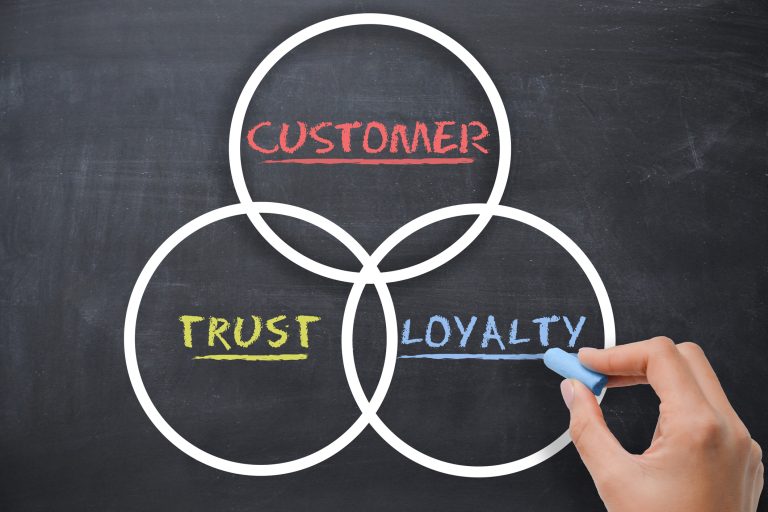
Assessing customer loyalty is a vital part of any business strategy. It helps in understanding how loyal your customers are towards your brand and what measures you can take to retain them. Customer loyalty can be defined as the willingness of a customer to continue doing business with a company and recommend it to others.
Understanding customer loyalty requires a deep understanding of your customers’ needs, wants, and behaviours. Metrics such as Net Promoter Score (NPS), Customer Satisfaction Score (CSAT), and Customer Effort Score (CES) can be used to measure customer loyalty. These metrics help in assessing how likely your customers are to recommend your brand to others, how satisfied they are with your products or services, and how easy it is for them to do business with you.
Key Takeaways:
- Measuring customer loyalty is essential for any business to understand how loyal their customers are towards their brand.
- Metrics such as NPS, CSAT, and CES can be used to assess customer loyalty.
- Understanding customer needs, wants, and behaviours is crucial to building customer loyalty.
Understanding Customer Loyalty
Customer loyalty is a crucial aspect of any successful business. It refers to the extent to which customers are willing to continue doing business with a brand or company. Loyal customers are those who repeatedly purchase products or services from a business, and are less likely to switch to a competitor.
There are several factors that contribute to customer loyalty. One of the most important is customer experience. Customers who have positive interactions with a brand are more likely to become loyal. This includes factors such as the quality of the product or service, the ease of use, and the level of customer service provided.
Another important factor is brand loyalty. This refers to the extent to which customers are attached to a particular brand, rather than just the product or service itself. Customers who are loyal to a brand are more likely to continue purchasing from that brand, even if there are cheaper or more convenient options available.
Customer relationships also play a significant role in customer loyalty. Businesses that invest in building strong relationships with their customers are more likely to have loyal customers. This includes factors such as personalised communication, loyalty programs, and regular follow-ups.
To assess the extent of customer loyalty, businesses can use a range of metrics. One common metric is the Net Promoter Score (NPS), which measures the likelihood of customers recommending a brand to others. Other metrics include customer retention rates, repeat purchase rates, and customer lifetime value.
Overall, understanding customer loyalty is crucial for any business looking to build a strong customer base and achieve long-term success. By focusing on factors such as customer experience, brand loyalty, and customer relationships, businesses can improve customer loyalty and drive growth.
Metrics to Measure Customer Loyalty
Assessing the extent of customer loyalty is essential for any business that wants to improve its customer retention rates and increase its customer base. There are several metrics that businesses can use to measure customer loyalty, each with its own advantages and disadvantages. In this section, we will discuss some of the most commonly used metrics to measure customer loyalty.
Net Promoter Score (NPS)
Net Promoter Score (NPS) is a metric used to measure customer loyalty and satisfaction. It is based on a simple question: “How likely are you to recommend our product/service to a friend or colleague?” Customers are asked to rate their likelihood on a scale of 0 to 10, with 0 being “not at all likely” and 10 being “extremely likely.” Customers who give a score of 9 or 10 are considered “promoters,” while those who give a score of 0 to 6 are considered “detractors.” The NPS is calculated by subtracting the percentage of detractors from the percentage of promoters. A higher NPS indicates higher customer loyalty.
Customer Effort Score (CES)
Customer Effort Score (CES) is a metric used to measure the ease of doing business with a company. It is based on the question: “How much effort did you have to put forth to handle your request?” Customers are asked to rate their effort on a scale of 1 to 5, with 1 being “very low effort” and 5 being “very high effort.” A lower CES indicates higher customer loyalty.
Customer Satisfaction (CSAT)
Customer Satisfaction (CSAT) is a metric used to measure customer satisfaction with a company’s products or services. It is based on the question: “How satisfied are you with our product/service?” Customers are asked to rate their satisfaction on a scale of 1 to 5, with 1 being “very unsatisfied” and 5 being “very satisfied.” A higher CSAT indicates higher customer loyalty.
Customer Loyalty Index (CLI)
Customer Loyalty Index (CLI) is a metric used to measure customer loyalty over time. It is based on a combination of factors, including customer satisfaction, customer retention, and customer advocacy. A higher CLI indicates higher customer loyalty.
Customer Engagement Score
Customer Engagement Score is a metric used to measure the level of engagement customers have with a company’s products or services. It is based on factors such as the number of visits to a company’s website, the number of social media followers, and the number of customer reviews. A higher customer engagement score indicates higher customer loyalty.
Customer Lifetime Value (CLV)
Customer Lifetime Value (CLV) is a metric used to measure the total value a customer brings to a company over their lifetime. It is based on factors such as the customer’s purchase history, the frequency of purchases, and the average purchase value. A higher CLV indicates higher customer loyalty.
Churn Rate
Churn Rate is a metric used to measure the rate at which customers stop doing business with a company. It is based on the number of customers who have stopped doing business with a company over a given period. A lower churn rate indicates higher customer loyalty.
Repeat Purchase Rate
Repeat Purchase Rate is a metric used to measure the rate at which customers make repeat purchases from a company. It is based on the number of customers who have made repeat purchases over a given period. A higher repeat purchase rate indicates higher customer loyalty.
In conclusion, there are several metrics that businesses can use to measure customer loyalty. Each metric has its own advantages and disadvantages, and businesses should choose the metrics that are most relevant to their specific needs. By measuring customer loyalty, businesses can identify areas for improvement and take steps to increase customer retention rates and grow their customer base.
The Role of Quality Products and Services
In assessing the extent of customer loyalty, the quality of your products and services plays a crucial role. High-quality products and services are essential for customer satisfaction, which in turn drives customer loyalty.
Customers expect products and services that meet their needs and exceed their expectations. If your products and services consistently meet or exceed customer expectations, customers are more likely to remain loyal to your brand. On the other hand, if your products and services consistently fail to meet customer expectations, customers are more likely to switch to your competitors.
To ensure the quality of your products and services, it is important to conduct regular quality checks and assessments. This will help you identify areas of improvement and make necessary changes to your products and services to meet customer needs.
Moreover, it is important to listen to your customers and take their feedback seriously. Customers provide valuable insights into the quality of your products and services, and addressing their concerns and suggestions can help improve customer satisfaction and loyalty.
In addition, providing excellent customer service is also crucial for enhancing customer loyalty. Customers expect prompt and courteous service, and addressing their concerns and issues in a timely and professional manner can help build trust and loyalty.
Overall, the quality of your products and services is a key factor in driving customer loyalty. By ensuring high-quality products and services, listening to customer feedback, and providing excellent customer service, you can enhance customer satisfaction and loyalty, and ultimately grow your business.
The Impact of Loyalty Programs
Loyalty programs are a popular tool that businesses use to encourage customer loyalty. These programs typically offer various incentives, such as points, rewards, and vouchers, to customers who make repeat purchases. The idea is that by offering these incentives, customers will be more likely to continue doing business with the company.
But do loyalty programs actually work? And if so, how much of an impact do they have on customer loyalty?
Research suggests that loyalty programs can be effective in increasing customer loyalty. For example, a study by Sage Journals found that loyalty programs can improve customer retention in profitable segments by providing more satisfaction. Another study by MIT Sloan Review suggests that loyalty programs can be effective if they avoid common traps that undermine their effectiveness.
However, it’s important to note that loyalty programs are not a magic solution to customer loyalty. They are just one tool that businesses can use to encourage loyalty. Other factors, such as the quality of products or services, customer service, and overall brand reputation, also play a significant role in customer loyalty.
It’s also important to note that loyalty programs can have drawbacks. For example, some customers may only make purchases to earn rewards, rather than because they actually need or want the product or service. Additionally, loyalty programs can be costly to implement and maintain, and may not be feasible for all businesses.
Overall, loyalty programs can have a positive impact on customer loyalty, but they should be used in conjunction with other strategies to ensure long-term success.
Importance of Personalisation in Customer Loyalty
Personalisation is a crucial aspect of customer loyalty. By customising your products and services to meet the specific needs of your customers, you can create a more meaningful and engaging experience that fosters long-term relationships. Personalisation can take many forms, from tailoring your marketing messages to each customer’s interests to offering personalised recommendations based on their purchase history.
One of the key benefits of personalisation is that it can help to build trust and credibility with your customers. When you demonstrate that you understand their unique needs and preferences, it shows that you value them as individuals and are committed to providing a high level of service. This can lead to increased customer satisfaction and loyalty, as customers are more likely to return to a business that they trust and feel valued by.
Personalisation can also help to improve the overall customer experience by making it more relevant and engaging. By tailoring your products and services to meet the specific needs and preferences of your customers, you can create a more enjoyable and memorable experience that encourages them to return. This can lead to increased customer loyalty and advocacy, as customers are more likely to recommend your business to others if they have had a positive experience.
However, it is important to note that personalisation must be done carefully and thoughtfully. While it can be a powerful tool for building customer loyalty, it can also backfire if done poorly. For example, if you send irrelevant or overly frequent marketing messages, it can lead to customer annoyance and even resentment. Therefore, it is important to strike the right balance between personalisation and privacy, and to ensure that you are providing value to your customers at all times.
In summary, personalisation is a critical component of customer loyalty. By understanding the unique needs and preferences of your customers and tailoring your products and services accordingly, you can build trust, improve the customer experience, and foster long-term relationships that drive business success.
Customer Retention Strategies
Retaining customers is crucial for any business to achieve long-term success. Customer retention strategies are the techniques that businesses use to keep their customers loyal and satisfied. Here are some effective customer retention strategies that you can implement:
1. Provide Excellent Customer Service
Excellent customer service is one of the most important factors in customer retention. Make sure your customer service team is well-trained, knowledgeable, and friendly. Respond promptly to customer queries and complaints, and go above and beyond to resolve any issues. By providing excellent customer service, you can build a strong relationship with your customers and increase their loyalty to your brand.
2. Offer Personalised Experiences
Customers appreciate personalised experiences that cater to their individual needs and preferences. Use customer data to personalise your marketing messages, product recommendations, and promotions. By showing your customers that you understand their needs and preferences, you can increase their loyalty to your brand.
3. Implement a Loyalty Program
A loyalty program is a great way to reward your customers for their repeat business. Offer discounts, exclusive promotions, and other incentives to customers who have been with your brand for a long time. By making your customers feel valued and appreciated, you can increase their loyalty to your brand.
4. Continuously Improve Your Products and Services
Customers are more likely to stay loyal to a brand that provides high-quality products and services. Continuously gather feedback from your customers and use it to improve your offerings. By showing your customers that you are committed to providing the best possible experience, you can increase their loyalty to your brand.
5. Communicate Regularly with Your Customers
Regular communication with your customers can help you build a strong relationship with them. Use email, social media, and other channels to keep your customers informed about new products, promotions, and other updates. By staying top of mind, you can increase your customers’ loyalty to your brand.
In conclusion, customer retention strategies are essential for any business that wants to succeed in the long term. By providing excellent customer service, offering personalised experiences, implementing a loyalty program, continuously improving your products and services, and communicating regularly with your customers, you can increase their loyalty to your brand.
The Effect of Customer Loyalty on Revenue
Customer loyalty has a significant impact on revenue. Loyal customers are more likely to spend more money on your products or services, which increases your revenue. They are also more likely to recommend your business to others, which can bring in new customers and further increase revenue.
According to a study by Zeithaml, there is a positive relationship between customer loyalty and revenue growth. The study found that businesses with higher levels of customer loyalty had higher revenue growth rates compared to those with lower customer loyalty. This suggests that investing in customer loyalty can have a positive impact on revenue growth.
Loyal customers are also more likely to make repeat purchases and upsell. They are familiar with your business and trust your products or services, which makes them more likely to spend more money on additional products or services. This can increase your revenue per customer and improve your overall revenue.
On the other hand, businesses with low levels of customer loyalty may struggle to generate revenue. If customers are not satisfied with your business, they may be less likely to make repeat purchases or recommend your business to others. This can lead to a decrease in revenue and make it harder to grow your business.
In summary, customer loyalty has a significant impact on revenue. Investing in customer loyalty can lead to higher revenue growth rates, increased revenue per customer, and more repeat purchases. On the other hand, businesses with low levels of customer loyalty may struggle to generate revenue and grow their business.
The Role of AI in Assessing Customer Loyalty
Artificial intelligence (AI) has become an increasingly popular tool for assessing customer loyalty. AI can provide businesses with valuable insights into customer behaviour, preferences, and satisfaction levels. By analysing data from various sources, including social media, customer feedback, and purchase history, AI can help businesses identify patterns and trends that can be used to improve customer loyalty.
One of the key benefits of AI is its ability to analyse large amounts of data quickly and accurately. This can be particularly useful for businesses that have a large customer base, as it allows them to identify trends and patterns that might otherwise go unnoticed. For example, AI can be used to identify customers who are at risk of churning, allowing businesses to take proactive steps to retain these customers.
AI can also be used to personalise the customer experience, which can be a powerful tool for building customer loyalty. By analysing customer data, AI can identify individual preferences and tailor the customer experience accordingly. For example, AI can be used to recommend products or services that are likely to be of interest to a particular customer, or to provide personalised offers and promotions.
Another benefit of AI is its ability to automate certain aspects of customer service. For example, AI-powered chatbots can be used to provide customers with instant responses to their queries, without the need for human intervention. This can help to improve customer satisfaction levels, as customers are able to get the information they need quickly and easily.
However, it is important to note that AI is not a panacea for all customer loyalty issues. While AI can provide businesses with valuable insights into customer behaviour, it is only one tool in a broader toolkit. Businesses should also consider other factors that can impact customer loyalty, such as service quality, product quality, and pricing.
In summary, AI can be a valuable tool for assessing customer loyalty, providing businesses with insights into customer behaviour, preferences, and satisfaction levels. By leveraging the power of AI, businesses can identify patterns and trends that can be used to improve customer loyalty, personalise the customer experience, and automate certain aspects of customer service. However, businesses should also consider other factors that can impact customer loyalty, and should use AI as part of a broader toolkit.
Interpreting and Using Customer Loyalty Data
Assessing customer loyalty is an essential part of any business strategy. However, interpreting and using customer loyalty data can be challenging, especially if you are not familiar with the techniques and tools used to evaluate customer behaviour. In this section, we will provide you with some tips and insights on how to interpret and use customer loyalty data.
Research and Reports
Research and reports are valuable sources of information when it comes to assessing the extent of customer loyalty. These documents can provide you with insights into customer behaviour, preferences, and opinions. To get the most out of these reports, you should pay attention to the following:
- The methodology used to collect data: make sure that the research was conducted using reliable and valid methods.
- The sample size: the larger the sample size, the more representative the findings will be.
- The benchmark used: compare your results with industry benchmarks to get a better understanding of where you stand.
Customer Behaviour
Customer behaviour is a crucial aspect of assessing customer loyalty. You should look at the following metrics to evaluate customer behaviour:
- Repeat purchase rate: this metric measures the percentage of customers who have made more than one purchase from your company.
- Net promoter score (NPS): this metric measures the likelihood of customers recommending your company to others.
- Customer satisfaction score (CSAT): this metric measures the satisfaction of customers with your products or services.
Organisation
Organisation is another crucial factor in interpreting and using customer loyalty data. You should consider the following:
- Who is responsible for collecting and analysing the data: make sure that the person or team responsible has the necessary skills and expertise.
- How the data is collected and stored: make sure that the data is collected and stored in a secure and reliable manner.
- How the data is used: make sure that the data is used to inform business decisions and improve customer experience.
In conclusion, interpreting and using customer loyalty data requires careful consideration of research and reports, customer behaviour, and organisation. By paying attention to these factors, you can get a better understanding of customer loyalty, make informed business decisions, and improve customer experience.
Conclusion
Assessing the extent of customer loyalty is crucial for any business that wants to improve customer retention and advocacy. By measuring customer loyalty, you can identify areas for improvement and tailor your strategies to increase visit frequency and spend per transaction.
One key metric to consider is the Net Promoter Score (NPS), which measures the likelihood of customers to recommend your business to others. A high NPS indicates strong customer loyalty and advocacy, while a low score suggests room for improvement.
Another important metric is visit frequency, which measures how often customers return to your business. By tracking visit frequency, you can identify trends and patterns in customer behaviour and adjust your strategies accordingly.
Spend per transaction is also a useful metric to consider, as it indicates how much customers are willing to spend each time they visit your business. By increasing spend per transaction, you can boost revenue and improve customer loyalty.
In conclusion, assessing the extent of customer loyalty requires a combination of metrics and strategies. By measuring NPS, visit frequency, and spend per transaction, you can identify areas for improvement and tailor your strategies to increase customer retention and advocacy.
Frequently Asked Questions
What are the key metrics for measuring customer loyalty?
There are several key metrics that can be used to measure customer loyalty, including customer retention rate, net promoter score (NPS), customer satisfaction score (CSAT), and customer effort score (CES). These metrics can provide insights into how loyal customers are to a business and how likely they are to remain customers in the future.
How can customer loyalty be assessed in a business context?
Customer loyalty can be assessed in a business context by measuring the frequency of customer purchases, the amount of money spent by customers, and the likelihood of customers recommending the business to others. Additionally, businesses can conduct surveys to gather information on customer attitudes towards the business and its products or services.
What factors contribute to customer loyalty?
Several factors can contribute to customer loyalty, including the quality of the product or service, customer service, brand reputation, price, and convenience. Customers who are satisfied with a business’s products or services are more likely to remain loyal to the business and recommend it to others.
What is the relationship between customer lifetime value and loyalty?
Customer lifetime value (CLV) is a metric that measures the total value a customer brings to a business over their lifetime. CLV and loyalty are closely related, as loyal customers tend to have a higher CLV. By retaining loyal customers, businesses can increase their CLV and improve their overall profitability.
How can customer loyalty research be conducted effectively?
Customer loyalty research can be conducted effectively by using a combination of quantitative and qualitative research methods, such as surveys, focus groups, and customer feedback. It is important to ensure that the research is conducted in a way that is unbiased and representative of the customer base.
What is the importance of customer retention rate in assessing loyalty?
Customer retention rate is an important metric in assessing customer loyalty, as it measures the percentage of customers who continue to do business with a company over a given period of time. A high customer retention rate indicates that customers are satisfied with the business and are more likely to remain loyal in the future.