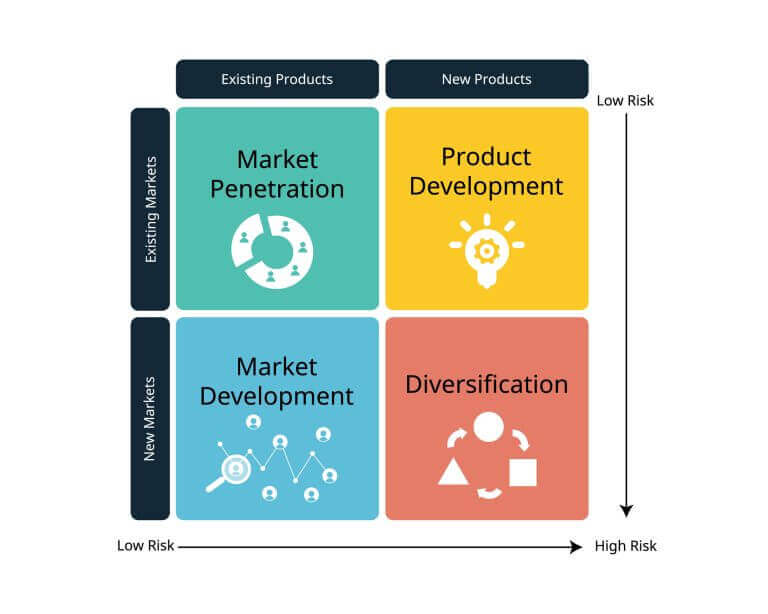
The Ansoff Matrix is a powerful tool for anyone looking to grow their business. Using this matrix helps you identify various growth strategies, making it easier to navigate complex market conditions. By categorising opportunities, it allows you to make informed decisions that align with your business goals.
This strategic planning tool not only highlights potential risks but also helps you assess your options clearly. As you explore new markets or products, the matrix serves as a guide to weigh your choices effectively. Understanding these advantages will equip you with the knowledge to implement successful growth strategies.
Key Takeaways
- The Ansoff Matrix helps identify growth strategies for your business.
- It is useful for assessing risks associated with new opportunities.
- Integrating the matrix with other tools enhances strategic planning.
Understanding the Ansoff Matrix
The Ansoff Matrix is a strategic tool that helps businesses determine growth strategies. It categorises options for expanding products and markets in a clear framework. This section will explore its definition, components, and how it aids in strategic decision-making.
Defining the Ansoff Matrix
The Ansoff Matrix, developed by Igor Ansoff, is a model used to identify growth opportunities. It presents four key strategies: market penetration, market development, product development, and diversification.
Each strategy corresponds to a specific approach a company can take regarding its existing or new products in existing or new markets. By using this matrix, businesses can better evaluate risks and opportunities associated with each growth path, leading to informed decision-making.
Components of the Matrix
The Ansoff Matrix consists of four quadrants that illustrate the relationship between products and markets. Here’s a brief overview of each component:
- Market Penetration: Focuses on increasing sales of existing products in the current market.
- Market Development: Involves entering new markets with existing products, and targeting new customer segments.
- Product Development: Entails developing new products for current markets to satisfy existing customer needs.
- Diversification: Involves launching new products in new markets, which carries the highest risk.
Understanding these components allows you to choose the most appropriate growth strategy for your business context.
Product/Market Expansion Grid
The Product/Market Expansion Grid is the framework that supports the Ansoff Matrix. This grid visually represents the four growth strategies, making it easier for you to analyse options.
- Market Penetration usually has the lowest risk as it uses existing products.
- Market Development attracts new customers without altering the product.
- Product Development focuses on innovation to keep current customers engaged.
- Diversification is more complex, often requiring extensive market research and resources.
By placing your business strategies within this grid, you can assess the feasibility and potential success of each option effectively.
Application in Strategic Planning
Utilising the Ansoff Matrix can significantly enhance your strategic planning process. This tool helps in structuring your approach toward growth while ensuring alignment with your business objectives. It guides effective resource allocation a nd improves decision-making capabilities.
Incorporation into Strategic Planning
You can incorporate the Ansoff Matrix directly into your strategic planning sessions. The matrix offers a clear framework to evaluate growth options such as market penetration, market development, product development, and diversification.
Using this framework enables you to systematically assess each pathway. For instance, by plotting existing products against new markets, you can identify potential opportunities with less risk. It streamlines decision-making and ensures a balanced view of where to invest resources first.
Aligning With Business Goals
Aligning the Ansoff Matrix with your business goals is vital. Focus on how each quadrant corresponds to your long-term aims. For example, if your goal is to increase market share, place emphasis on market penetration strategies.
Through thorough analysis, you can ensure that every strategy you pursue supports your overarching objectives. This alignment also fosters accountability, as you can easily track progress against specific targets.
Resource Allocation and Management
Effective resource allocation is critical in strategic planning. The Ansoff Matrix helps you determine where to allocate resources based on potential growth strategies. By assessing risk levels in each of the four quadrants, you can prioritise investments accordingly.
For example, allocating more resources to market penetration can yield quicker results with less risk compared to diversification. This targeted approach allows you to manage your resources better, ensuring that critical areas receive the attention they need for growth.
Growth Strategies Explored
The Ansoff Matrix offers several strategies to help you achieve business growth. Understanding these strategies can improve your competitive position and market share. Below, you will find key insights into market penetration, product and market development, and diversification strategies.
Market Penetration and Share
Market penetration focuses on increasing your share within existing markets. You might achieve this by boosting sales of current products to current customers. This could involve aggressive marketing, promotional discounts, or improving customer service.
Another tactic is to enhance product visibility. For example, placing your products in strategic locations can attract more buyers. You may also consider competitive pricing strategies to make your offering more appealing.
Successful market penetration increases your market share and, ultimately, revenue. It relies on understanding your customers’ needs and the competitive landscape.
Product and Market Development
In product development, you aim to create new products for existing markets. This may involve enhancing a current product or introducing a brand-new one. Collecting feedback from your customers helps identify gaps and opportunities for improvement.
Market development, on the other hand, targets new markets for existing products. This could mean expanding geographically or identifying new customer segments. For example, you could enter an emerging market or attract a different demographic by adjusting your marketing strategy.
Both strategies can significantly contribute to your growth and profitability, helping you expand your customer base and diversify your offerings.
Diversification Strategies
Diversification strategies involve expanding into new markets or product lines. There are two main types: related and unrelated diversification.
Related diversification involves launching products that are similar to your existing offerings. This can help you leverage your current capabilities and brand recognition. An example is a soft drink company introducing a new flavour.
Unrelated diversification means branching out into entirely different areas. While it can spread risk, this strategy requires careful consideration of new market dynamics. For instance, a company that sells electronics might venture into the grocery sector.
Choosing the right diversification strategy can help you mitigate risks and find new growth opportunities. By understanding and applying these strategies, you can better position your business for success.
Assessing and Managing Risk
When using the Ansoff Matrix, understanding and managing risks is crucial. You need to identify potential risks associated with strategic options and implement effective risk management practices to safeguard your business.
Conducting Risk Assessment
A thorough risk assessment involves identifying, analysing, and evaluating risks that can impact your strategic choices. Start by listing potential risks linked to each option in the Ansoff Matrix, such as market entry challenges or product development issues. Next, evaluate the likelihood and impact of these risks.
Use tools like SWOT analysis to pinpoint specific weaknesses that may arise. This allows you to focus on critical areas for your business. Document your findings and establish a clear risk profile that outlines the identified risks and their potential effects on your objectives.
Levels of Risk in Strategic Options
The Ansoff Matrix presents various levels of risk depending on your chosen strategy.
- Market Penetration: This is generally low risk, as it focuses on existing products in existing markets.
- Market Development: Entering new markets introduces moderate risk. You must understand local regulations and preferences.
- Product Development: Here, the risk is also moderate as you’re introducing new products. Consider R&D costs and market demand.
- Diversification: This carries the highest risk since it involves entering new markets with new products. Thorough research is essential before proceeding.
Understanding these levels helps you make informed decisions about where to allocate resources.
Risk Management Practices
Effective risk management practices are essential to navigating potential threats. Start by developing a risk management plan that outlines the strategies you will employ to address each identified risk.
Common practices include:
- Regular Monitoring: Constantly assess the market and your strategies to identify emerging risks.
- Insurance: Safeguard your assets from unexpected losses.
- Contingency Planning: Prepare backup plans for various scenarios, ensuring your business can adapt quickly.
Implementing these practices supports informed decision-making and minimises business risks linked to your strategic objectives.
Advantages of the Ansoff Matrix
The Ansoff Matrix provides businesses with a structured approach to identifying growth opportunities. It helps clarify strategies and focuses efforts, allowing for informed decision-making. By analysing different market and product combinations, you can uncover ways to enhance competitive advantage while managing risks effectively.
Strategic Clarity and Focus
Using the Ansoff Matrix helps you clarify your business strategy. It breaks down your options into four distinct categories: market penetration, market development, product development, and diversification. This structured view enables you to select the best approach for your goals.
You can identify which strategies align with your strengths and market conditions. This clarity in strategy helps direct resources effectively. When you understand where to allocate your efforts, it increases the chances of success.
Facilitating Growth Opportunities
The matrix is an effective tool for exploring growth opportunities. By evaluating existing and new markets alongside current and new products, you generate various options. This exploration helps you uncover areas for potential growth that you might not have considered.
For example, if you are looking to expand, market development could be a key area. By targeting new customer segments or geographical areas, you can increase reach and drive sales. The Ansoff Matrix energises your growth strategy by highlighting clear pathways to advancement.
Mitigating Business Risks
The Ansoff Matrix allows you to assess risks associated with different business strategies. By understanding the implications of each quadrant, you can choose paths that align with your risk tolerance. This strategic assessment helps you avoid risky ventures that do not fit your capabilities.
When diversifying into new products or markets, for instance, the matrix helps you evaluate how comfortable you are with uncertainty. By focusing on familiar markets and products first, you can build a solid foundation before venturing into riskier areas. This approach reduces the chances of facing unexpected challenges.
Enhancing Competitive Advantage
Implementing the Ansoff Matrix can help enhance your competitive advantage. By thoroughly analysing your market position and the options available, you can identify areas where you can outperform competitors. Whether through product innovation or market expansion, clarity in strategy provides you with an edge.
For instance, market penetration strategies focus on increasing your market share. This could involve aggressive marketing efforts or lowering prices. By excelling in these areas, you position your business as a leader, making it harder for competitors to take your place.
Flexibility and Adaptability in Use
The Ansoff Matrix is flexible and can adapt to your unique needs. It works for businesses of all sizes and industries, allowing for a tailored approach to strategy development. You can use the framework to reassess your strategy regularly as conditions change.
Moreover, the matrix can evolve with your business. As you gain new insights or data, updating your strategy within the matrix framework is straightforward. This adaptability ensures that you are always moving in the right direction and can respond to new challenges or opportunities efficiently.
Integration with Other Analytical Tools
Using the Ansoff Matrix alongside other analytical tools can enhance your understanding of market dynamics and strategic positioning. This integration allows you to gain deeper insights and make informed decisions. The following explores how to combine the Ansoff Matrix with SWOT analysis and consider external factors in your strategy.
Combining with SWOT Analysis
SWOT analysis is an effective tool used to evaluate your business’s Strengths, Weaknesses, Opportunities, and Threats. When integrated with the Ansoff Matrix, you can identify how internal factors align with market opportunities.
For example, if you identify a Strength in your product quality, it might complement a strategy for Market Development in the Ansoff Matrix. Conversely, recognising a Weakness, such as limited distribution networks, may signal a need for Product Development instead. This combination helps you to assess risks and benefits more comprehensively, guiding your strategic choices effectively.
Considering External Factors
External factors play a crucial role in determining the success of your strategies. You should take into account elements such as market trends, regulatory changes, and economic conditions.
When employing the Ansoff Matrix, assessing these external factors can help you choose the right growth strategy. For instance, strong market research might reveal a new trend that favours Market Penetration. Similarly, understanding competitive landscapes can inform your decisions related to Product Development. Integrating these analyses ensures that your strategy is not only based on internal capabilities but also aligns with external market conditions, reducing the chances of unforeseen risks.
Implementing the Ansoff Matrix
To implement the Ansoff Matrix effectively, you need to take clear, actionable steps while ensuring all stakeholders are engaged. This process often involves thorough evaluation to measure success against set goals.
Actionable Steps for Businesses
Start by identifying your current market position. This involves understanding your existing products, services, and customer base.
Next, explore the four strategic options in the Ansoff Matrix:
- Market Penetration: Increase sales of existing products in the current market.
- Market Development: Introduce existing products into new markets.
- Product Development: Create new products for your existing market.
- Diversification: Launch new products in new markets.
Choose a path that aligns with your business goals. Conduct research and development to assess feasibility. Create a structured approach to implement the selected strategy, ensuring you allocate the necessary resources.
Engaging Stakeholders
Engage key stakeholders throughout the process. Their insights can refine your strategy and ensure buy-in.
- Internal Stakeholders: Include employees, management, and teams from different departments. They offer diverse perspectives on customer needs and operational capabilities.
- External Stakeholders: Involve suppliers, customers, and investors. Their feedback can guide market and product development efforts.
Organise workshops or meetings that encourage open dialogue. Share your objectives and gather input to create a sense of ownership. A collaborative effort fosters commitment and aligns everyone with the goals.
Evaluating Outcomes
After implementing your strategy, establish clear metrics for evaluation. Assess the performance of the chosen option against your initial goals.
- Sales Growth: Measure increases in revenue or market share.
- Customer Feedback: Gather insights on satisfaction and product reception.
- Market Trends: Analyse shifts in market dynamics or competitive responses.
Regular evaluations let you pivot if necessary. Create a feedback loop for continued improvement. Document your findings to inform future strategic choices within the Ansoff framework.
Real-World Case Studies
Applying the Ansoff Matrix in real-world scenarios helps businesses identify effective growth strategies. By examining success stories in diversification and market penetration, you can see how companies leverage these approaches for meaningful business growth.
Success Stories in Diversification
A notable example of diversification is Amazon. Originally an online bookstore, Amazon expanded into various sectors, including cloud computing with Amazon Web Services (AWS). This move not only reduced dependency on book sales but also created significant synergies. AWS now contributes a large portion of Amazon’s profits.
Another success story is Disney, which diversified by acquiring Pixar, Marvel, and Lucasfilm. Each acquisition strengthened Disney’s brand and expanded its audience. The integration of these franchises into theme parks and merchandise has been highly profitable.
Both companies illustrate how diversification can lead to sustainable growth and reduced risks in uncertain markets.
Analysing Market Penetration Successes
Coca-Cola effectively demonstrates market penetration by focusing on increased product distribution. The company expanded its presence in emerging markets while reinforcing its existing customer base through promotional campaigns. This strategy has led to enhanced brand visibility and sales growth.
Another example is Starbucks, which increased its market penetration by opening stores in high-traffic locations. The company also introduces seasonal and local products to attract diverse customers. This strategy keeps the brand relevant and encourages repeat visits.
Through these cases, you can see that market penetration can foster loyalty and drive consistent revenue growth.
Customer-Centric Growth
Focusing on customer-centric growth can provide your business with valuable insights and directions for expansion. By understanding your customer segments, leveraging your customer base, and observing customer behaviour, you can uncover significant growth opportunities.
Identifying Customer Segments
To effectively target your strategies, start by identifying your customer segments. This involves grouping customers based on shared characteristics such as demographics, preferences, and purchasing habits.
By analysing these segments, you can tailor your products and marketing efforts to meet their specific needs. Use data analytics tools to gather insights on customer behaviour. This will allow you to highlight your most profitable segments and focus your resources on them.
Leveraging Customer Base for Expansion
Your existing customer base is a crucial asset for growth. Engaging with current customers can lead to referral opportunities and repeat sales. Developing loyalty programmes can incentivise customers to continue purchasing and promote your brand to others.
You can also explore cross-selling and upselling strategies by introducing related products or services. This not only increases sales but can enhance customer satisfaction by offering solutions that better meet their needs.
Customer Behaviour and Brand Loyalty
Understanding customer behaviour is essential for building brand loyalty. Pay attention to how customers interact with your brand, including their purchasing patterns and feedback.
Surveys and social media insights can provide valuable information on their preferences and concerns. Responding to this feedback builds trust and strengthens their loyalty to your brand. You can even develop personalised marketing campaigns to enhance their connection with your offerings, fostering a long-term relationship.
Marketing Tactics and the Ansoff Matrix
Using the Ansoff Matrix can guide your marketing tactics effectively. It helps you align your marketing strategies with your growth objectives. This section explores how you can integrate marketing strategies and optimally use pricing, promotional efforts, and distribution channels.
Integrating with Marketing Strategies
When using the Ansoff Matrix, it’s essential to connect your marketing tactics with your growth strategies. If you’re focusing on market penetration, consider campaigns that enhance brand loyalty. You can use customer feedback to refine products or services based on existing customer needs.
For product development, innovation is key. Your marketing strategies should highlight new features or improvements to attract attention. Engaging storytelling can illustrate how these changes benefit your customers.
For market development, identify new demographics to target. Tailor your marketing messages to resonate with these groups. For diversification, promote your brand’s versatility while entering new markets. Understanding audience segments will guide your marketing efforts effectively.
Pricing and Promotional Efforts
Pricing strategies play a crucial role in your marketing tactics within the Ansoff Matrix. Competitive pricing can increase your market share when focusing on market penetration. Clearly communicate the value of your offering to justify pricing, especially when introducing new products.
Promotional efforts should include a mix of traditional and digital marketing. Consider running targeted ads to reach potential customers in new markets. Seasonal promotions can boost sales, appealing to different customer segments.
Utilise social media platforms to engage with your audience through promotions. Influencer partnerships can also amplify your message. Make sure promotions highlight any unique selling points, further enhancing your competitive edge.
Expanding through New Distribution Channels
Identifying new distribution channels can help you reach broader audiences. The Ansoff Matrix encourages you to explore various sales avenues, such as online platforms or retail partnerships. This expansion can lead to increased visibility for your products.
Evaluate existing distribution methods and identify gaps that new channels could fill. For instance, if you’re targeting younger demographics, consider using e-commerce platforms effectively.
Additionally, collaborating with established retailers can enhance product availability. Build relationships with distributors that align with your brand values. Streamlining logistics to ensure timely deliveries can also improve customer satisfaction, making your brand more competitive in the market.
Conclusion
Using the Ansoff Matrix provides clear advantages in strategic planning. It helps you outline various growth strategies that are essential for your business.
By employing this tool, you can assess four main strategies: market penetration, product development, market development, and diversification. Each of these strategies allows you to identify your path for potential expansion.
The matrix also aids in spotting opportunities to gain a competitive advantage. You can analyse your current market and products to make informed decisions that align with your management goals.
With the Ansoff Matrix, you can set specific targets and understand the risks involved in each strategy. This clarity is essential for effective management and resource allocation.
Ultimately, using the Ansoff Matrix helps you navigate your growth journey. It empowers you to make confident choices that support your long-term vision for the business.
Frequently Asked Questions
The Ansoff Matrix is a valuable tool that aids in various strategic decisions. Understanding its applications can improve your approach to business growth and risk management. Here are some common questions regarding its advantages.
How does the Ansoff Matrix support strategic planning in business?
The Ansoff Matrix helps you visualise different growth strategies. By outlining options such as market penetration, product development, market development, and diversification, you can clearly see where to focus your efforts. This clarity makes it easier to align your business goals with your strategic actions.
What are the benefits of applying the Ansoff Matrix in marketing decisions?
Using the Ansoff Matrix in marketing allows you to evaluate your existing products and markets. It helps in identifying potential areas for growth. You can target specific strategies that fit your current resources and market conditions, enhancing the effectiveness of your marketing efforts.
In what ways does the Ansoff Matrix assist in risk assessment for new and existing market ventures?
The Matrix provides a framework to assess risks associated with each option. By categorising growth strategies, you can evaluate the potential risks and rewards of entering new markets or developing new products. This understanding enables you to make informed decisions that fit your risk tolerance.
How does the Ansoff Matrix framework facilitate corporate growth and product development?
The Ansoff Matrix outlines clear pathways for growth. As you consider your options, you can use it to identify which strategies offer the best opportunities for expanding your product line and entering new markets. This targeted approach can lead to more successful growth initiatives.
What are the key strengths of the Ansoff Matrix when developing a diversification strategy?
The Ansoff Matrix highlights the benefits and challenges of diversification. By clearly showing existing and new products and markets, it helps you evaluate different diversification tactics. This insight allows you to choose a strategy that leverages your strengths while minimising risk.
How does the Ansoff Matrix enhance decision-making for market penetration?
In market penetration, the Ansoff Matrix offers a structured approach to deepening your presence in existing markets. It encourages you to consider pricing strategies, promotions, and enhanced customer engagement. By focusing on these elements, you can increase your market share efficiently.