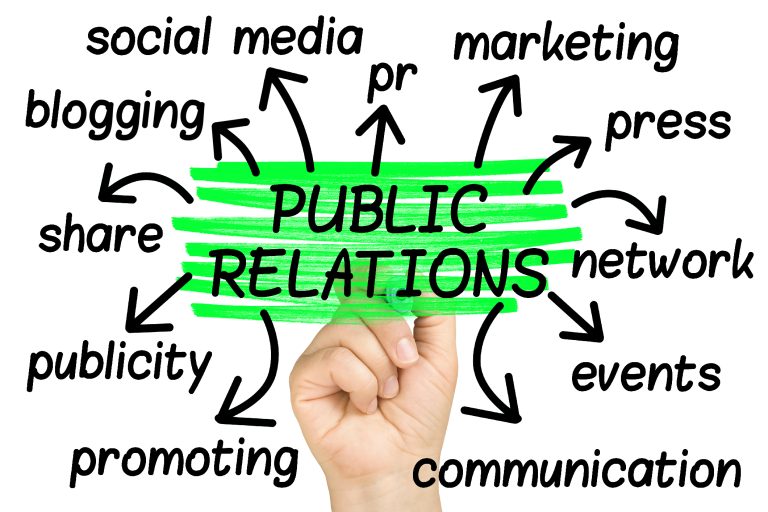
Public relations (PR) is an essential component of a company’s marketing strategy. It is a strategic communication process that builds and maintains mutually beneficial relationships between a company and its stakeholders. PR plays a vital role in shaping public perception of a company, its products, and services.
In today’s competitive business environment, companies need to use a combination of marketing techniques to promote their products and services. The promotion mix consists of various elements such as advertising, personal selling, sales promotion, direct marketing, and public relations.
Public relations is an integral part of the promotion mix, which helps companies to create a positive image and reputation in the eyes of the public.
Key Takeaways
- Public relations is a strategic communication process that builds and maintains mutually beneficial relationships between a company and its stakeholders.
- Public relations is an integral part of the promotion mix, which helps companies to create a positive image and reputation in the eyes of the public.
- The promotion mix consists of various elements such as advertising, personal selling, sales promotion, direct marketing, and public relations.
Understanding Public Relations
Public relations (PR) is a communication strategy that aims to create and maintain a positive image for a company, organization, or individual. It involves managing the spread of information between an entity and its target audience, with the goal of building strong relationships and trust.
PR is an important component of the promotional mix, which includes advertising, sales promotion, personal selling, and direct marketing. PR activities can help to generate positive publicity, enhance brand reputation, and attract new customers.
One of the key functions of PR is crisis communication. In the event of a crisis, such as a product recall or a negative news story, PR professionals work to minimize the damage to the entity’s reputation and restore public trust. This may involve issuing a public apology, providing accurate information to the media, and taking steps to prevent similar incidents from occurring in the future.
Another important aspect of PR is press relations. PR professionals work to establish and maintain positive relationships with journalists and media outlets, with the goal of securing positive media coverage for their clients. This can involve pitching story ideas, arranging interviews, and providing background information.
PR also encompasses public affairs, which involves engaging with government officials and other stakeholders to shape public policy and legislation. PR professionals may work to influence public opinion on issues such as environmental regulation, healthcare reform, or tax policy.
Overall, PR is a vital tool for building and maintaining a positive reputation for an entity. By understanding the principles of effective PR and implementing a well-designed PR strategy, you can enhance your entity’s image, improve customer relationships, and achieve your business objectives.
Role of Public Relations in Promotion Mix
In marketing, the promotion mix refers to the set of tools that a marketer uses to communicate with the target audience. The promotion mix comprises of advertising, personal selling, sales promotion, direct marketing, and public relations. Public relations (PR) is an essential part of the promotion mix, and it plays a crucial role in creating brand awareness and managing a company’s reputation.
PR is the practice of building and maintaining relationships between an organization and its publics. It is a strategic communication process that aims to build mutual understanding and trust between the organization and its stakeholders. In the promotion mix, PR is used to create a favourable image of the company and its products or services. It is also used to manage any negative publicity that the company may face.
The role of PR in the promotion mix is to create a positive image of the company and its products or services. PR helps to build brand awareness and brand recognition, which are essential for the success of any promotional campaign. It also helps to differentiate the company from its competitors and position the company as a leader in its industry.
PR is also used to manage any negative publicity that the company may face. Negative publicity can damage the company’s reputation and affect its sales. PR helps to address any negative publicity and manage the company’s reputation. It also helps to build trust and credibility with the target audience.
In integrated marketing communications (IMC), PR plays a crucial role in creating a consistent and cohesive message across all communication channels. IMC is a strategic approach to marketing that integrates all communication tools to create a seamless and consistent message. PR helps to ensure that the company’s message is consistent across all communication channels, including advertising, personal selling, sales promotion, and direct marketing.
In conclusion, PR is an essential part of the promotion mix, and it plays a crucial role in creating brand awareness, managing the company’s reputation, and creating a consistent and cohesive message across all communication channels. As a marketer, you must understand the role of PR in the promotion mix and use it effectively to achieve your marketing objectives.
Public Relations and Advertising
When it comes to promoting a product or service, advertising is often the first thing that comes to mind. However, public relations (PR) also plays an important role in the promotion mix. PR is the art of building and maintaining relationships between an organization and its stakeholders, including customers, employees, investors, and the media.
Advertising is a form of paid promotion that involves creating and placing ads in various media channels such as television, newspapers, magazines, radio, and billboards. On the other hand, PR is a form of earned media coverage that involves getting media outlets to cover your story or event without paying for it.
While advertising is more focused on creating brand awareness and generating sales, PR is more focused on building credibility and trust with stakeholders. PR can help create a positive image for an organization by highlighting its achievements, promoting its values, and addressing any negative publicity.
In the promotion mix, advertising and PR can work together to create a more effective campaign. For example, a company may use advertising to create awareness of a new product, and then use PR to generate media coverage and create buzz around the launch.
Overall, both advertising and PR are important components of the promotion mix. While advertising is more focused on creating brand awareness and generating sales, PR is more focused on building credibility and trust with stakeholders. By using both advertising and PR together, an organization can create a more effective and well-rounded promotion campaign.
Online Public Relations and Social Media
In today’s digital age, online public relations and social media have become an essential part of the promotion mix. The emergence of the internet and social media platforms has revolutionized the role and work of public relations professionals. With the help of social media, public relations professionals can now reach a larger audience and build relationships with them.
Social media platforms like Facebook, Twitter, Instagram, and LinkedIn provide an excellent opportunity for businesses to interact with their customers and build relationships with them. With the help of social media, businesses can create a two-way communication channel, where customers can provide feedback and businesses can respond to their queries.
Online public relations also involves creating and managing a company’s online reputation. A company’s website is the first point of contact for many customers, and it is essential to have a well-designed and user-friendly website. A well-designed website can help build trust and credibility with customers.
Internet marketing is another critical aspect of online public relations. With the help of internet marketing, businesses can promote their products or services to a larger audience. Internet marketing involves various techniques like search engine optimization (SEO), pay-per-click (PPC) advertising, and email marketing.
Viral marketing is another technique used in online public relations. Viral marketing involves creating content that is shareable and has the potential to go viral. Viral marketing campaigns can help businesses reach a larger audience and create brand awareness.
In conclusion, online public relations and social media play a vital role in the promotion mix. With the help of social media, businesses can interact with their customers and build relationships with them. A well-designed website and effective internet marketing campaigns can help businesses promote their products or services to a larger audience. Viral marketing campaigns can help businesses create brand awareness and reach a larger audience.
Targeting and Messaging in Public Relations
When it comes to public relations in the promotion mix, targeting and messaging are crucial. You need to identify your target audience and craft messages that will resonate with them. By doing so, you can effectively communicate your brand’s values and ensure that your message is heard by the people who matter most.
To begin with, you need to identify your target audience. This could be a specific demographic, such as young adults or parents, or it could be a group of people who share a common interest or value. Once you have identified your target audience, you can begin to craft messages that will appeal to them.
Your message should be clear, concise, and aligned with your brand’s values. It should also be presented in a way that is visually appealing and easy to understand. This could be through the use of images, videos, or infographics.
When targeting your audience, you need to consider their needs, wants, and preferences. What are their pain points? What motivates them? What do they value? By answering these questions, you can create messages that speak directly to your target audience and resonate with them on a deeper level.
It’s also important to consider the presentation of your message. How will it be delivered? Will it be through social media, email, or traditional media? The presentation of your message can have a big impact on how it is received, so it’s important to choose the right medium for your target audience.
In summary, targeting and messaging are critical components of public relations in the promotion mix. By identifying your target audience and crafting messages that resonate with them, you can effectively communicate your brand’s values and ensure that your message is heard by the people who matter most.
Public Relations and Sales Promotion
Public relations (PR) is an essential component of the promotion mix that can help you build your brand image and enhance your reputation. It involves managing your relationship with your stakeholders, including customers, employees, investors, and the media. PR can help you communicate your message effectively and build trust with your target audience.
In contrast, sales promotion is a short-term incentive that encourages customers to make a purchase. It can be used to promote new products, increase sales, and encourage repeat purchases. Sales promotion can take many forms, including discounts, coupons, rebates, and free samples. It often includes a call to action that encourages customers to act quickly.
When used together, PR and sales promotion can be a powerful combination. PR can help you build your brand image and enhance your reputation, while sales promotion can encourage customers to make a purchase. For example, if you are launching a new product, you can use PR to generate buzz and excitement, and then use sales promotion to encourage customers to try the product.
In summary, PR and sales promotion are both important components of the promotion mix. PR can help you build your brand image and enhance your reputation, while sales promotion can encourage customers to make a purchase. By using these two components together, you can create a powerful marketing campaign that can help you achieve your business objectives.
Events and Public Relations
In the promotion mix, events and public relations go hand in hand. Events are a powerful tool for promoting your brand, and public relations can help you get the most out of those events.
Special events can be used to create a buzz around your brand and generate interest from the media and the public. They can also be used to launch new products, celebrate milestones, or simply to connect with your audience.
Press releases and news conferences are important tools for public relations. A well-written press release can generate media coverage and help get your message out to a wider audience. A news conference can be used to announce a major event or product launch, and can help you get more coverage in the media.
Press conferences are another way to get your message out to the media. They are typically used to provide updates on a particular issue or to answer questions from journalists. They can be a great way to build relationships with the media and establish your brand as an authority in your industry.
Overall, events and public relations are important components of the promotion mix. By using them effectively, you can create a buzz around your brand, generate media coverage, and connect with your audience in a meaningful way.
Cost and Budgeting in Public Relations
When it comes to public relations in the promotion mix, cost and budgeting are crucial factors to consider. Public relations campaigns can be costly, but they are often cheaper than other forms of advertising. The cost of a public relations campaign will depend on a range of factors, including the size of the campaign, the length of the campaign, and the target audience.
To create a budget for your public relations campaign, you will need to consider a range of different costs. These may include the cost of hiring a public relations agency, the cost of creating promotional materials, the cost of hosting events, and the cost of any media coverage that you may receive. It is important to create a budget that is realistic and that takes into account all of the costs associated with your campaign.
One way to keep costs down is to focus on building relationships with your target audience. By engaging with your audience on social media, responding to customer feedback, and offering promotions and discounts, you can create a strong relationship with your customers without spending a lot of money on advertising.
Another way to keep costs down is to use targeted advertising. By focusing your advertising efforts on your target audience, you can reduce the amount of money that you need to spend on advertising. This can be done by using social media advertising, targeted online advertising, or other forms of targeted advertising.
In conclusion, cost and budgeting are important considerations when it comes to public relations in the promotion mix. By creating a realistic budget and focusing on building relationships with your target audience, you can create a successful public relations campaign without breaking the bank.
Direct Marketing and Public Relations
In the promotion mix, direct marketing and public relations are two important tools that marketers use to reach out to their customers and audience. Direct marketing is a technique that involves communicating directly with individual recipients to promote products or services. This can be done through various channels such as email, text messages, or social media.
Public relations, on the other hand, is a strategic communication process that builds mutually beneficial relationships between organizations and their audiences. It involves managing the spread of information between an organization and its stakeholders, such as customers, employees, and the media.
When it comes to promoting a product or service, direct marketing and public relations can work together to achieve the desired results. For example, a marketer can use direct marketing to send personalised messages to customers, while public relations can help to build a positive image of the brand through media coverage and events.
One advantage of direct marketing is that it allows marketers to target specific segments of their audience with tailored messages. This can increase the effectiveness of marketing campaigns, as customers are more likely to respond positively to messages that are relevant to their interests and needs.
Public relations, on the other hand, can help to build trust and credibility with customers. By communicating openly and transparently with their audience, organizations can establish themselves as trustworthy and reliable. This can lead to increased customer loyalty and advocacy.
In conclusion, direct marketing and public relations are both important tools in the promotion mix. By using these techniques effectively, marketers can reach out to their customers and audience in a targeted and meaningful way, while also building long-term relationships based on trust and credibility.
Public Relations for New Launches
When launching a new product or service, it is essential to create brand awareness and generate demand. Public relations (PR) is an effective tool to achieve these goals. PR is a strategic communication process that builds mutually beneficial relationships between an organization and its publics. It helps to create a positive image of the brand and generate buzz around the launch.
One of the primary objectives of PR for new launches is to create brand awareness. PR can help to introduce the brand to the target audience and generate interest in the product or service. It can also help to establish the brand as an authority in the industry. PR activities such as media relations, influencer outreach, and event marketing can help to create a buzz around the launch and generate excitement among the target audience.
Another objective of PR for new launches is to generate demand for the product or service. PR can help to create a sense of urgency among the target audience and drive sales. PR activities such as product reviews, endorsements, and social media campaigns can help to generate demand and increase sales.
PR can also help to build brand loyalty among the target audience. By creating a positive image of the brand and engaging with the target audience, PR can help to build trust and loyalty. This can lead to repeat business and positive word-of-mouth recommendations.
In summary, PR is an essential component of the promotion mix for new launches. It can help to create brand awareness, generate demand, and build brand loyalty. By leveraging PR activities such as media relations, influencer outreach, and event marketing, you can create a buzz around your launch and establish your brand as an authority in the industry.
Public Relations and Celebrities
Public relations is an essential tool in the promotional mix. It is used to create and maintain a positive image of a company or brand. One way that public relations is used is through celebrity endorsements. Celebrities have a huge influence on their fans and followers. They can help to increase brand awareness and generate interest in a product or service.
Sponsorship is another way that public relations is used with celebrities. Companies sponsor events or sports teams and use celebrities to promote their brand. This can be an effective way to reach a large audience and create a positive association with a brand.
Charity work is also a popular way for celebrities to use public relations. By working with charities, celebrities can increase their profile and create a positive image for themselves and the brand they are associated with. Companies can also use charity work as a way to promote their brand and show that they care about social issues.
It is important to choose the right celebrity to work with. The celebrity should be a good fit for the brand and have a positive image. If the celebrity has a negative image or is involved in controversy, it can have a negative impact on the brand.
Overall, public relations and celebrities can be a powerful combination in the promotional mix. By using celebrities to promote their brand, companies can reach a large audience and create a positive image for themselves.
Public Relations and Competitors
When it comes to promoting your organisation, you must not only focus on your own strengths and weaknesses but also on those of your competitors. Public relations (PR) is a crucial component of the promotion mix that can help you stand out from your competitors and gain an edge in the market.
One of the advantages of using PR in your promotion mix is that it can help you build a positive reputation for your organisation. By using PR tactics such as media relations, event sponsorship, and community outreach, you can create a favourable image of your organisation in the minds of your target audience. This can help you differentiate yourself from your competitors who may not have such a positive reputation.
However, there are also some disadvantages of using PR in your promotion mix. One of the biggest challenges is that it can be difficult to measure the effectiveness of PR activities. Unlike advertising or sales promotions, which have clear metrics such as click-through rates or sales figures, PR activities can be harder to quantify. This can make it difficult to determine whether your PR efforts are actually helping you gain an edge over your competitors.
Another challenge of using PR in your promotion mix is that it can be time-consuming and expensive. PR activities such as media relations or event sponsorship can require a significant investment of time and resources. This can be a disadvantage if your competitors are able to achieve similar results with less effort or expense.
Overall, while PR can be a valuable tool in your promotion mix, it is important to carefully consider the advantages and disadvantages of using it in the context of your competitors. By understanding your competitors’ strengths and weaknesses, you can make informed decisions about how to use PR to gain an edge in the market.
Benefits of Public Relations in Promotion Mix
Incorporating public relations (PR) into your promotion mix can provide various benefits for your business. Here are some ways that PR can contribute to your marketing efforts:
Positive Brand Image
One of the primary benefits of PR in the promotion mix is that it can help establish and maintain a positive brand image. By leveraging media coverage, events, and other PR tactics, you can create a favourable impression of your brand in the eyes of your target audience. This can lead to increased trust, loyalty, and advocacy, which can translate into more sales and revenue for your business.
Increased Exposure
Another significant advantage of PR in the promotion mix is that it can help you reach a wider audience and increase your exposure. By securing media coverage, participating in events, and leveraging social media and other online channels, you can generate more visibility and awareness for your brand. This can help you attract new customers, build your reputation, and expand your market share.
Cost-Effective
Compared to other forms of advertising and marketing, PR can be a cost-effective way to promote your business. While paid advertising and other tactics can be expensive, PR can often be done with minimal or no cost. For example, you can pitch your story to journalists, participate in industry events, or create shareable content on social media without spending a lot of money. This can help you stretch your marketing budget further and achieve more significant results.
In summary, PR can provide various benefits for your business when included in your promotion mix. By establishing a positive brand image, increasing your exposure, and being cost-effective, PR can help you achieve your marketing goals and grow your business.
Frequently Asked Questions
What is the role of public relations in a company’s promotion strategy?
Public relations (PR) is a key component of a company’s promotion strategy. It involves building and maintaining relationships with the public, including customers, investors, and other stakeholders. PR helps to create a positive image of the company and its products or services, and can be used to generate publicity and media coverage.
What are the benefits of incorporating public relations into the promotion mix?
Incorporating public relations into the promotion mix can provide a number of benefits. PR can help to increase brand awareness and credibility, improve customer relationships, and generate positive media coverage. It can also be a cost-effective way to promote a company or product, as compared to other elements of the promotion mix.
How does public relations differ from other elements of the promotion mix?
Public relations differs from other elements of the promotion mix, such as advertising, sales promotion, and personal selling, in that it is focused on building relationships with the public rather than directly promoting a product or service. PR is often used to generate positive media coverage, while advertising and sales promotion are more focused on direct marketing efforts.
What are some examples of successful public relations campaigns in promotion?
Successful public relations campaigns in promotion include the Dove “Real Beauty” campaign, which focused on promoting a positive body image for women, and the Old Spice “The Man Your Man Could Smell Like” campaign, which used humour and creativity to promote the brand. These campaigns were successful in generating positive media coverage and increasing brand awareness.
What factors should be considered when determining the appropriate mix of promotion strategies?
When determining the appropriate mix of promotion strategies, factors such as the target audience, budget, and marketing goals should be considered. Different promotion strategies may be more effective for different target audiences, and the budget will also impact which strategies can be used. Marketing goals, such as increasing brand awareness or generating sales, will also influence the promotion mix.
What are the key components of an effective promotion mix?
The key components of an effective promotion mix include advertising, sales promotion, personal selling, and public relations. Each of these elements plays a different role in promoting a product or service, and the appropriate mix will depend on the target audience, budget, and marketing goals. An effective promotion mix should be well-balanced and integrated, with each element working together to achieve the desired results.