If you’re interested in making money online, you may have heard about affiliate marketing. It’s a popular way to earn passive income by promoting other people’s products and earning a commission on each sale. But how do you get started with affiliate marketing?
In this article, we’ll walk you through the steps to start your own affiliate marketing business.
First, it’s important to understand what affiliate marketing is and how it works. Essentially, you’ll be partnering with companies to promote their products or services to your audience. When someone makes a purchase through your unique affiliate link, you’ll earn a commission on the sale.
The key to success with affiliate marketing is to choose the right products to promote and to build a loyal audience who trusts your recommendations.
Once you understand the basics of affiliate marketing, it’s time to start building your business. This involves choosing your niche, setting up your platform, creating high-quality content, joining affiliate programs, and optimising for SEO. It can be a lot of work upfront, but the potential for passive income is worth it.
In the following sections, we’ll dive deeper into each step to help you get started with affiliate marketing today.
Key Takeaways
- Affiliate marketing is a popular way to earn passive income by promoting other people’s products and earning a commission on each sale.
- To get started with affiliate marketing, you’ll need to choose your niche, set up your platform, create high-quality content, join affiliate programs, and optimise for SEO.
- Building a successful affiliate marketing business takes time and effort, but the potential for passive income is worth it.
Understanding Affiliate Marketing
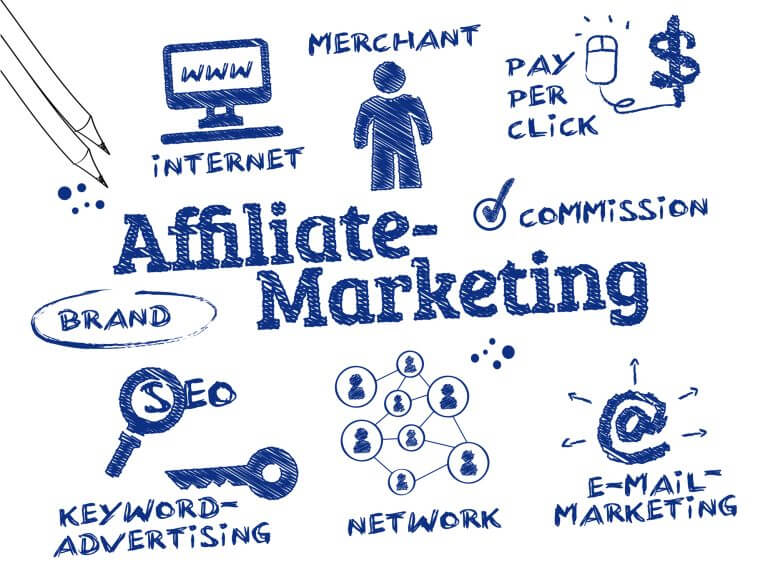
Affiliate marketing is a marketing model that involves promoting other people’s or companies’ products and earning a commission for each sale made through your referral link. This marketing model is a win-win situation for both affiliates and merchants. Affiliates earn a commission for each sale made through their referral link, and merchants get more exposure and sales for their products.
Defining Affiliate Marketing
Affiliate marketing is a marketing model that involves promoting other people’s or companies’ products and earning a commission for each sale made through your referral link. Affiliates can promote products through various channels such as social media, blogs, websites, email marketing, and more.
How Affiliate Marketing Works
Affiliate marketing works by having affiliates promote products through their channels using a unique referral link. When a customer clicks on the affiliate’s referral link and makes a purchase, the affiliate earns a commission. The commission rate varies depending on the merchant and product, but it typically ranges from 5% to 50% of the sale price.
The Role of Affiliates and Merchants
Affiliates play a crucial role in affiliate marketing by promoting products to their audience and driving sales for merchants. Merchants provide affiliates with promotional materials such as banners, links, and ads to help them promote their products. Merchants also track sales made through affiliate links and pay out commissions to affiliates.
Affiliate marketing can be done through an affiliate network, which connects affiliates with merchants and tracks sales and commissions. Affiliate networks also provide tools and resources to help affiliates promote products and optimize their campaigns.
Overall, affiliate marketing is a great way to earn passive income and promote products you believe in. By understanding how affiliate marketing works and the roles of affiliates and merchants, you can start your own affiliate marketing business and earn commissions for promoting products you love.
Choosing Your Niche
When starting affiliate marketing, one of the most crucial steps is selecting your niche. This decision will determine the type of products you promote, the audience you target, and the content you create. Here are some essential things to consider when choosing your niche:
Importance of Selecting a Niche
Selecting a niche is crucial because it helps you focus your efforts on a specific audience. By targeting a specific group of people, you can tailor your content and promotions to their interests and needs. This approach is more effective than trying to appeal to everyone. Additionally, selecting a niche can help you establish yourself as an authority in that area, which can increase your credibility and attract more followers.
Researching and Identifying Profitable Niches
To identify a profitable niche, you need to research and identify areas with high demand and low competition. You can use tools like Google Trends, Amazon Best Sellers, and ClickBank Marketplace to find popular niches and products. You can also look for areas where your interests and skills overlap with market demand. For example, if you enjoy fitness and nutrition, you can explore niches like weight loss, supplements, or healthy eating.
Evaluating Market Demand with Tools like Google Trends
Google Trends is a powerful tool that can help you evaluate market demand for your niche. It shows you the popularity of search terms over time, which can indicate whether a niche is growing or declining. You can also use Google Trends to compare different niches and identify areas with the highest potential. For example, if you’re considering promoting fitness products, you can compare keywords like “yoga mats,” “dumbbells,” and “running shoes” to see which one has the most interest.
In conclusion, selecting your niche is a critical step in starting affiliate marketing. It helps you focus your efforts, establish yourself as an authority, and increase your chances of success. By researching and identifying profitable niches and using tools like Google Trends, you can make an informed decision that aligns with your interests and goals.
Setting Up Your Platform
When it comes to affiliate marketing, setting up your platform is a crucial step in the process. Your platform is where you will be promoting your affiliate products and services. There are several options available to you, and it’s important to choose the right one for your needs.
Deciding Between a Website or Blog
One of the most popular platforms for affiliate marketing is a website or blog. This is a great option if you want to create a long-term presence on the internet. A website or blog gives you the ability to create content that will attract visitors and keep them engaged. You can also use your website or blog to promote your affiliate products and services.
If you decide to create a website or blog, you will need to choose a platform to build it on. WordPress is one of the most popular platforms available, and it’s easy to use, even if you don’t have any coding experience. You can choose from a wide range of themes and plugins to customise your website or blog.
Utilising Social Media Platforms
Social media platforms like Facebook, Twitter, and Instagram are also great options for affiliate marketing. These platforms allow you to build a following and promote your affiliate products and services. You can create posts, share content, and engage with your followers.
When using social media for affiliate marketing, it’s important to remember that you need to provide value to your followers. Don’t just promote your affiliate products and services. Instead, focus on creating content that will be useful and interesting to your followers.
Leveraging Video Platforms like YouTube
Video platforms like YouTube are another great option for affiliate marketing. YouTube allows you to create videos that promote your affiliate products and services. You can create product reviews, tutorials, and other types of content that will be useful to your viewers.
When creating videos for affiliate marketing, it’s important to remember that you need to provide value to your viewers. Don’t just promote your affiliate products and services. Instead, focus on creating content that will be useful and interesting to your viewers. You can also include links to your affiliate products and services in the description of your videos.
In conclusion, when setting up your platform for affiliate marketing, you have several options available to you. Whether you choose to create a website or blog, use social media, or leverage video platforms like YouTube, it’s important to provide value to your audience. By doing so, you’ll be able to build a following and promote your affiliate products and services successfully.
Creating High-Quality Content
When it comes to affiliate marketing, creating high-quality content is essential to attract and retain your audience. Here are some tips to help you develop a content strategy that will keep your readers engaged and informed.
Developing a Content Strategy
Before you start creating content, you need to develop a strategy that aligns with your affiliate marketing goals. Start by identifying your target audience and their interests. This will help you create content that resonates with them and keeps them coming back for more.
Next, decide on the type of content you want to create. This could include blog posts, videos, product reviews, and more. Remember to focus on quality over quantity. It’s better to create fewer pieces of high-quality content than to churn out mediocre content on a regular basis.
Finally, create a content calendar to help you stay organized and consistent. This will ensure that you are publishing content regularly and keeping your audience engaged.
Writing Engaging and Informative Blog Posts
Blog posts are a great way to attract and engage your audience. When creating blog posts, focus on providing value to your readers. This means writing informative and engaging content that helps them solve a problem or learn something new.
To make your blog posts more engaging, use subheadings, bullet points, and images to break up the text and make it easier to read. You should also include a call to action at the end of each post, encouraging your readers to take action, such as clicking on an affiliate link.
Producing Compelling Videos and Visuals
Videos and visuals are another great way to engage your audience. When creating videos and visuals, focus on providing value to your viewers. This means creating content that is informative, entertaining, and visually appealing.
To make your videos and visuals more engaging, use high-quality images and video footage. You should also include captions and annotations to make it easier for viewers to follow along. Finally, don’t forget to include a call to action at the end of each video, encouraging your viewers to take action, such as clicking on an affiliate link.
By following these tips, you can create high-quality content that attracts and retains your audience, and helps you achieve your affiliate marketing goals.
Joining Affiliate Programs
If you’re new to affiliate marketing, the first step is to join an affiliate program. This will allow you to promote products and earn commissions on sales that you refer. Here are some key things to keep in mind when joining affiliate programs.
Finding the Right Affiliate Programs
The first step is to find affiliate programs that are a good fit for your niche and audience. You can search for affiliate programs on Google, or use affiliate networks like ShareASale, Awin, or Clickbank to find relevant programs.
When choosing affiliate programs, it’s important to consider the commission rate, the quality of the products, and the reputation of the merchant. Look for programs that offer a fair commission rate and high-quality products that your audience will be interested in.
Understanding Commission Structures
Different affiliate programs have different commission structures. Some programs offer a flat rate commission for each sale, while others offer a percentage of the sale price. It’s important to understand the commission structure before you join a program, so you can calculate how much you can earn from each sale.
Applying to Affiliate Networks
Some merchants have their own affiliate programs, while others use affiliate networks to manage their affiliate program. Amazon Associates is an example of a merchant with its own affiliate program, while ShareASale and Awin are examples of affiliate networks.
To join an affiliate network, you’ll need to apply and be approved by the network. This process typically involves filling out an application and providing information about your website and marketing strategy.
Once you’re approved, you’ll be able to browse and apply to different affiliate programs within the network. This can be a great way to find relevant programs and manage all of your affiliate links in one place.
Overall, joining affiliate programs is a crucial step in starting your affiliate marketing journey. By finding the right programs and understanding commission structures, you can start earning commissions on sales and building a profitable affiliate business.
Optimising for SEO
If you want to start affiliate marketing, then you need to optimise your website for search engines. Optimising your website for SEO is crucial because it helps search engines understand what your website is about and how it can benefit users. Here are some tips to help you optimise your website for SEO:
Keyword Research and SEO Basics
Keyword research is the foundation of SEO. It involves finding the right keywords that your target audience is searching for. You can use tools like Google Keyword Planner to find relevant keywords. Once you have the right keywords, you need to use them in your website’s content, meta tags, and URLs. This will help search engines understand what your website is about and rank it higher in search results.
In addition to keyword research, you need to follow some basic SEO practices. This includes having a mobile-friendly website, using descriptive URLs, creating high-quality content, and having a fast website. These practices will help search engines crawl and index your website more efficiently.
On-Page and Off-Page SEO Techniques
On-page SEO involves optimising your website’s content and structure. This includes using the right keywords in your content, having a clear website structure, and using header tags. On-page SEO also involves optimising your website’s images, videos, and other multimedia content.
Off-page SEO involves building backlinks to your website. Backlinks are links from other websites that point to your website. The more high-quality backlinks you have, the higher your website will rank in search results. You can build backlinks by guest blogging, participating in forums, and using social media.
Tracking and Improving Web Traffic
Once you have optimised your website for SEO, you need to track your web traffic. This will help you understand how users are interacting with your website and what changes you need to make to improve your website’s performance. You can use tools like Google Analytics to track your website’s traffic.
To improve your website’s performance, you need to use the data you collect from your web traffic analysis. This includes identifying your website’s top-performing pages, finding out which keywords are driving the most traffic, and improving your website’s user experience.
By following these tips, you can optimise your website for SEO and start generating more traffic and sales through affiliate marketing.
Building Your Audience
Affiliate marketing is all about building a loyal audience that trusts you and your recommendations. Without a strong audience, your affiliate marketing efforts will fall flat. In this section, we’ll explore some effective ways to build your audience.
Engaging with Your Target Audience
The first step in building your audience is to identify your target audience. Who are the people you want to reach with your affiliate marketing efforts? What are their needs and interests?
Once you’ve identified your target audience, it’s time to engage with them. You can do this by creating content that speaks directly to their needs and interests. For example, if your target audience is interested in health and wellness, you could create blog posts and social media content that focus on healthy living tips and products.
Growing Your Email List
Another effective way to build your audience is to grow your email list. Email marketing is a powerful tool for affiliate marketers because it allows you to communicate directly with your audience.
To grow your email list, you can offer a free resource or incentive in exchange for people signing up. For example, you could offer a free e-book or discount code for a product you’re promoting.
Utilising Influencer Marketing
Influencer marketing is another effective way to build your audience. By partnering with influencers in your niche, you can tap into their existing audience and reach new people.
When working with influencers, it’s important to choose someone who aligns with your brand and values. You should also be transparent about your affiliate marketing efforts and disclose any sponsored content.
Overall, building your audience is a crucial part of succeeding in affiliate marketing. By engaging with your target audience, growing your email list, and utilising influencer marketing, you can build a loyal following that trusts your recommendations.
Monetising Your Efforts
Once you have created a successful affiliate marketing strategy, it’s time to monetise your efforts. This means maximising your revenue streams and earning potential through various methods. Below are some tips to help you make the most of your affiliate marketing efforts.
Understanding Different Revenue Streams
One of the biggest advantages of affiliate marketing is the ability to earn commissions on sales. However, there are other revenue streams that you can explore to maximise your earnings. For example, some affiliate programs offer recurring commissions on subscription-based products or services. You can also earn commissions on upsells, cross-sells, and even on clicks or leads.
Maximising Affiliate Commissions
To maximise your affiliate commissions, it’s important to choose the right products or services to promote. Look for products or services that are relevant to your audience and have a high conversion rate. You should also negotiate higher commission rates with your affiliate partners. This is especially important if you are driving a lot of sales or have a large following.
Exploring Additional Monetisation Strategies
In addition to affiliate commissions, there are other ways to monetise your affiliate marketing efforts. For example, you can create your own products or services to sell to your audience. You can also offer consulting or coaching services related to your niche. Another option is to sell advertising space on your website or social media channels.
By exploring different monetisation strategies, you can increase your earning potential and create a more sustainable affiliate marketing business. However, it’s important to balance monetisation with providing value to your audience. Always put your audience first and focus on building long-term relationships with your followers.
Scaling Your Affiliate Business
Scaling your affiliate business is an essential step towards achieving long-term growth and success. It involves leveraging analytics, creating partnerships and networks, and maintaining sustainability and flexibility.
Leveraging Analytics for Growth
One of the most effective ways to scale your affiliate business is by leveraging analytics. By using data to track your website traffic, conversions, and sales, you can identify areas for improvement and make data-driven decisions. You can use tools like Google Analytics to track your website’s performance and identify which pages are driving the most traffic and conversions. This information can help you optimize your website for better performance and increased conversions.
Creating Partnerships and Networks
Another way to scale your affiliate business is by creating partnerships and networks. By partnering with other businesses and affiliates, you can expand your reach and drive more traffic to your website. You can also create networks of affiliates who can promote your offers to their audiences. This can help you reach new audiences and drive more sales.
Maintaining Sustainability and Flexibility
Sustainability and flexibility are essential for scaling your affiliate business. You need to ensure that your business is sustainable in the long term by diversifying your revenue streams and creating a stable income. You also need to be flexible and adaptable to changes in the market and industry trends. This can help you stay ahead of the competition and continue to grow your business.
In conclusion, scaling your affiliate business requires a combination of analytics, partnerships, sustainability, and flexibility. By leveraging these strategies, you can achieve long-term growth and success in the affiliate marketing industry.
Frequently Asked Questions
What are the initial steps for a beginner to become an affiliate marketer?
To become an affiliate marketer as a beginner, you need to first choose a niche that you are passionate about and interested in. Next, you will need to research and identify affiliate programs that are relevant to your niche. Once you have identified a few programs, you can apply to become an affiliate. Upon approval, you will receive a unique affiliate link that you can use to promote the product or service.
Can one engage in affiliate marketing without any initial investment, and how?
Yes, it is possible to engage in affiliate marketing without any initial investment. Many affiliate programs are free to join, and you can promote products or services using free tools such as social media platforms. However, keep in mind that investing in a website, paid advertising, or other marketing tools can help you reach a larger audience and potentially increase your earnings.
Which strategies are most effective for a newcomer in affiliate marketing?
As a newcomer in affiliate marketing, it is best to focus on building your audience and establishing trust with them. You can do this by creating high-quality content that is relevant to your niche and providing value to your audience. You can also leverage social media platforms, email marketing, and other marketing channels to promote your affiliate products.
What are high ticket affiliate programs, and how do they work?
High ticket affiliate programs are affiliate programs that offer high commission rates for products or services that are expensive. These programs can be lucrative for affiliate marketers, as they offer the potential for high earnings per sale. To promote high ticket affiliate products, you will need to focus on building trust with your audience and providing high-quality content that showcases the value of the product.
How can I start affiliate marketing through Amazon as a novice?
To start affiliate marketing through Amazon as a novice, you will need to first sign up for the Amazon Associates program. Once you are approved, you will receive a unique affiliate link that you can use to promote products on Amazon. To increase your earnings, you can create content that is relevant to the products you are promoting and leverage social media platforms to reach a larger audience.
What essential elements should be included in an affiliate marketing course for beginners?
An affiliate marketing course for beginners should cover the basics of affiliate marketing, including how to choose a niche, how to identify affiliate programs, and how to promote products. It should also cover more advanced topics such as how to build an audience, how to create high-quality content, and how to use marketing tools such as email marketing and paid advertising. Additionally, the course should provide real-world examples and case studies to help beginners understand how to apply the concepts they are learning.