Creating a sales funnel in Mailchimp is an effective way to convert potential customers into paying ones. A sales funnel consists of a series of steps that a customer goes through before making a purchase. The goal is to guide them through each step, from the initial awareness of your product or service to the final purchase. Mailchimp is a powerful tool that can help you automate this process and make it easier to manage.
To create a sales funnel in Mailchimp, you need to first understand the different stages of a sales funnel. This includes the awareness stage, interest stage, decision stage, and action stage. Once you have a clear understanding of these stages, you can start building your funnel in Mailchimp.
This involves setting up different email campaigns that target customers at each stage of the funnel. You can also use Mailchimp’s automation features to send out targeted emails based on specific triggers, such as when a customer abandons their cart.
Overall, creating a sales funnel in Mailchimp can help you streamline your sales process and increase conversions. By guiding customers through each stage of the funnel, you can build trust and establish a relationship that leads to more sales. With Mailchimp’s powerful features, you can automate this process and make it easier to manage.
Key Takeaways
- Understand the different stages of a sales funnel before creating one in Mailchimp.
- Use Mailchimp’s automation features to send targeted emails based on specific triggers.
- Streamline your sales process and increase conversions by guiding customers through each stage of the funnel.
Understanding Sales Funnel
Definition and Importance
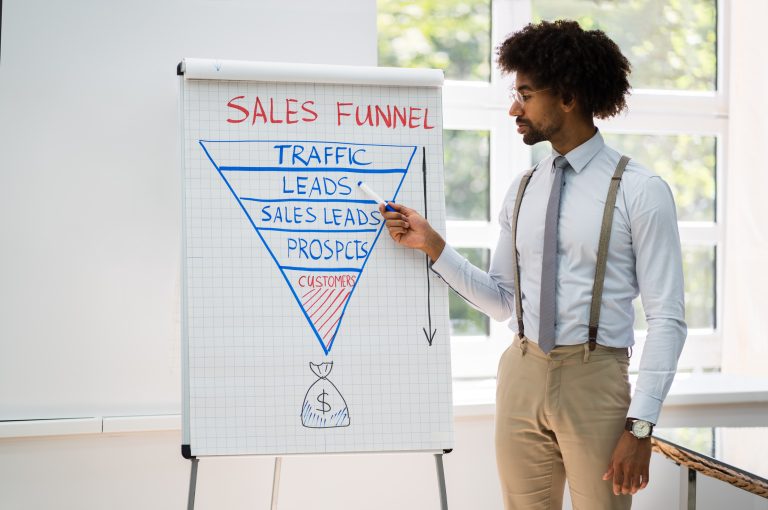
A sales funnel is a visual representation of the customer journey, from the moment they become aware of your product or service to the point of making a purchase. It is an essential tool for any business that wants to understand how potential customers interact with their brand and how to improve their sales process.
The sales funnel is also known as the marketing funnel, and it is a crucial concept in marketing. The funnel is divided into several stages, each representing a step in the customer journey. The stages are designed to move potential customers from awareness to conversion, and ultimately, to become loyal customers.
Stages of a Sales Funnel
The sales funnel typically consists of four stages: awareness, interest, decision, and action.
Awareness Stage
The awareness stage is the first stage of the funnel. At this stage, potential customers become aware of your product or service. Your goal is to create awareness and attract potential customers to your brand. You can achieve this by using various marketing techniques such as social media, content marketing, and advertising.
Interest Stage
The interest stage is the second stage of the funnel. At this stage, potential customers have shown an interest in your product or service. Your goal is to nurture this interest and provide them with more information about your brand. You can achieve this by using email marketing, webinars, and other lead generation techniques.
Decision Stage
The decision stage is the third stage of the funnel. At this stage, potential customers are ready to make a decision. Your goal is to convince them that your product or service is the best solution for their needs. You can achieve this by providing them with testimonials, case studies, and other social proof.
Action Stage
The action stage is the final stage of the funnel. At this stage, potential customers have made a decision and are ready to take action. Your goal is to make it easy for them to make a purchase or sign up for your service. You can achieve this by providing them with a clear call to action, easy-to-use checkout process, and excellent customer service.
In conclusion, understanding the sales funnel is crucial for any business that wants to improve its sales process and increase conversions. By implementing a sales funnel in Mailchimp, you can track potential customers’ progress through the funnel and create targeted campaigns to move them from one stage to the next.
Getting Started with Mailchimp
Overview of Mailchimp
Mailchimp is an online digital marketing platform that allows you to create and optimize sales funnels. It is easy to use and provides a wide range of features that can help you create effective email campaigns, landing pages, and marketing automation workflows. With Mailchimp, you can create a sales funnel that will help you convert leads into customers.
One of the main benefits of Mailchimp is its ease of use. The platform is designed to be user-friendly, and you can easily navigate through the various features and tools. Mailchimp also provides a range of templates and pre-built workflows that you can use to get started quickly. With Mailchimp, you don’t need to have any technical skills to create a sales funnel.
Setting Up an Account
To get started with Mailchimp, you will need to create an account. The process is straightforward and can be completed in a few minutes. Once you have created an account, you can start exploring the platform and its features.
To create an account, go to the Mailchimp website and click on the “Sign Up Free” button. You will then be asked to provide your email address, username, and password. Once you have entered this information, click on the “Get Started” button.
After creating an account, you will be prompted to create your first audience. An audience is a group of people who have given you permission to send them emails. You can create an audience by importing a list of contacts or by adding contacts manually. Once you have created an audience, you can start creating your sales funnel.
In conclusion, Mailchimp is an excellent platform for creating sales funnels. It is easy to use and provides a wide range of features that can help you create effective email campaigns, landing pages, and marketing automation workflows. With Mailchimp, you can create a sales funnel that will help you convert leads into customers.
Creating a Sales Funnel in Mailchimp
If you are looking to create a sales funnel in Mailchimp, you have come to the right place. Mailchimp is a powerful tool that can help you automate your marketing campaigns and convert website visitors into qualified leads. In this section, we will guide you through the process of creating a sales funnel in Mailchimp.
Campaign Creation
The first step in creating a sales funnel in Mailchimp is to create a campaign. A campaign is a marketing message that you send to your target audience. Mailchimp offers several types of campaigns, including email campaigns, landing page campaigns, and social media campaigns. To create a campaign, follow these steps:
- Log in to your Mailchimp account.
- Click on the “Campaigns” tab.
- Click on the “Create Campaign” button.
- Choose the type of campaign you want to create.
- Follow the prompts to set up your campaign.
Landing Page Design
The next step in creating a sales funnel in Mailchimp is to design a landing page. A landing page is a web page that is designed to capture a visitor’s attention and convert them into a lead. Mailchimp offers several landing page templates that you can use to create your own landing page. To design a landing page, follow these steps:
- Click on the “Landing Pages” tab in Mailchimp.
- Click on the “Create Landing Page” button.
- Choose a template that fits your marketing campaign.
- Customize the template to match your brand and offer.
- Publish your landing page.
Email Marketing Setup
The final step in creating a sales funnel in Mailchimp is to set up your email marketing. Email marketing is a powerful tool that can help you nurture your leads and convert them into customers. Mailchimp offers several email marketing tools, including automated emails and drip campaigns. To set up your email marketing, follow these steps:
- Click on the “Audience” tab in Mailchimp.
- Create a segment of your target audience.
- Create a newsletter or email sequence that matches your marketing campaign.
- Set up automated emails or drip campaigns to nurture your leads.
- Send your emails to your target audience.
In conclusion, creating a sales funnel in Mailchimp is a powerful way to automate your marketing campaigns and convert website visitors into qualified leads. By following the steps outlined in this section, you can create a sales funnel that captures your target audience’s attention and converts them into customers.
Nurturing Leads and Converting Prospects
Once you have captured leads in your Mailchimp sales funnel, the next step is to nurture these leads and convert them into paying customers. This process involves building relationships with your leads, educating them about your product or service, and encouraging them to take action.
Lead Nurturing Strategies
Lead nurturing involves providing valuable information to your leads at every stage of the sales funnel. This helps to build trust and brand awareness, and keeps your leads engaged with your business. Here are some effective lead nurturing strategies you can use in Mailchimp:
- Email Marketing: Send regular email newsletters and updates to your leads to keep them informed about your business. Use personalised content and targeted messaging to increase engagement and conversions.
- Lead Magnets: Offer free resources such as ebooks, guides, or webinars to your leads in exchange for their contact details. This helps to build a relationship with your leads and positions your business as an authority in your industry.
- Retargeting Ads: Use retargeting ads to reach out to leads who have visited your website but have not yet converted. This helps to keep your business top of mind and encourages leads to take action.
Conversion Rate Optimisation
Conversion rate optimisation involves improving the chances of your leads taking action and becoming paying customers. Here are some effective strategies you can use in Mailchimp to optimise your conversion rates:
- Clear Call-to-Action: Use clear and compelling calls-to-action (CTAs) in your emails and landing pages to encourage leads to take action. Make sure your CTAs are prominently displayed and easy to understand.
- Engaging Content: Use engaging and relevant content to educate and persuade your leads. This helps to build desire and interest in your product or service, and encourages leads to take action.
- Relationship Building: Build relationships with your leads by providing value and personalised content. This helps to build trust and brand loyalty, and encourages leads to make a decision to purchase from your business.
By using these lead nurturing and conversion rate optimisation strategies in Mailchimp, you can increase your chances of converting leads into paying customers and growing your business.
Analysing and Improving Your Sales Funnel
Creating a sales funnel in Mailchimp is a great way to improve your marketing strategy and boost your revenue. However, it’s not enough to simply set up a funnel and hope for the best. To get the most out of your sales funnel, you need to analyse and improve it over time. In this section, we’ll explore some tips for doing just that.
Understanding Analytics
One of the most important tools you have for analysing your sales funnel is analytics. Mailchimp provides a range of analytics tools that can help you track the performance of your funnel and identify areas for improvement.
One key metric to keep an eye on is conversion rate. This is the percentage of people who complete the desired action at each stage of your funnel. By tracking your conversion rate over time, you can identify which stages of your funnel are performing well and which need improvement.
Another important metric is attention. This refers to how long people are spending on each stage of your funnel. If people are spending a lot of time on one stage but not progressing to the next, it may be a sign that there’s a problem with that stage.
Using Advanced Settings
Mailchimp also provides a range of advanced settings that can help you customise your sales funnel and improve its performance. Here are a few key settings to consider:
- Tracking: Mailchimp allows you to track a range of different actions, such as clicks, opens, and purchases. By tracking these actions, you can get a better understanding of how people are interacting with your funnel and identify areas for improvement.
- Marketer: Mailchimp’s marketer feature allows you to create customised campaigns based on a range of different criteria. By using this feature, you can create campaigns that are tailored to the specific needs and interests of your audience.
- Reporting: Mailchimp’s reporting tools allow you to generate detailed reports on the performance of your funnel. By reviewing these reports regularly, you can identify trends and patterns that can help you improve your funnel over time.
- Analyse: Mailchimp’s analysis tools allow you to dig deeper into your funnel data and identify specific areas for improvement. For example, you can use these tools to identify which email campaigns are driving the most conversions, or which landing pages are performing the best.
- Goals: Mailchimp’s goals feature allows you to set specific goals for your funnel, such as increasing conversion rates or boosting revenue. By setting these goals and tracking your progress towards them, you can stay focused on what’s important and make informed decisions about how to improve your funnel.
- Visualization: Mailchimp’s visualization tools allow you to create customised charts and graphs that can help you better understand your funnel data. By visualising your data in this way, you can identify trends and patterns that may not be immediately apparent from raw data.
- Key Performance Indicators (KPIs): Mailchimp’s KPIs feature allows you to track a range of different metrics, such as revenue per customer, customer lifetime value, and more. By tracking these metrics over time, you can identify areas for improvement and make informed decisions about how to optimise your funnel.
In conclusion, analysing and improving your sales funnel in Mailchimp is an ongoing process that requires careful attention and regular review. By using Mailchimp’s analytics and advanced settings, you can identify areas for improvement and make informed decisions about how to optimise your funnel for maximum performance.
Best Practices and Additional Resources
When it comes to creating a sales funnel in Mailchimp, there are several best practices and additional resources that can help you optimize your funnel and increase sales. In this section, we’ll cover some of the most important resources and strategies you can use to create a successful sales funnel.
Competitor Analysis
One of the best ways to optimize your sales funnel is to conduct a competitor analysis. This involves researching your competition to identify their strengths and weaknesses, as well as any strategies they’re using that you could adopt or improve upon.
Tools like SEMrush or Ahrefs can help you identify your competitors and analyze their digital marketing strategies. By understanding what your competition is doing, you can create a sales funnel that stands out and attracts your target audience.
Case Studies and Testimonials
Another important resource for creating a successful sales funnel is case studies and testimonials. These provide social proof that your product or service is effective and can help build trust with potential customers.
Consider including case studies and testimonials on your landing page or in your email campaigns. You can also use tools like Trustpilot or Google Reviews to gather customer feedback and showcase it on your website.
Guides and Webinars
Finally, guides and webinars can be incredibly valuable resources for optimizing your sales funnel. These resources can provide detailed information on best practices, as well as actionable tips and strategies you can implement in your own funnel.
Mailchimp offers a range of guides and webinars on topics like email marketing, social media advertising, and e-commerce. These resources can help you make the most of your marketing budget and resources, and stay ahead of the competition.
In conclusion, by conducting a competitor analysis, using case studies and testimonials, and leveraging guides and webinars, you can create a sales funnel that drives conversions and increases revenue. Keep these best practices and resources in mind as you build your own funnel, and don’t be afraid to experiment and try new strategies to see what works best for your business.
Dealing with Abandoned Carts
One of the most common issues faced by online stores is the problem of abandoned shopping carts. Abandoned carts occur when a customer adds items to their cart but leaves the website before completing the purchase. This can be frustrating for online store owners, but there are strategies that can be employed to reduce the number of abandoned carts and increase sales.
Abandoned Cart Email Strategies
One effective strategy for dealing with abandoned carts is to send an abandoned cart email. This is an email that is automatically sent to customers who have added items to their cart but have not completed their purchase. The email can include a reminder of the items in the cart, along with a call to action to complete the purchase.
When creating an abandoned cart email, it’s important to keep the following best practices in mind:
- Personalize the email with the customer’s name and the items in their cart.
- Include a clear call to action that links directly to the checkout page.
- Offer an incentive, such as free shipping or a discount, to encourage the customer to complete their purchase.
- Use a sense of urgency in the subject line and body of the email to encourage the customer to act quickly.
Retargeting and Special Offers
Another effective strategy for dealing with abandoned carts is to use retargeting and special offers. Retargeting involves showing ads to customers who have previously visited your website or added items to their cart. These ads can be displayed on other websites or social media platforms.
Special offers can also be used to encourage customers to complete their purchase. For example, you could offer a discount code to customers who have abandoned their cart, or offer free shipping for a limited time.
When using retargeting and special offers, it’s important to keep the following best practices in mind:
- Use eye-catching graphics and messaging to grab the customer’s attention.
- Make the offer clear and easy to understand.
- Use a sense of urgency to encourage the customer to act quickly.
- Test different offers and messaging to see what works best.
By employing these strategies, you can reduce the number of abandoned carts on your website and increase sales. Remember to test different strategies and messaging to see what works best for your business.
Frequently Asked Questions
What are the steps to creating a successful sales funnel in Mailchimp?
To create a successful sales funnel in Mailchimp, you need to follow these steps:
- Define your target audience and create buyer personas.
- Identify the stages of your sales funnel, including the awareness, interest, decision, and action stages.
- Create content for each stage of the funnel that is tailored to your target audience’s needs and interests.
- Use Mailchimp’s automation features to send targeted emails to subscribers based on their behaviour and engagement with your content.
- Design landing pages that are optimized for conversions and lead capture.
- Use analytics to track your funnel’s performance and make data-driven decisions to improve it.
How can Mailchimp’s automation features be used to enhance a sales funnel?
Mailchimp’s automation features can be used to enhance a sales funnel in several ways, including:
- Sending targeted emails to subscribers based on their behaviour and engagement with your content.
- Nurturing leads with a series of automated emails that are designed to move them through the sales funnel.
- Triggering emails based on specific actions, such as abandoned cart reminders or post-purchase follow-ups.
- Personalizing emails with dynamic content that is tailored to each subscriber’s interests and behaviour.
What are some best practices for designing a sales funnel in Mailchimp?
Here are some best practices for designing a sales funnel in Mailchimp:
- Keep your funnel simple and focused on your target audience’s needs and interests.
- Use clear and compelling calls-to-action (CTAs) throughout your funnel.
- Design landing pages that are optimized for conversions and lead capture.
- Use segmentation to target your emails and content to specific groups of subscribers.
- Test and optimize your funnel regularly to improve its performance.
How can I track the performance of my sales funnel in Mailchimp?
You can track the performance of your sales funnel in Mailchimp by using analytics to measure key metrics such as open rates, click-through rates, conversion rates, and revenue generated. You can also use Mailchimp’s reporting features to track the performance of individual emails, automations, and campaigns.
What are some effective lead generation strategies for a Mailchimp sales funnel?
Some effective lead generation strategies for a Mailchimp sales funnel include:
- Creating gated content, such as ebooks or webinars, that require users to provide their email address to access.
- Running targeted social media ads that drive traffic to your landing pages.
- Offering exclusive discounts or promotions to subscribers who sign up for your email list.
- Hosting events, such as webinars or workshops, that require registration with an email address.
How do I integrate Mailchimp with other tools to optimize my sales funnel?
Mailchimp can be integrated with a variety of other tools to optimize your sales funnel, including:
- CRMs like Salesforce or Hubspot to manage your leads and automate your sales process.
- E-commerce platforms like Shopify or WooCommerce to track sales and revenue generated from your funnel.
- Analytics tools like Google Analytics or Hotjar to track user behaviour and optimize your funnel based on data.