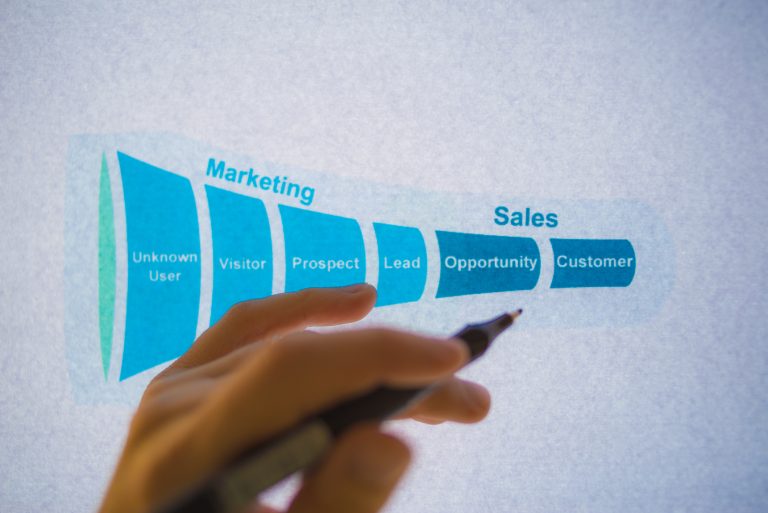
Calculating your sales funnel conversion rate is an essential aspect of your business strategy. It determines how successful your marketing efforts are and helps you identify areas of improvement. Understanding your conversion rate can help you make informed decisions about your marketing budget, target audience, and content strategy.
The conversion rate is defined as the percentage of people who take a desired action, such as making a purchase or filling out a form, out of the total number of visitors to your website. By tracking your conversion rate, you can determine how effective your sales funnel is at guiding potential customers through the buying process.
To calculate your sales funnel conversion rate, you need to first define the stages of your funnel and track the number of visitors at each stage. This will help you identify which stages need improvement and make data-driven decisions to optimize your conversion rate.
In this article, we will guide you through the process of calculating your sales funnel conversion rate and provide tips for improving it.
Key Takeaways
- Calculating your sales funnel conversion rate is essential for determining the effectiveness of your marketing efforts.
- The conversion rate is the percentage of people who take a desired action out of the total number of visitors to your website.
- To calculate your conversion rate, you need to define the stages of your funnel and track the number of visitors at each stage.
Understanding Sales Funnel
If you’re looking to improve your sales funnel conversion rate, it’s essential to understand what a sales funnel is and how it works. A sales funnel is a visual representation of the journey a potential customer takes from awareness to purchase. The funnel is divided into stages, and each stage represents a step in the customer’s journey.
The four main stages of a sales funnel are awareness, interest, desire, and action. At the top of the funnel, the awareness stage, potential customers become aware of your brand or product. They may have seen an ad or stumbled upon your website. At this stage, your goal is to capture their attention and get them interested in what you have to offer.
Once a potential customer is interested, they move to the interest stage. Here, they begin to learn more about your product or service and how it can help them. Your goal at this stage is to provide valuable information and build trust with the customer.
The desire stage is where potential customers begin to see the value in your product or service. They may compare your offering to others and decide that yours is the best fit for their needs. Your goal at this stage is to create a sense of urgency and encourage them to take action.
Finally, at the bottom of the funnel, the action stage, potential customers make a purchase. Your goal at this stage is to make the purchase process as easy and straightforward as possible.
To calculate your sales funnel conversion rate, you need to track the number of people who move from one stage of the funnel to the next. For example, if 100 people become aware of your product, and 50 of those people move to the interest stage, your conversion rate for the awareness to interest stage is 50%.
Understanding your sales funnel is the first step in improving your conversion rate. By tracking your funnel and identifying areas where potential customers drop off, you can make changes to improve the customer experience and increase your sales.
Defining Conversion Rate
When it comes to measuring the success of your sales funnel, the conversion rate is one of the most important metrics to track. Simply put, the conversion rate is the percentage of visitors to your website or landing page who complete a desired action, such as making a purchase or filling out a form.
To calculate your conversion rate, you’ll need to know the total number of visitors to your site or page, as well as the number of visitors who completed the desired action. Divide the number of conversions by the total number of visitors, then multiply by 100 to get your conversion rate as a percentage.
It’s important to note that the desired action can vary depending on your business goals and the specific stage of the sales funnel you’re measuring. For example, if you’re measuring the conversion rate of a landing page designed to generate leads, the desired action might be filling out a form or subscribing to a newsletter. If you’re measuring the conversion rate of a product page, the desired action might be making a purchase.
Tracking your conversion rate over time can help you identify areas where your sales funnel could be improved. For example, if you notice a low conversion rate on a particular page, you might need to tweak the design or messaging to make it more compelling.
When setting goals for your conversion rate, it’s important to keep in mind that what constitutes a “good” conversion rate can vary widely depending on your industry, business model, and other factors. However, tracking your conversion rate and striving to improve it over time can help ensure that your sales funnel is as effective as possible.
The Importance of Conversion Rate
Calculating your sales funnel conversion rate is crucial to the success of your business. It tells you how many people are moving through your funnel and becoming customers. This information is essential for making informed decisions about your marketing strategy, product offerings, and pricing.
Here are some reasons why conversion rate is important:
Revenue
Conversion rate directly impacts your revenue. The higher your conversion rate, the more revenue you generate. By tracking your conversion rate, you can identify areas where you need to improve your funnel to increase revenue.
Growth
A high conversion rate is also an indicator of growth potential. If you can maintain a high conversion rate, you can scale your business more easily. Tracking your conversion rate over time can help you identify trends and adjust your strategy accordingly.
Competition
Conversion rate is a key metric for benchmarking against your competition. If your conversion rate is lower than your competitors, you may need to adjust your marketing strategy or pricing to stay competitive.
Value
Conversion rate can also help you determine the value of your marketing efforts. If you’re spending a lot of money on advertising but not seeing a high conversion rate, you may need to adjust your targeting or messaging to improve the value of your marketing campaigns.
In summary, conversion rate is an essential metric for any business that wants to grow and succeed. By tracking your conversion rate and making adjustments to your funnel, you can increase revenue, scale your business, stay competitive, and improve the value of your marketing efforts.
How to Calculate Sales Funnel Conversion Rate
Calculating your sales funnel conversion rate is essential to understanding how effective your sales process is. It allows you to identify areas where you can improve your sales process, and also helps you to set realistic sales targets. In this section, we’ll show you how to calculate your sales funnel conversion rate using a simple formula.
Conversion Rate Formula
The formula for calculating your sales funnel conversion rate is relatively straightforward. You need to divide the number of people who have completed the desired action by the total number of people who entered the sales funnel. You can express this as a percentage.
Conversion Rate = (Number of People Who Completed Desired Action / Total Number of People Who Entered Sales Funnel) x 100%
For example, if 1000 people entered your sales funnel and 100 of them made a purchase, your conversion rate would be:
Conversion Rate = (100 / 1000) x 100% = 10%
Sales Funnel Calculator
If you find it challenging to calculate your sales funnel conversion rate manually, you can use a sales funnel calculator. These tools are available online and can help you to calculate your conversion rate quickly and accurately.
To use a sales funnel calculator, you need to input the number of people who entered your sales funnel and the number of people who completed the desired action. The calculator will then provide you with your conversion rate as a percentage.
Why Is Conversion Rate Important?
Conversion rate is an essential metric for any business that wants to improve its sales process. By calculating your conversion rate, you can identify areas where your sales process is not working correctly and make changes to improve it.
A high conversion rate indicates that your sales process is effective, and you are converting a significant proportion of your leads into customers. A low conversion rate, on the other hand, suggests that your sales process needs improvement, and you are losing potential customers at some stage of the funnel.
In conclusion, calculating your sales funnel conversion rate is an essential step in improving your sales process. By using the conversion rate formula or a sales funnel calculator, you can quickly and accurately determine your conversion rate and take steps to improve it.
Analysing Different Stages of the Sales Funnel
To calculate your sales funnel conversion rate, you need to understand the different stages of the funnel. These stages are:
- Awareness stage: This is the stage where potential customers become aware of your product or service.
- Consideration stage: At this stage, potential customers are considering whether or not to purchase your product or service.
- Decision: This is the stage where potential customers make a decision to purchase your product or service.
- Sales cycle: The sales cycle is the time it takes for a potential customer to move through the funnel and make a purchase.
To analyse the different stages of the funnel, you need to track the number of leads at each stage. For example, if you have 100 leads in the awareness stage, and 25 of those leads move on to the consideration stage, your conversion rate from awareness to consideration is 25%.
You can use a table to track the number of leads at each stage of the funnel. This will help you identify which stages need improvement and where you can focus your efforts to increase your conversion rate.
It’s important to note that not all leads will move through the funnel at the same rate. Some leads may move quickly through the funnel, while others may take longer. By analysing the different stages of the funnel, you can identify where leads are getting stuck and make changes to improve your conversion rate.
In addition to tracking the number of leads at each stage of the funnel, you should also track the time it takes for leads to move through the funnel. This will help you identify areas where you can streamline the process and reduce the sales cycle.
By analysing the different stages of the sales funnel, you can identify areas for improvement and make changes to increase your conversion rate. With a clear understanding of the funnel and the right tracking tools, you can optimise your sales process and increase your revenue.
Understanding the Customer Journey
To calculate your sales funnel conversion rate, you need to understand the customer journey. The customer journey is the path a lead takes from becoming aware of your product or service to becoming a paying customer. Understanding the customer journey is essential because it allows you to identify the stages where leads are dropping off and take action to improve your conversion rate.
The customer journey typically consists of four stages: awareness, consideration, decision, and retention. In the awareness stage, the lead becomes aware of your product or service. In the consideration stage, the lead is evaluating your product or service and comparing it to alternatives. In the decision stage, the lead decides whether to purchase your product or service. In the retention stage, the paying customer continues to use your product or service and hopefully becomes a repeat customer.
To understand the customer journey, you need to track your leads and paying customers through each stage. You can use a variety of tools to track the customer journey, including CRM software, marketing automation software, and Google Analytics. By tracking your leads and paying customers, you can identify the conversion rate at each stage of the customer journey.
It’s important to note that the customer journey is not a linear path. Leads may enter and exit the journey at different stages, and they may move back and forth between stages. For example, a lead may become aware of your product, drop out of the consideration stage, and then re-enter the consideration stage at a later time.
To improve your conversion rate, you need to identify the stages where leads are dropping off and take action to address the issues. For example, if you have a high drop-off rate in the consideration stage, you may need to improve your marketing messaging or provide more information about your product or service.
In summary, understanding the customer journey is essential to calculating your sales funnel conversion rate. By tracking your leads and paying customers through each stage of the journey, you can identify where leads are dropping off and take action to improve your conversion rate.
The Role of Content in Conversion
When it comes to conversion rate, the role of content cannot be overstated. Your marketing content, including your copy and headlines, plays a crucial role in attracting potential customers and guiding them through the sales funnel. In this section, we’ll explore the importance of content in each stage of the funnel and provide tips on how to optimise your content for maximum conversion.
Top of the Funnel
At the top of the funnel, your goal is to attract potential customers and generate interest in your product or service. This is where your marketing content comes into play. Your content should be informative, engaging, and relevant to your target audience. This can include blog posts, social media updates, infographics, and more.
To optimise your content for conversion at the top of the funnel, consider the following tips:
- Use attention-grabbing headlines that clearly convey the value of your content
- Focus on the benefits of your product or service, rather than just its features
- Use visuals to make your content more engaging and shareable
- Include calls-to-action (CTAs) that encourage readers to take the next step in the funnel
Middle of the Funnel
In the middle of the funnel, your goal is to nurture leads and guide them towards a purchase decision. This is where your content can really shine. Your content should be more focused on your product or service, while still providing value to your audience.
To optimise your content for conversion in the middle of the funnel, consider the following tips:
- Use case studies, testimonials, and reviews to build trust and credibility
- Create comparison content that highlights the benefits of your product or service over your competitors
- Use CTAs that encourage leads to take action, such as signing up for a free trial or scheduling a demo
Bottom of the Funnel
At the bottom of the funnel, your goal is to convert leads into paying customers. This is where your content can make or break the sale. Your content should be focused on closing the deal and addressing any remaining objections or concerns.
To optimise your content for conversion at the bottom of the funnel, consider the following tips:
- Use product demos, free trials, and other offers to encourage leads to take the final step
- Address any remaining objections or concerns with targeted content, such as FAQs or case studies
- Use urgency and scarcity to create a sense of urgency and encourage leads to take action
In conclusion, the role of content in conversion cannot be overstated. By creating high-quality, relevant content that addresses the needs and concerns of your target audience, you can attract potential customers, nurture leads, and guide them towards a purchase decision. Use the tips provided in this section to optimise your content for each stage of the funnel and maximise your conversion rate.
Optimising Conversion Rate
Optimising your sales funnel conversion rate is essential to increase your revenue and grow your business. By optimising your conversion rate, you can increase the number of leads that convert into paying customers, ultimately boosting your sales.
Conversion rate optimisation involves making data-driven decisions to improve the conversion rate of your sales funnel. To optimise your conversion rate, you need to identify the bottlenecks in your sales funnel and experiment with different strategies to improve your conversion rate.
One way to optimise your conversion rate is by conducting experiments. You can run A/B tests to compare two versions of your sales funnel and see which one performs better. By experimenting with different variations, you can identify the best strategies to improve your conversion rate.
Another way to optimise your conversion rate is by collecting feedback from your customers. You can use surveys, feedback forms, and customer interviews to gather feedback on your sales funnel. By listening to your customers, you can identify the pain points in your sales funnel and make improvements to address them.
To calculate your conversion rate, you need to divide the number of conversions by the number of visitors to your sales funnel. This will give you the percentage of visitors who convert into paying customers. You can use this metric to track your progress and identify areas for improvement.
In summary, optimising your conversion rate is critical to the success of your business. By experimenting with different strategies and collecting feedback from your customers, you can identify the best ways to improve your conversion rate. Remember to track your progress and use data to make informed decisions about your sales funnel.
The Impact of AI on Conversion Rate
Artificial Intelligence (AI) has revolutionized the way businesses operate and has significantly impacted the marketing industry. AI has enabled marketers to leverage insights and data to optimize their marketing campaigns and improve conversion rates.
AI-powered tools can track and analyze customer behaviour, preferences, and interactions with a brand’s website or social media channels. By tracking these metrics, marketers can gain valuable insights into what works and what doesn’t, allowing them to optimize their sales funnel and improve conversion rates.
One of the most significant benefits of using AI in conversion rate optimization is the ability to track and analyze data in real-time. This allows marketers to make data-driven decisions quickly and adjust their campaigns accordingly.
AI can also help identify areas of the sales funnel that need improvement. By analyzing customer behaviour and interactions with a brand’s website or social media channels, AI-powered tools can identify bottlenecks and areas where customers are dropping off. This information can then be used to optimize the sales funnel and improve conversion rates.
Another benefit of using AI in conversion rate optimization is the ability to personalize the customer experience. AI-powered tools can analyze customer data and interactions to create personalized marketing campaigns that are tailored to each individual customer. This can improve customer engagement and increase conversion rates.
In conclusion, AI has had a significant impact on conversion rate optimization. By leveraging insights and data, marketers can optimize their sales funnel and improve conversion rates. AI-powered tools can track and analyze customer behaviour, identify areas of improvement, and personalize the customer experience, all of which can lead to increased conversion rates.
Using Social Proof to Boost Conversion
Social proof is a powerful tool that can help boost your sales funnel conversion rate. By showing potential customers that others have already purchased and enjoyed your product or service, you can increase their confidence in your brand and encourage them to take action.
One effective way to incorporate social proof into your sales funnel is by including reviews and testimonials from satisfied customers. These can be displayed prominently on your website, or even integrated into your email marketing campaigns. By showcasing positive feedback from real customers, you can help build trust and credibility with potential buyers.
Another way to use social proof to boost conversion is by highlighting any awards or accolades your brand has received. For example, if you’ve been named “Best in Class” by a reputable industry publication, make sure to feature this prominently on your website or in your marketing materials. This can help establish your brand as a leader in your field and increase customer confidence in your products or services.
It’s important to note that social proof should be used ethically and responsibly. Avoid making exaggerated or false claims, and always seek permission before using customer reviews or testimonials. Additionally, be sure to monitor your online reputation and address any negative feedback promptly and professionally.
In conclusion, incorporating social proof into your sales funnel can be a highly effective way to boost conversion rates and increase customer confidence in your brand. By showcasing positive reviews, testimonials, and awards, you can help establish your brand as a trusted leader in your industry and encourage potential customers to take action.
Leveraging Marketing Channels
To calculate your sales funnel conversion rate, it’s important to leverage your marketing channels effectively. Marketing channels are the different ways you reach your audience, such as social media, email, ads, and more. By understanding how each channel contributes to your sales funnel, you can make informed decisions about where to invest your time and resources.
One of the key metrics you’ll need to calculate your conversion rate is the number of visitors to your website or landing page. This can be tracked using tools like Google Analytics. Once you know how many visitors you’re getting, you can start to look at how many of those visitors are taking the desired action, such as making a purchase or filling out a form.
Different marketing channels will have different conversion rates, so it’s important to track each one separately. For example, your email campaigns may have a higher conversion rate than your social media ads. By tracking these metrics, you can make data-driven decisions about where to focus your marketing efforts.
When it comes to social media, it’s important to choose the right channels for your business. Different platforms will have different audiences and engagement rates. For example, Instagram may be more effective for reaching a younger audience, while LinkedIn may be better for B2B marketing. By understanding your target audience and the strengths of each platform, you can create more effective social media campaigns.
Email marketing is another powerful channel for driving conversions. By creating targeted campaigns and personalised messages, you can build stronger relationships with your audience and increase your conversion rates. It’s important to track metrics like open rates and click-through rates to see how your campaigns are performing.
In summary, to calculate your sales funnel conversion rate, you need to leverage your marketing channels effectively. By tracking metrics like website visitors, conversion rates, and engagement rates for each channel, you can make data-driven decisions about where to focus your marketing efforts. Social media and email are two powerful channels for driving conversions, but it’s important to choose the right platforms and create targeted campaigns to see the best results.
Understanding Key Metrics and KPIs
When it comes to measuring the success of your sales funnel, there are several key metrics and KPIs that you need to be aware of. These metrics and KPIs will help you understand how well your funnel is performing and where you need to make improvements. Here are some of the most important metrics and KPIs to keep in mind:
Metrics
- Traffic Volume: This metric refers to the number of people who visit your website or landing page. It is an important metric to track because it gives you an idea of how many potential customers you have.
- Conversion Rate: The conversion rate is the percentage of visitors who take a desired action, such as filling out a form or making a purchase. This metric is crucial because it shows you how effective your funnel is at turning visitors into customers.
- Bounce Rate: The bounce rate is the percentage of visitors who leave your website or landing page without taking any action. A high bounce rate can indicate that your funnel is not engaging enough or that your targeting is off.
KPIs
- Cost per Acquisition (CPA): The CPA is the amount of money you spend on advertising or marketing to acquire a new customer. This KPI is important because it helps you measure the effectiveness of your marketing campaigns.
- Customer Lifetime Value (CLV): The CLV is the amount of money a customer is expected to spend with your business over their lifetime. This KPI is essential because it helps you understand the long-term value of your customers.
- Sales Velocity: The sales velocity is the rate at which you are generating revenue. This KPI is important because it helps you understand how quickly you are growing your business.
Understanding these key metrics and KPIs is essential for calculating your sales funnel conversion rate. By tracking and analysing these metrics, you can identify areas where your funnel needs improvement and make data-driven decisions to optimise your funnel for maximum results.
The Role of Design and CTAs
The design of your sales funnel plays a crucial role in determining the conversion rate. A well-designed funnel with clear and concise messaging can increase the likelihood of a visitor taking the desired action. On the other hand, a poorly designed funnel can lead to confusion and frustration, resulting in a lower conversion rate.
One of the key elements of a well-designed funnel is the placement and design of the CTAs (calls to action). CTAs are the buttons or links that encourage visitors to take the desired action, such as making a purchase or signing up for a newsletter.
To optimize your conversion rate, it’s important to use clear and compelling CTAs that stand out from the rest of the design. This can be achieved by using contrasting colours, bold text, and clear messaging. It’s also important to place the CTAs in strategic locations throughout the funnel, such as at the end of a product description or on the checkout page.
In addition to the design of the CTAs, it’s important to consider the messaging used in the CTAs. The language used should be clear and concise, and should clearly communicate the benefits of taking the desired action. For example, instead of using a generic CTA like “Submit”, try using a more specific and compelling CTA like “Get Your Free Ebook Now”.
Overall, the design of your sales funnel and the CTAs used play a critical role in determining the conversion rate. By using clear and compelling CTAs that are strategically placed throughout the funnel, you can increase the likelihood of visitors taking the desired action and ultimately increase your conversion rate.
Understanding Customer Acquisition and Retention
To calculate your sales funnel conversion rate, you must first understand the concepts of customer acquisition and retention. Customer acquisition refers to the process of gaining new customers, while customer retention refers to the process of keeping existing customers.
Acquiring new customers is important for any business, as it allows you to expand your customer base and increase your revenue. However, retaining existing customers is just as important, if not more so. Studies have shown that it can cost up to five times more to acquire a new customer than to retain an existing one. Additionally, existing customers are more likely to make repeat purchases and refer others to your business.
To calculate your sales funnel conversion rate, you must consider both customer acquisition and retention. This involves tracking the number of prospects who enter your sales funnel, the number of prospects who become customers, and the number of customers who make repeat purchases.
To calculate your customer acquisition rate, divide the number of new customers by the total number of prospects who entered your sales funnel during a given period. This will give you a percentage that represents the effectiveness of your customer acquisition efforts.
To calculate your customer retention rate, divide the number of customers who made repeat purchases by the total number of customers during a given period. This will give you a percentage that represents the effectiveness of your customer retention efforts.
Understanding customer acquisition and retention is crucial to calculating your sales funnel conversion rate. By focusing on both aspects of the sales funnel, you can improve your conversion rate and increase your revenue over time. Additionally, by calculating your customer lifetime value (LTV), you can determine the long-term value of each customer to your business and make informed decisions about your customer acquisition and retention strategies.
The Role of Sales Team in Conversion
The sales team plays a crucial role in the conversion process of your sales funnel. They are responsible for turning your marketing qualified leads (MQLs) into sales qualified leads (SQLs) and ultimately, closing the deal.
To calculate the conversion rate of your sales funnel, you need to take into account the number of MQLs and SQLs generated by your marketing and sales teams respectively. The conversion rate is the percentage of MQLs that turn into SQLs and eventually become customers.
The win rate of your sales team is also an important factor to consider when calculating the conversion rate. The win rate is the percentage of SQLs that are converted into customers. A high win rate indicates that your sales team is effective in closing deals, while a low win rate may indicate that your sales team needs to improve their sales skills or the quality of SQLs needs to be improved.
Your sales team should work closely with your marketing team to ensure that MQLs are qualified properly before being passed on to the sales team. This will help to ensure that the sales team is working with high-quality SQLs that have a higher chance of converting into customers.
To improve the conversion rate of your sales funnel, you can consider implementing a lead scoring system. This system will help to identify the most qualified leads and prioritise them for follow-up by your sales team. This will help to ensure that your sales team is focusing their efforts on the leads that are most likely to convert into customers.
In summary, the sales team plays a critical role in the conversion process of your sales funnel. By working closely with your marketing team and implementing a lead scoring system, you can improve the quality of your SQLs and increase your conversion rate.
Leveraging Upsells and Cross-Sells
To increase your sales funnel conversion rate, you should consider leveraging upsells and cross-sells. Upselling is when you offer your customers a higher-priced item than the one they are currently considering. Cross-selling is when you offer your customers complementary or related items to the one they are currently considering.
By offering upsells and cross-sells, you can increase the average order value and potentially boost your sales funnel conversion rate. However, it is important to make sure your offers are relevant and valuable to your customers.
One way to do this is to create product bundles. A product bundle is a group of products that are sold together at a discounted price. By bundling products, you can encourage customers to purchase more items and increase your sales funnel conversion rate.
When creating product bundles, make sure the products are complementary and relevant to each other. For example, if you sell cameras, you could create a bundle that includes a camera, a tripod, and a memory card. This bundle would be relevant to customers who are interested in photography and would provide them with everything they need to get started.
Another way to leverage upsells and cross-sells is to use personalised recommendations. By using data about your customers’ past purchases and browsing behaviour, you can offer them products that are relevant to their interests. This can increase the chances of them making a purchase and boost your sales funnel conversion rate.
Overall, upselling and cross-selling can be effective strategies for increasing your sales funnel conversion rate. By offering relevant and valuable products to your customers, you can increase the average order value and encourage repeat purchases.
Conclusion
Calculating your sales funnel conversion rate is an essential step in understanding the effectiveness of your sales process. By measuring the number of leads that progress through each stage of the funnel, you can identify areas for growth and optimization.
Throughout this article, we have discussed the importance of tracking your conversion rate and the steps involved in calculating it. By following these steps, you can gain valuable insights into the performance of your sales funnel and make data-driven decisions to improve your results.
Remember that your conversion rate is not a fixed number and can vary depending on a range of factors, including your traffic source, target audience, and the effectiveness of your marketing campaigns. By regularly monitoring your conversion rate and making adjustments as needed, you can continue to optimize your sales funnel for maximum growth and success.
In conclusion, calculating your sales funnel conversion rate is a crucial step in achieving your business goals. By taking the time to measure and analyze your results, you can identify areas for improvement and make data-driven decisions to optimize your sales process. With a clear understanding of your conversion rate, you can confidently move forward and achieve the results you desire.
Frequently Asked Questions
What is the formula for calculating conversion rate across the sales funnel?
To calculate the conversion rate across the sales funnel, divide the number of conversions by the number of leads or visitors at each stage of the funnel. For example, if you had 1000 visitors to your website, and 100 of them became leads, and 10 of them became customers, your conversion rates would be 10% for the lead stage and 1% for the customer stage.
How can sales pipeline conversion rate be calculated?
To calculate the sales pipeline conversion rate, divide the number of deals won by the number of deals that were in the pipeline at the beginning of the period. For example, if you had 100 deals in the pipeline at the beginning of the month and you won 10 of them, your conversion rate would be 10%.
What are the benchmarks for B2B SaaS funnel conversion rates?
The benchmarks for B2B SaaS funnel conversion rates vary depending on the industry, the product, and the target market. However, a good rule of thumb is to aim for a conversion rate of at least 2-3% at each stage of the funnel.
What is the quantitative percentage importance of any sales funnel?
The quantitative percentage importance of any sales funnel depends on the business and its goals. However, a sales funnel is an essential tool for any business looking to convert leads into customers and maximise revenue.
What is the conversion rate for telemarketing leads?
The conversion rate for telemarketing leads varies depending on the industry, the product, and the quality of the leads. However, a good conversion rate for telemarketing leads is around 10-20%.
How does ClickFunnels calculate conversion rate?
ClickFunnels calculates conversion rate by dividing the number of people who completed the desired action by the total number of visitors to the funnel. For example, if you had 1000 visitors to your funnel and 100 of them completed the desired action, your conversion rate would be 10%.