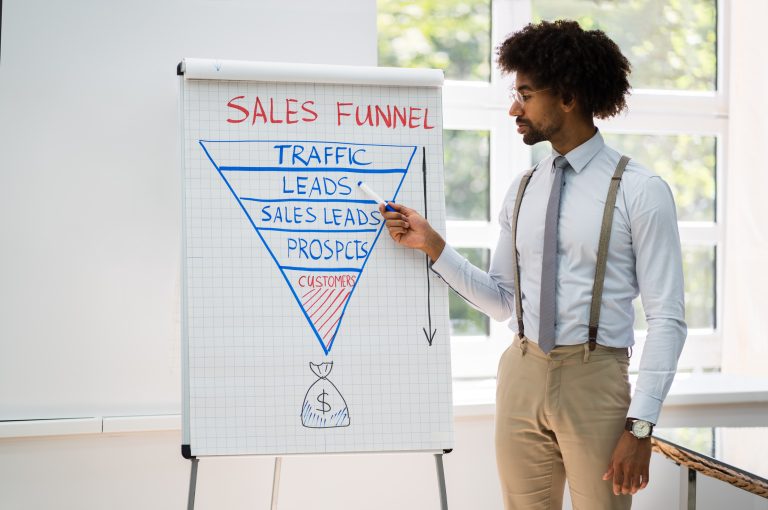
Creating a sales funnel is essential for any business looking to convert leads into customers. A sales funnel is a visual representation of the journey that a potential customer takes from being aware of your product or service to becoming a paying customer. It is a crucial aspect of any sales strategy, and if done correctly, can increase your revenue and customer base.
Understanding the sales funnel is the first step in creating an effective one. It consists of several stages, including awareness, interest, decision, and action. Each stage requires specific actions to be taken to move the potential customer closer to making a purchase.
By creating a sales funnel that addresses each stage, you can help guide your leads through the buying process and increase your chances of converting them into customers.
Key Takeaways
- Understanding the stages of a sales funnel is crucial for creating an effective one.
- Creating a sales funnel requires specific actions to be taken at each stage to move leads closer to making a purchase.
- By creating an effective sales funnel, you can increase your chances of converting leads into paying customers.
Understanding Sales Funnel
Definition and Importance
A sales funnel is a marketing model that represents the journey of a potential customer from awareness to purchase. It is a visual representation of the process that a business uses to turn prospects into customers. The sales funnel is divided into different stages, each of which represents a different step in the customer journey.
Understanding the sales funnel is crucial for any business looking to improve its marketing and sales efforts. It helps businesses to identify where their customers are in the buying process and what actions they need to take to move them to the next stage. By understanding the sales funnel, businesses can create targeted marketing campaigns that are designed to move customers through the funnel and ultimately convert them into paying customers.
The sales funnel is divided into four main stages: awareness, interest, decision, and action. Each stage requires a different marketing approach and tactics to move customers through the funnel.
Awareness
The awareness stage is the first stage of the sales funnel. At this stage, potential customers become aware of your business and its products or services. The goal of this stage is to create brand awareness and attract potential customers to your business.
Marketing tactics at this stage include social media marketing, content marketing, and search engine optimization (SEO). The goal is to create content that resonates with your target audience and makes them aware of your business and what you have to offer.
Interest
The interest stage is the second stage of the sales funnel. At this stage, potential customers have shown an interest in your business and its products or services. The goal of this stage is to build a relationship with potential customers and nurture their interest in your business.
Marketing tactics at this stage include email marketing, retargeting, and lead magnets. The goal is to provide potential customers with valuable content that helps them to better understand your business and what you have to offer.
Decision
The decision stage is the third stage of the sales funnel. At this stage, potential customers are considering whether or not to make a purchase from your business. The goal of this stage is to provide potential customers with the information they need to make an informed decision.
Marketing tactics at this stage include product demonstrations, case studies, and customer reviews. The goal is to provide potential customers with social proof that your business and its products or services are the right choice for them.
Action
The action stage is the final stage of the sales funnel. At this stage, potential customers have made the decision to purchase from your business. The goal of this stage is to make the purchasing process as easy and seamless as possible.
Marketing tactics at this stage include order confirmations, thank you pages, and upselling. The goal is to provide potential customers with a positive purchasing experience that encourages them to become repeat customers.
In conclusion, understanding the sales funnel is essential for any business looking to improve its marketing and sales efforts. By understanding the different stages of the sales funnel and the marketing tactics that are most effective at each stage, businesses can create targeted marketing campaigns that are designed to move customers through the funnel and ultimately convert them into paying customers.
The Stages of a Sales Funnel
Creating a sales funnel is an essential part of any successful business strategy. A sales funnel is a visual representation of the customer journey from initial awareness to final purchase. It consists of several stages that the customer goes through before making a purchase. In this section, we will discuss the four main stages of a sales funnel: Awareness, Interest, Decision, and Action.
Awareness Stage
The Awareness stage is the top of the funnel. At this stage, the customer becomes aware of your product or service. The goal of this stage is to attract potential customers and introduce them to your brand. You can achieve this by using various marketing techniques such as social media, content marketing, and advertising. The key is to create content that is relevant and engaging to your target audience.
Interest Stage
The Interest stage is where customers start to show interest in your product or service. They may have visited your website or engaged with your social media content. At this stage, you need to provide more detailed information about your product or service. You can use blog posts, videos, or webinars to educate your potential customers about the benefits of your product or service.
Decision Stage
The Decision stage is where customers are ready to make a purchase. At this stage, you need to provide them with all the information they need to make an informed decision. You can use product demos, case studies, or customer reviews to showcase the benefits of your product or service. It is also important to address any objections or concerns the customer may have.
Action Stage
The Action stage is the bottom of the funnel. This is where the customer makes the purchase. At this stage, you need to make the buying process as easy as possible. You can do this by providing a clear call-to-action, such as “Buy Now” or “Sign Up.” It is also important to follow up with the customer after the purchase to ensure they are satisfied with their purchase.
In summary, the four stages of a sales funnel are Awareness, Interest, Decision, and Action. By understanding these stages and creating content that is relevant and engaging to your target audience, you can increase your chances of converting potential customers into loyal customers. Remember the AIDA model – Attention, Interest, Desire, Action – and tailor your content to each stage of the funnel.
Creating an Effective Sales Funnel
When it comes to creating a sales funnel, it is important to have a clear plan in place. A sales funnel is a process that guides potential customers from initial engagement to final purchase. By creating a sales funnel, you can increase your chances of success and improve your conversion rates. In this section, we will discuss the key steps to creating an effective sales funnel.
Targeting the Right Audience
The first step in creating a sales funnel is to identify your target audience. This involves understanding the needs and interests of your potential customers. By targeting the right audience, you can increase your chances of success and improve your conversion rates.
Capturing Leads
The next step in creating a sales funnel is to capture leads. This involves collecting contact information from potential customers, such as their email addresses. By capturing leads, you can engage with potential customers and guide them through the sales funnel.
Nurturing Prospects
Once you have captured leads, the next step is to nurture prospects. This involves providing valuable information and offers to potential customers in order to keep them engaged with your brand. By nurturing prospects, you can build trust and increase your chances of success.
Closing the Sale
The next step in creating a sales funnel is to close the sale. This involves making a compelling offer and guiding potential customers towards a purchase. By closing the sale, you can convert potential customers into paying customers.
Retention and Repeat Business
Finally, it is important to focus on retention and repeat business. This involves providing excellent customer service and encouraging customers to make repeat purchases. By focusing on retention and repeat business, you can increase your chances of long-term success.
In conclusion, creating an effective sales funnel involves targeting the right audience, capturing leads, nurturing prospects, closing the sale, and focusing on retention and repeat business. By following these steps, you can increase your chances of success and improve your conversion rates.
Tools for Building Sales Funnels
To build a successful sales funnel, you need to use the right set of tools. In this section, we’ll discuss some of the top tools that you can use to create and optimize your sales funnels.
CRM Software
Customer Relationship Management (CRM) software is an essential tool for building sales funnels. It helps you track your leads, manage your customer interactions, and automate your sales processes. With CRM software, you can easily segment your leads, personalize your communication, and track your sales performance.
Some of the popular CRM software options include Salesforce, HubSpot, and Zoho CRM. These tools offer a range of features, including lead management, sales forecasting, and analytics. When choosing a CRM software, consider your business needs, budget, and the level of customization you require.
Email Marketing Tools
Email marketing is an integral part of any sales funnel. It helps you nurture your leads, build relationships, and drive conversions. Email marketing tools allow you to create and send automated emails, segment your audience, and track your campaign performance.
Some of the popular email marketing tools include Mailchimp, ConvertKit, and Aweber. These tools offer a range of features, including email templates, automation workflows, and analytics. When choosing an email marketing tool, consider your business needs, budget, and the level of automation you require.
Landing Page Builders
Landing pages are an essential part of any sales funnel. They help you capture leads, showcase your products, and drive conversions. Landing page builders allow you to create and optimize landing pages without any coding skills.
Some of the popular landing page builders include Unbounce, Leadpages, and ClickFunnels. These tools offer a range of features, including drag-and-drop editors, A/B testing, and analytics. When choosing a landing page builder, consider your business needs, budget, and the level of customization you require.
In conclusion, using the right set of tools is crucial for building successful sales funnels. CRM software, email marketing tools, and landing page builders are some of the essential tools that you can use to create and optimize your sales funnels. Choose the right tools that suit your business needs, budget, and level of customization to maximize your sales funnel’s performance.
Optimising Your Sales Funnel
When it comes to creating a sales funnel, it’s important to remember that the work doesn’t stop once you’ve built it. Optimising your sales funnel is crucial to ensure that you’re generating the most conversions possible. In this section, we’ll explore three key areas for optimising your sales funnel: A/B Testing, Conversion Rate Optimisation, and Customer Behaviour Analysis.
A/B Testing
A/B testing is a powerful tool for optimising your sales funnel. By creating two versions of a page or email and comparing their performance, you can identify which version generates more conversions. It’s important to only test one variable at a time, such as the headline or the call-to-action, to ensure that you can accurately attribute any changes in performance to that specific change.
Conversion Rate Optimisation
Conversion rate optimisation (CRO) is the process of improving the percentage of visitors to your site who take a desired action, such as making a purchase or filling out a form. By analysing reports and engagement metrics, you can identify areas of your sales funnel where visitors are dropping off and make changes to improve the conversion rate.
To optimise your conversion rate, consider the following:
- Make sure your content is relevant and engaging to your target audience
- Simplify your forms and checkout process to reduce friction
- Use clear and compelling calls-to-action throughout your sales funnel
Customer Behaviour Analysis
Understanding your customers’ behaviour is key to optimising your sales funnel. By analysing how visitors interact with your site and where they’re dropping off, you can identify opportunities to improve your funnel and generate more conversions.
To analyse customer behaviour, consider the following:
- Use heat maps and other tracking tools to see where visitors are clicking and scrolling
- Set up conversion funnels in Google Analytics to track how visitors move through your sales funnel
- Survey your customers to gather feedback on their experience and identify areas for improvement
Optimising your sales funnel is an ongoing process that requires constant attention and analysis. By using A/B testing, CRO, and customer behaviour analysis, you can identify opportunities to improve your funnel and generate more conversions.
Sales Funnel Metrics and KPIs
When you’re creating a sales funnel, it’s essential to measure its success by tracking specific metrics and key performance indicators (KPIs). By doing so, you can identify areas that need improvement and make data-driven decisions to optimize your funnel for better results. Here are some of the most important sales funnel metrics and KPIs to consider:
Lead Conversion Rate
Your lead conversion rate is the percentage of leads that become paying customers. This metric is essential because it measures the effectiveness of your sales process in converting prospects into customers. To calculate your lead conversion rate, divide the number of paying customers by the number of leads and multiply by 100.
Customer Acquisition Cost
Your customer acquisition cost (CAC) is the amount of money you spend on acquiring a new customer. This metric is crucial because it helps you determine the profitability of your sales funnel. To calculate your CAC, divide the total cost of acquiring customers by the number of new customers.
Lifetime Value of a Customer
Your lifetime value of a customer (LTV) is the amount of revenue you can expect from a customer over their lifetime. This metric is important because it helps you determine how much you can spend on acquiring a new customer. To calculate your LTV, multiply the average purchase value by the average purchase frequency rate and then multiply that by the average customer lifespan.
These three metrics are just the tip of the iceberg when it comes to measuring the success of your sales funnel. Other important metrics to consider include conversion rates, revenue per sale, and pricing strategy effectiveness. By tracking these metrics and KPIs, you can gain valuable insights into your sales process and optimize your funnel for success.
Sales Funnel Strategies
Creating a successful sales funnel requires a well-planned strategy that involves multiple marketing channels. Here are some effective sales funnel strategies that can help you generate more leads, engage with your audience, and increase conversions.
Content Marketing
Content marketing is a powerful tool for generating leads and building relationships with your target audience. By creating high-quality blog posts, videos, infographics, and other types of content, you can attract prospects to your website and position your business as a thought leader in your industry. Make sure to create content that is tailored to the needs and interests of your target audience, and use calls to action (CTAs) to encourage them to take the next step in the sales funnel.
Social Media Marketing
Social media platforms like Facebook, Twitter, and LinkedIn are great channels for promoting your business and engaging with your target audience. By creating engaging social media posts, running targeted Facebook ads, and building a strong social media presence, you can attract new prospects and nurture existing ones. Make sure to use social media analytics tools to track your performance and adjust your strategy as needed.
Email Marketing
Email marketing is one of the most effective channels for generating leads and converting prospects into customers. By building an email list and sending targeted email campaigns, you can keep your audience engaged and informed about your products and services. Make sure to segment your email list based on demographics, interests, and behaviour, and use personalisation and automation to deliver relevant content to each subscriber.
Remember that every business is unique, and there is no one-size-fits-all sales funnel strategy that works for everyone. Experiment with different channels and tactics to find what works best for your business, and don’t be afraid to adjust your strategy as you go along. By focusing on generating high-quality leads, engaging with your audience, and delivering value at every stage of the sales funnel, you can build a successful and profitable online business.
Common Sales Funnel Mistakes and How to Avoid Them
Creating a sales funnel can be a challenging task, but it’s crucial to avoid common mistakes that can hinder your success. Here are some of the most common sales funnel mistakes and how to avoid them:
1. Not Defining Your Target Audience
One of the biggest mistakes you can make when creating a sales funnel is not defining your target audience. Without a clear understanding of who your potential customers are, you won’t be able to create a funnel that speaks directly to their needs and desires.
To avoid this mistake, take the time to create buyer personas that represent your ideal customers. Use data and research to understand their demographics, interests, pain points, and goals. This will help you create a sales funnel that resonates with them and guides them through the customer journey.
2. Focusing Too Much on the Sale
Another common mistake is focusing too much on the sale and not enough on building a relationship with your potential customers. If your funnel is too pushy or sales-focused, you may turn off potential customers and lose their interest.
To avoid this mistake, focus on building trust and providing value at every stage of the funnel. Offer helpful content, free resources, and customer testimonials to show that you care about their needs and want to help them succeed. This will increase their interest and engagement, making them more likely to convert into paying customers.
3. Ignoring Customer Engagement
Customer engagement is a crucial part of any sales funnel, but it’s often overlooked. If you’re not engaging with your potential customers, you may miss out on valuable opportunities to build relationships and guide them through the funnel.
To avoid this mistake, make sure to engage with your potential customers at every stage of the funnel. Use email marketing, social media, and other channels to stay in touch and provide helpful information. Encourage customer reviews, feedback, and social proof to build trust and credibility. This will keep your potential customers engaged and increase their chances of converting into paying customers.
4. Not Optimizing for Conversions
Finally, one of the biggest mistakes you can make is not optimizing your funnel for conversions. If your funnel is not designed to guide potential customers towards the desired action, you may miss out on valuable opportunities to convert them into paying customers.
To avoid this mistake, make sure to optimize every stage of the funnel for conversions. Use lead magnets, discount codes, bonus products, and other incentives to encourage action and increase conversions. Test different funnel stages, messaging, and offers to see what works best for your target audience. This will help you create a high-converting sales funnel that drives revenue and growth for your business.
By avoiding these common sales funnel mistakes, you can create a funnel that guides potential customers through the customer journey and converts them into paying customers. Keep these tips in mind as you create your own sales funnel, and you’ll be on your way to success.
Frequently Asked Questions
What are the key stages in a successful sales funnel?
A successful sales funnel typically consists of four key stages: awareness, interest, decision, and action. At the awareness stage, you want to create brand awareness and attract potential customers to your website or social media channels. At the interest stage, you want to engage with your potential customers and provide them with valuable information that will help them make an informed decision. At the decision stage, you want to present your products or services as the best solution to your potential customers’ needs. Finally, at the action stage, you want to convert your potential customers into paying customers by providing them with a clear and easy-to-follow call to action.
How can I design a sales funnel that converts leads into paying customers?
To design a sales funnel that converts leads into paying customers, you need to understand your target audience and their needs. You should create content that is tailored to your target audience and provides them with the information they need to make an informed decision. You should also make sure that your landing pages are optimised for conversion and that your call to action is clear and compelling. Finally, you should track your metrics and make adjustments to your sales funnel as needed to maximise your conversion rates.
What are the best tools and software for creating a sales funnel?
There are many tools and software available for creating a sales funnel, including landing page builders, email marketing software, and customer relationship management (CRM) software. Some popular options include ClickFunnels, Leadpages, Mailchimp, and HubSpot. The best tools and software for your business will depend on your specific needs and budget.
What are the most important metrics to track in a sales funnel?
The most important metrics to track in a sales funnel include conversion rates, click-through rates, bounce rates, and time spent on page. These metrics will help you understand how well your sales funnel is performing and where you need to make improvements.
How can I optimise my sales funnel for maximum conversion rates?
To optimise your sales funnel for maximum conversion rates, you should test different elements of your funnel, including your landing pages, call to action, and email marketing campaigns. You should also track your metrics and make adjustments as needed to improve your conversion rates. Finally, you should continue to provide valuable content to your potential customers and engage with them on social media to build trust and credibility.
What are some common mistakes to avoid when creating a sales funnel?
Some common mistakes to avoid when creating a sales funnel include not understanding your target audience, not providing valuable content, having a confusing or unclear call to action, and not tracking your metrics. It is also important to avoid making exaggerated or false claims about your products or services, as this can damage your credibility and reputation.