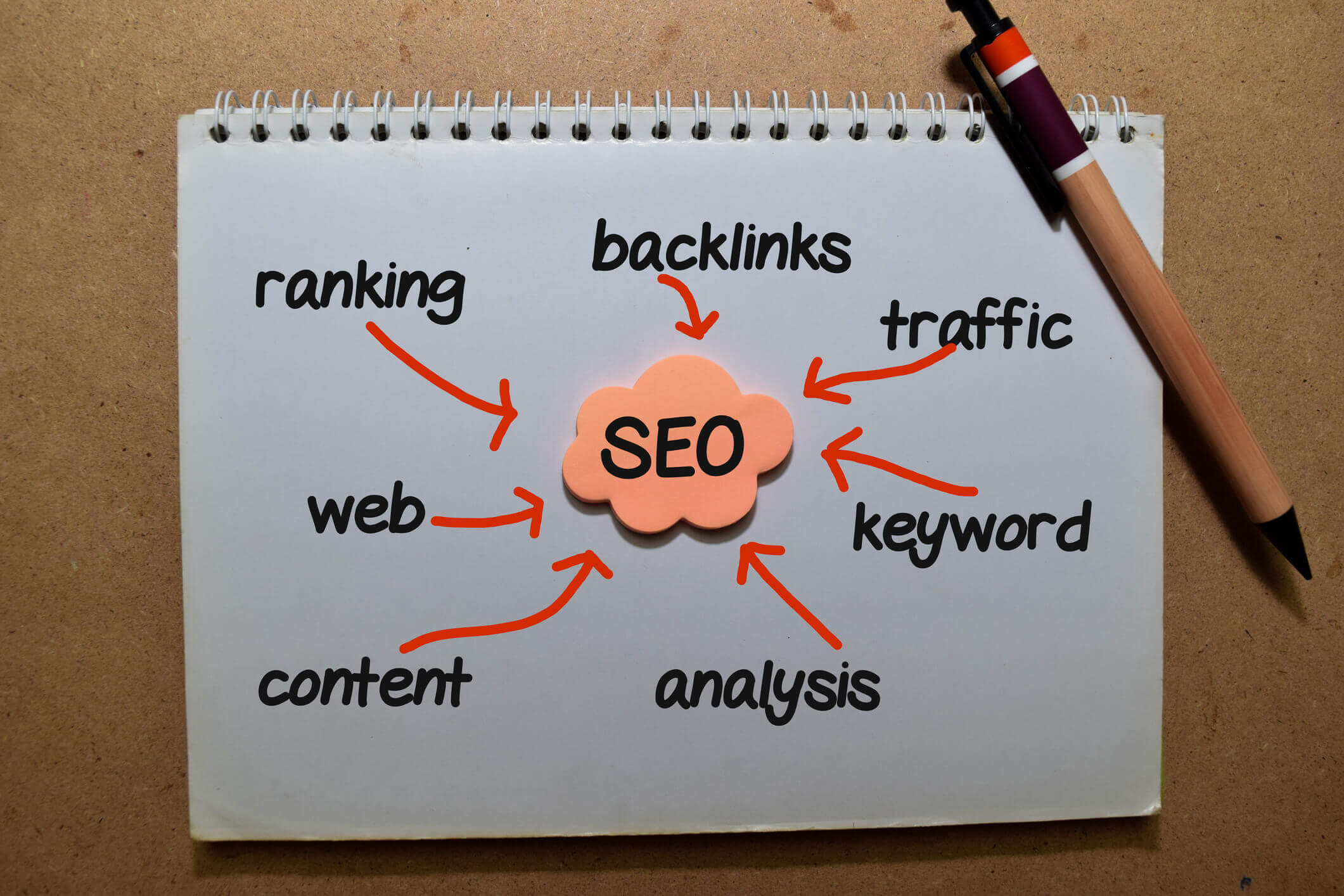
If you’re new to SEO, you may have heard the term “keywords” thrown around, but what exactly are they? Simply put, SEO keywords are the words and phrases in your website’s content that make it possible for people to find your site via search engines like Google.
When someone types in a search query, search engines use complex algorithms to determine which websites are most relevant to their search.
By optimising your website’s content with relevant keywords, you’re making it easier for search engines to understand what your site is about and match it to the right search queries.
Understanding SEO keywords is crucial to developing an effective SEO strategy. Keyword research is a fundamental part of this process. You need to identify the keywords that your target audience is using to search for products or services like yours, and then incorporate those keywords into your website’s content.
This will help your site rank higher in search engine results pages (SERPs), which in turn can drive more traffic to your site.
To optimise your website’s content for different platforms, you need to understand how search engines interpret keywords differently on each platform.
For example, Google’s algorithm for ranking websites on desktop search is different from its algorithm for ranking websites on mobile search. Optimising your content for different platforms requires careful planning and execution.
By taking the time to understand the fundamentals of keyword research and SEO strategy, you’ll be better equipped to develop a successful SEO campaign that drives traffic to your website.
Key Takeaways
- SEO keywords are the words and phrases in your website’s content that make it possible for people to find your site via search engines.
- Keyword research is a fundamental part of developing an effective SEO strategy.
- Optimising your content for different platforms requires careful planning and execution.
Understanding SEO Keywords
Definition and Importance
SEO keywords are words and phrases that describe the content of a web page and help search engines understand what the page is about. They are an essential part of any SEO strategy because they help search engines match a user’s search query with relevant content.
Using relevant keywords in your website content can help improve your website’s visibility and ranking in search engine results pages (SERPs). This is because search engines use keywords to determine the relevance of a web page to a user’s search query.
Types of Keywords
There are several types of keywords that you should be aware of when developing an SEO strategy:
- Seed keywords are the basic keywords that describe the main topic of your website or content. They are usually one or two words long and can be broad or specific.
- Long-tail keywords are longer, more specific phrases that contain multiple words. They are often used by people who are further along in the buying process and have a specific query in mind.
- Head terms are short, broad keywords that are often very competitive. They are usually one or two words long and can be difficult to rank for.
Keyword Intent
It’s important to understand the intent behind a user’s search query when choosing keywords. There are two main types of search intent:
- Commercial intent refers to a user who is looking to make a purchase. These users are often further along in the buying process and are looking for specific products or services.
- Informational intent refers to a user who is looking for information on a particular topic. These users are often at the beginning of the buying process and are looking for more general information.
By understanding the different types of keywords and the intent behind a user’s search query, you can create content that is more relevant to your target audience and improve your website’s visibility and ranking in search engine results pages.
Keyword Research Fundamentals
When it comes to SEO, keyword research is a fundamental step that helps you identify the right keywords to target in your content. Keyword research involves identifying the words and phrases that your target audience is using to search for information related to your business. By targeting the right keywords, you can increase your website traffic and attract more potential customers.
Keyword Research Tools
There are several keyword research tools available that can help you identify the right keywords for your content. The Google Keyword Planner is a popular tool that provides you with information about the monthly search volume and competition level for each keyword. SEMrush and Keywords Explorer are other popular tools that provide you with similar data.
Analysing Search Volume
When conducting keyword research, it’s important to pay attention to the search volume for each keyword. The search volume refers to the number of times a keyword is searched for in a given period, usually a month. You should target keywords with a high search volume to attract more traffic to your website.
Assessing Keyword Difficulty
Another important factor to consider when conducting keyword research is the keyword difficulty score. The keyword difficulty score measures how difficult it is to rank for a particular keyword. Keywords with a high difficulty score are more competitive and may be harder to rank for. You should target keywords with a lower difficulty score to increase your chances of ranking higher in search engine results pages (SERPs).
In conclusion, conducting keyword research is an essential step in any SEO strategy. By identifying the right keywords to target, you can increase your website traffic and attract more potential customers. Use keyword research tools to identify the right keywords, analyse search volume to target high-traffic keywords, and assess keyword difficulty to target keywords that are easier to rank for.
SEO Strategy and Keyword Planning
When it comes to SEO, the right strategy and planning can make all the difference. One of the most important aspects of SEO is keyword planning. By choosing the right keywords, you can help your website rank higher in search engine results pages (SERPs) and drive more traffic to your site.
Developing a Content Strategy
Before you start incorporating keywords into your content, it’s important to develop a content strategy. This involves identifying the types of content you want to create, such as blog posts or category pages, and determining the topics you want to cover.
When developing your content strategy, it’s important to keep your target audience in mind. You want to create content that is unique, relevant, and valuable to your audience. This will help establish your authority in your niche and encourage backlinks to your site.
Incorporating Keywords into Content
Once you have your content strategy in place, it’s time to start incorporating keywords into your content. This involves identifying the keywords and phrases that your target audience is searching for and using them strategically in your content.
When incorporating keywords into your content, it’s important to use them in a natural way. Avoid “keyword stuffing,” which involves using the same keyword over and over again in an attempt to rank higher in SERPs. Instead, focus on creating high-quality content that incorporates your keywords in a way that makes sense.
Measuring Keyword Performance
Finally, it’s important to measure the performance of your keywords. This involves tracking your website’s ranking for each keyword and monitoring changes over time.
One tool that can help with this is Google Trends. This tool allows you to see how often a particular keyword is being searched for and how its popularity has changed over time. By monitoring keyword performance, you can identify which keywords are driving the most traffic to your site and adjust your content strategy accordingly.
In addition to monitoring keyword performance, it’s also important to pay attention to other factors that can impact your website’s ranking, such as meta descriptions and backlinks. By taking a comprehensive approach to SEO, you can help your website rank higher in SERPs and drive more traffic to your site.
Optimising for Different Platforms
When it comes to SEO, optimising for different platforms can make a big difference in your search engine rankings and traffic. In this section, we’ll explore some of the ways you can optimise your SEO campaign for different platforms, including ecommerce, video content, and local SEO.
Ecommerce SEO
If you’re running an ecommerce website, you’ll want to make sure your product and category pages are optimised for SEO. This means including relevant keywords in your product titles, descriptions, and meta tags, as well as using alt tags for your product images. You’ll also want to pay attention to your site’s domain authority and page authority, as these can have a big impact on your search engine rankings.
One important platform to consider when it comes to ecommerce SEO is Amazon. Optimising your product listings for Amazon can help you reach a wider audience and increase your sales. This means using relevant keywords in your product titles, descriptions, and bullet points, as well as optimising your product images and using customer reviews to boost your rankings.
Optimising for Video Content
Video content is becoming increasingly important in the world of SEO, and optimising your videos can help you reach a wider audience and improve your search engine rankings. This means using relevant keywords in your video titles, descriptions, and tags, as well as using closed captions and transcripts to make your videos more accessible to search engines.
YouTube is one of the most important platforms to consider when it comes to video SEO. Optimising your YouTube videos can help you reach a wider audience and improve your search engine rankings. This means using relevant keywords in your video titles, descriptions, and tags, as well as using closed captions and transcripts to make your videos more accessible to search engines.
Local SEO and Landing Pages
If you’re running a local business, you’ll want to make sure your website is optimised for local SEO. This means including your business name, address, and phone number on your site, as well as using relevant local keywords in your content and meta tags. You’ll also want to create landing pages for each of your locations, and include customer reviews and testimonials to boost your rankings.
When it comes to landing pages, you’ll want to make sure they’re optimised for SEO. This means using relevant keywords in your page titles, descriptions, and content, as well as using internal links to boost your page authority. You’ll also want to make sure your landing pages are mobile-friendly and have a clear call-to-action to improve your conversion rates.
Advanced Keyword Tactics
When it comes to SEO keywords, there are several advanced tactics that you can use to take your strategy to the next level. In this section, we’ll explore some of the most effective tactics that you can use to improve your organic traffic, conversions, and linking websites.
Leveraging SERP Features
One of the most effective tactics for advanced keyword research is leveraging SERP features. These are the features that appear on the search engine results page (SERP) in addition to the organic search results. Some examples of SERP features include Google Suggest, People Also Ask, and Clickstream Data.
By leveraging these features, you can gain valuable insights into the search terms that people are using to find your website. This can help you identify new keywords to target, as well as optimize your existing content to better match the search intent of your audience.
Understanding User Behaviour
Another important tactic for advanced keyword research is understanding user behaviour. This involves analyzing the way that people interact with your website, including the search terms that they use, the pages that they visit, and the actions that they take.
By understanding user behaviour, you can identify new opportunities to optimize your content for specific keywords, as well as improve the overall user experience of your website. This can help you improve your organic traffic and conversions, as well as build stronger relationships with your audience.
Beyond Google: Other Search Engines
Finally, it’s important to remember that there are other search engines beyond Google that you can target with your SEO keywords. Some examples include Bing, DuckDuckGo, and Baidu.
While these search engines may not have the same level of traffic as Google, they can still provide valuable opportunities to reach new audiences and drive more organic traffic to your website. By optimizing your content for these search engines, you can expand your reach and improve your overall SEO strategy.
In conclusion, by leveraging SERP features, understanding user behaviour, and targeting other search engines, you can take your SEO keyword strategy to the next level. By using these advanced tactics, you can improve your organic traffic, conversions, and linking websites, and build stronger relationships with your audience.
Frequently Asked Questions
How can one effectively generate keywords for SEO purposes?
Generating keywords for SEO purposes involves identifying the words and phrases that your target audience is likely to use when searching for your product or service. Start by brainstorming a list of potential keywords and phrases that are relevant to your business. You can also use tools like Google Autocomplete, Google Trends, and Google Keyword Planner to generate keyword ideas.
What tools are available for conducting keyword research in SEO?
There are several tools available for conducting keyword research in SEO, including Google Keyword Planner, SEMrush, Ahrefs, Moz Keyword Explorer, and Keyword Tool. These tools can help you identify relevant keywords, analyze keyword competition, and track your search engine rankings.
In what way do keywords contribute to SEO and online marketing strategies?
Keywords play a crucial role in SEO and online marketing strategies. By incorporating relevant keywords into your website content, meta tags, and other elements, you can improve your search engine visibility and attract more targeted traffic to your site. Additionally, using keywords in your online advertising campaigns can help you reach your target audience more effectively.
Could you provide examples of impactful SEO keywords?
Examples of impactful SEO keywords include long-tail keywords like “best vegan restaurants in London”, “affordable SEO services for small businesses”, and “luxury holiday homes in Cornwall. These keywords are specific, relevant, and have a high search volume, making them more likely to attract targeted traffic to your site.
What strategies should be employed for selecting the most suitable SEO keywords?
When selecting SEO keywords, it’s important to consider factors like relevance, search volume, competition, and user intent. Aim to choose keywords that are highly relevant to your business and have a high search volume, but are not overly competitive. Additionally, consider the user intent behind each keyword and ensure that your content meets the needs of your target audience.
What are the different categories of keywords used in SEO practices?
The different categories of keywords used in SEO practices include short-tail keywords, long-tail keywords, geo-targeted keywords, and branded keywords. Short-tail keywords are broad search terms, while long-tail keywords are more specific and targeted. Geo-targeted keywords are location-based, while branded keywords include your company name or product names. It’s important to use a mix of these different keyword categories in your SEO strategy to maximize your search engine visibility and attract targeted traffic to your site.