Porter’s Five Forces is a framework for analyzing the competitive structure of an industry. It was developed by Michael E. Porter, a professor at Harvard Business School.
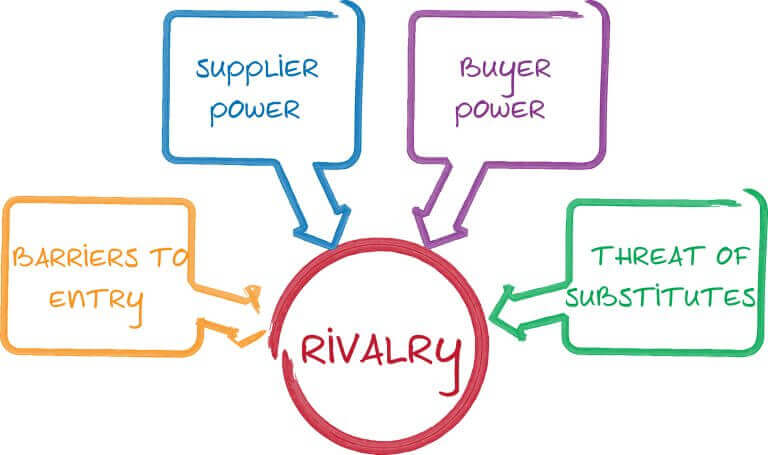
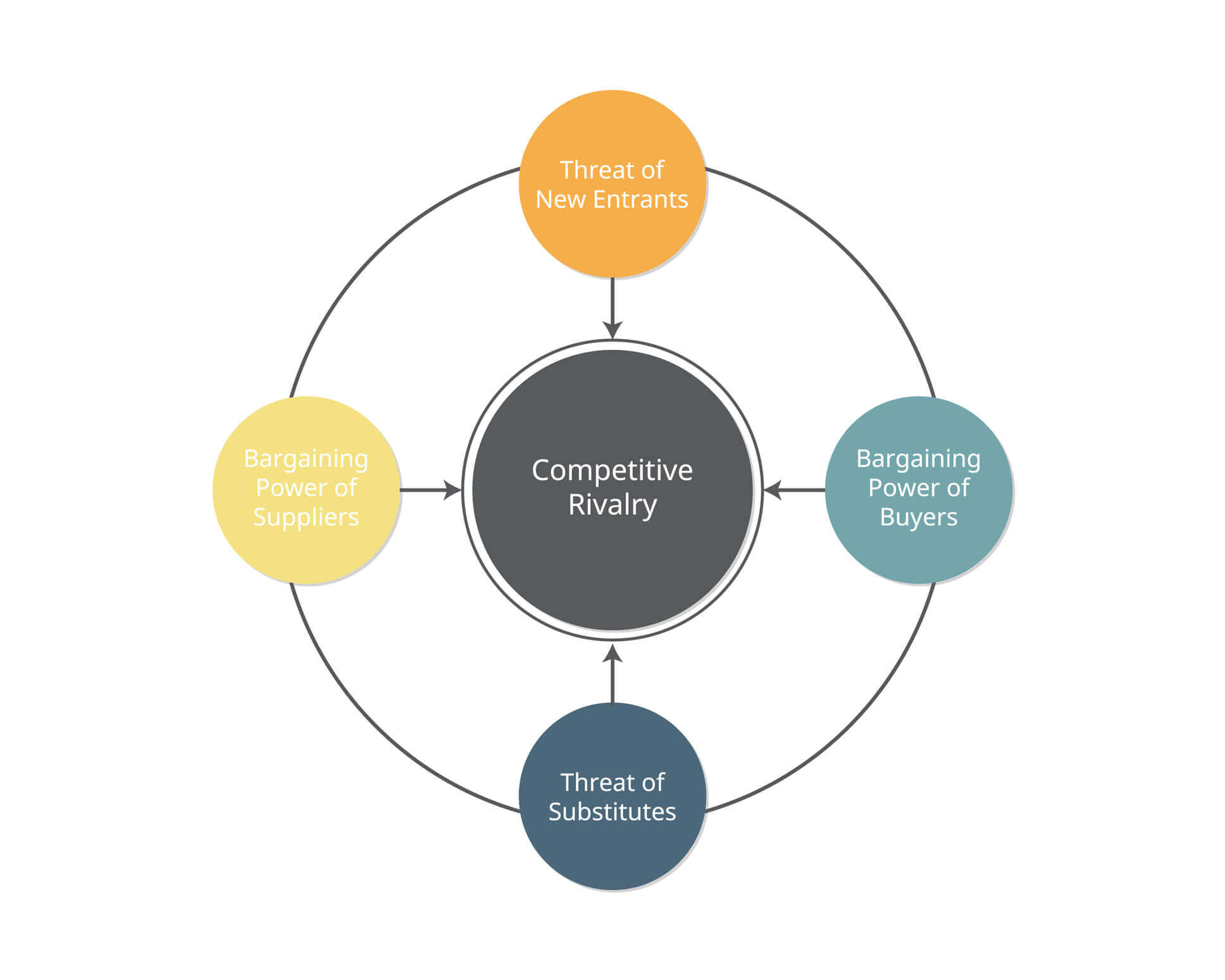
The framework is based on the idea that the profitability of any given industry is determined by the combined strength of five forces: the threat of new entrants, the bargaining power of suppliers, the bargaining power of buyers, the threat of substitute products or services, and the intensity of competitive rivalry.
Understanding Porter’s Five Forces is an essential part of business strategy. By analyzing industry structure, you can identify the key drivers of profitability and assess the potential for future growth.
This can help you to develop a competitive advantage and make informed decisions about where to invest your resources.
Key Takeaways
- Porter’s Five Forces is a framework for analyzing the competitive structure of an industry.
- Understanding the five forces is an essential part of business strategy.
- By analyzing industry structure, you can identify the key drivers of profitability and develop a competitive advantage.
Understanding Porter’s Five Forces
The Concept of Five Forces Model
Porter’s Five Forces Model is a strategic framework that helps businesses to identify and evaluate the competitive forces that shape their industry. The model was developed by Michael Porter in 1979 and has since become a widely accepted tool for analysing industry structure and competitiveness. The five forces that the model considers are:
- Threat of new entrants
- Bargaining power of suppliers
- Bargaining power of buyers
- Threat of substitute products or services
- Rivalry among existing competitors
The model suggests that the intensity of these five forces determines the profitability of an industry. By understanding these forces, businesses can develop strategies to improve their competitive position and profitability.
Relevance in Strategic Decisions
The Five Forces Model is a valuable tool for making strategic decisions. By analysing the competitive forces within their industry, businesses can identify potential threats and opportunities.
For example, if the threat of new entrants is high, a business may need to focus on building barriers to entry, such as establishing strong brand recognition or investing in research and development.
Similarly, if the bargaining power of suppliers is high, a business may need to negotiate better terms or seek alternative suppliers.
The Five Forces Model can also help businesses to identify potential areas for growth and expansion. For example, if the threat of substitute products or services is high, a business may need to focus on developing new products or services that are more difficult to substitute.
Alternatively, if the bargaining power of buyers is high, a business may need to focus on building stronger relationships with their customers.
In summary, the Five Forces Model is a powerful tool for analysing industry structure and competitiveness. By understanding the competitive forces within their industry, businesses can make informed strategic decisions to improve their competitive position and profitability.
Analysing Industry Structure
When using Porter’s Five Forces, one of the main objectives is to analyze the structure of the industry in question. This analysis helps you to understand the competitive landscape of the industry, and how attractive it is to potential entrants.
Determining Industry Attractiveness
One of the key factors in analyzing the structure of an industry is determining its overall attractiveness. This involves looking at factors such as the size of the market, growth potential, and the level of competition.
To determine the attractiveness of an industry, you can use tools such as market sizing and forecasting, as well as conducting a SWOT analysis. This helps you to identify the strengths, weaknesses, opportunities, and threats of the industry, and determine whether it is worth investing in.
Assessing Profit Potential
Another important aspect of analyzing industry structure is assessing the potential for profit. This involves looking at factors such as the bargaining power of suppliers and buyers, the threat of new entrants, and the level of rivalry among existing competitors.
To assess profit potential, you can use tools such as a PEST analysis, which helps you to identify the political, economic, social, and technological factors that may impact the industry. You can also use a Porter’s Five Forces framework to analyze the competitive forces at play in the industry.
By analyzing industry structure, you can gain a better understanding of the competitive landscape and determine the attractiveness and potential profitability of the industry. This information can help you to make informed decisions about investment and strategy.
Evaluating Competitive Rivalry
When using Porter’s Five Forces model to evaluate an industry, competitive rivalry is a crucial factor to consider. This factor assesses the intensity of competition among existing players in the industry.
Intensity of Competition
The intensity of competition can be evaluated by looking at factors such as the number of competitors, the level of product differentiation, and the rate of industry growth. High levels of competition can lead to decreased profitability, while low levels of competition can lead to increased profit margins.
Rivalry Among Existing Competitors
Rivalry among existing competitors is another aspect of competitive rivalry to consider. This factor evaluates how aggressively competitors are trying to gain market share and increase profitability.
Factors that can contribute to high levels of rivalry among existing competitors include high fixed costs, low switching costs for consumers, and similar product offerings.
To evaluate the intensity of competition and rivalry among existing competitors, it can be useful to create a table or list of the major players in the industry and their market share. This can help to identify which companies are the most significant competitors and which have the greatest potential to impact profitability.
Overall, evaluating competitive rivalry is an essential step in using Porter’s Five Forces model to assess an industry. By considering factors such as the intensity of competition and rivalry among existing competitors, you can gain a better understanding of the industry’s dynamics and identify potential areas of opportunity or risk.
Assessing Threat of New Entrants
When using Porter’s Five Forces model, assessing the threat of new entrants is a crucial step in understanding the competitive landscape of an industry. This involves analyzing the barriers to entry and capital requirements that exist for new players in the market.
Barriers to Entry
Barriers to entry refer to the obstacles that prevent new companies from entering an industry and competing with existing players. These barriers can take various forms, such as:
- Legal and regulatory barriers: Certain industries may require specific licenses or permits, which can be difficult and costly to obtain. For example, the healthcare industry requires extensive regulatory compliance, making it difficult for new entrants to compete.
- Economies of scale: Existing companies may have cost advantages due to their size and scale of operations. This can make it difficult for new entrants to achieve similar levels of efficiency and cost-effectiveness.
- Brand recognition: Established companies often have strong brand recognition and customer loyalty, which can be difficult for new entrants to overcome.
- Access to distribution channels: Existing companies may have exclusive relationships with suppliers or distributors, making it difficult for new entrants to access these channels.
Capital Requirements
Capital requirements refer to the amount of money that new entrants need to invest in order to enter an industry and compete effectively. This can include:
- Capital expenditures: New entrants may need to invest in expensive equipment, facilities, or technology in order to compete effectively.
- Marketing and advertising: Building brand recognition and attracting customers can be costly, particularly in industries with strong existing players.
- Research and development: Developing new products or services can require significant investment in research and development, which can be a barrier to entry for new companies.
Overall, understanding the barriers to entry and capital requirements that exist in an industry is essential for assessing the threat of new entrants. By identifying these factors, companies can develop strategies to defend against new competition and maintain their competitive advantage.
Bargaining Power of Suppliers
In Porter’s Five Forces model, the bargaining power of suppliers refers to the ability of suppliers to influence the price and quality of goods and services they provide to their customers. In this section, we will explore the two main factors that determine the bargaining power of suppliers: supplier power and dependency on raw materials.
Supplier Power
Supplier power is the degree to which suppliers can influence the prices and terms of trade for the products or services they supply. If there are only a few suppliers in the market, they can charge higher prices and impose more stringent terms of trade. This is because the buyers have limited options and cannot easily switch to alternative suppliers.
On the other hand, if there are many suppliers in the market, they will have less bargaining power. Buyers can easily switch to alternative suppliers, which puts pressure on suppliers to lower their prices and improve their terms of trade.
Dependency on Raw Materials
Another factor that affects the bargaining power of suppliers is the degree of dependency on raw materials. If a company is heavily reliant on a particular raw material, it will have less bargaining power with its suppliers. This is because the supplier can charge higher prices and impose more stringent terms of trade, knowing that the buyer has no other options.
However, if a company has multiple sources of raw materials, it will have more bargaining power with its suppliers. The supplier will have to compete with other suppliers, which puts pressure on them to offer better prices and terms of trade.
In conclusion, the bargaining power of suppliers is an important factor to consider when analyzing the competitive landscape of an industry. Companies that have strong bargaining power with their suppliers can negotiate better prices and terms of trade, which can give them a competitive advantage.
Conversely, companies that have weak bargaining power with their suppliers may face higher costs and lower profitability.
Bargaining Power of Buyers
As a business, it is important to understand the bargaining power of your buyers, which refers to the ability of your customers to negotiate prices and terms with you. This power can be influenced by several factors, including the size and concentration of buyers, the availability of substitute products, and the importance of your product to the buyer’s business.
Buyer Power
If your buyers have a high level of bargaining power, they can demand lower prices, better quality, and more favourable terms from you. This can put pressure on your profit margins and make it difficult to compete in the market. On the other hand, if your buyers have a low level of bargaining power, you may be able to charge higher prices and offer fewer concessions.
Impact on Pricing and Quality
The bargaining power of buyers can have a significant impact on your pricing strategy and the quality of your products. If your buyers have a high level of bargaining power, you may need to lower your prices to remain competitive.
This could lead to lower profit margins and a reduction in the quality of your products. Conversely, if your buyers have a low level of bargaining power, you may be able to charge higher prices and invest more in product quality.
To summarise, understanding the bargaining power of your buyers is crucial to developing a successful pricing strategy and maintaining a competitive position in the market. By assessing the factors that influence buyer power and adjusting your approach accordingly, you can maximise your profits and provide the best possible value to your customers.
Threat of Substitute Products or Services
As a business owner, you need to be aware of the threat of substitute products or services. This is one of the five forces that make up Porter’s Five Forces model, and it refers to the possibility of customers switching to a different product or service that serves the same purpose as your own.
Evaluating Substitutes
To evaluate substitutes, you need to identify the key factors that drive customers to choose your product or service over others.
For example, if you run a coffee shop, your customers may choose your coffee because of its flavour, quality, or convenience.
If a substitute product or service can offer these benefits at a lower cost or with greater convenience, it may pose a threat to your business.
To evaluate the threat of substitutes, you can use a SWOT analysis, which stands for Strengths, Weaknesses, Opportunities, and Threats. This analysis can help you identify the strengths and weaknesses of your own product or service, as well as the opportunities and threats posed by substitute products or services.
Effect on Market Share
The threat of substitute products or services can have a significant impact on your market share. If a substitute product or service gains popularity, it can reduce the demand for your own product or service, which can lead to a decrease in market share and revenue.
To mitigate the threat of substitutes, you can focus on improving the quality, convenience, or other factors that make your product or service unique. You can also differentiate your product or service from substitutes by offering additional features or benefits that are not available with substitutes.
In summary, the threat of substitute products or services is an important factor to consider when evaluating your business’s competitive position. By evaluating substitutes and their impact on your market share, you can develop strategies to mitigate this threat and maintain your business’s profitability.
Strategic Implications of Five Forces
Porter’s Five Forces framework is a powerful tool for strategic analysis. It provides a clear and structured approach to understanding the competitive landscape of your industry and identifying the key drivers of profitability. By using the Five Forces framework, you can gain insights into the underlying dynamics of your market and develop strategies to outmanoeuvre your competitors.
Influencing Business Models
One of the key strategic implications of the Five Forces framework is that it can help you to identify the most appropriate business model for your company. By analysing the competitive landscape of your industry, you can identify the key drivers of profitability and develop a business model that is optimised for success.
For example, if the threat of new entrants is high, you may need to focus on building a strong brand and developing proprietary technology to protect your market position.
Guiding Competitive Tactics
Another strategic implication of the Five Forces framework is that it can help you to develop effective competitive tactics. By understanding the underlying drivers of competition in your industry, you can develop strategies to outmanoeuvre your competitors and gain a competitive advantage.
For example, if the bargaining power of suppliers is high, you may need to develop alternative supply chains or negotiate more favourable terms with your suppliers.
Overall, the Five Forces framework is a powerful tool for strategic analysis that can help you to develop effective business models and competitive tactics. By using this framework, you can gain insights into the underlying dynamics of your market and develop strategies to outmanoeuvre your competitors.
Applications in Various Industries
Porter’s Five Forces model is a useful tool for analyzing different industries and their competitive dynamics. By understanding the forces that shape an industry’s profitability, companies can make strategic decisions to improve their performance. Here are some examples of how the model has been applied in various industries.
Case Studies: Automotive and Airline Industries
In the automotive industry, Porter’s Five Forces model can help companies understand the competitive dynamics of the market.
For example, the model can be used to analyze the bargaining power of suppliers and buyers, the threat of new entrants, and the intensity of competitive rivalry.
By understanding these forces, companies can make strategic decisions to improve their profitability.
Similarly, in the airline industry, the model can be used to analyze the competitive dynamics of the market. For example, the model can be used to analyze the bargaining power of suppliers, the threat of substitutes, and the intensity of competitive rivalry. By understanding these forces, companies can make strategic decisions to improve their profitability.
Adapting to Industry Dynamics
One of the key benefits of Porter’s Five Forces model is that it can help companies adapt to changing industry dynamics.
For example, as industries grow and mature, the competitive dynamics can change. By using the model to analyze these changes, companies can make strategic decisions to adapt to the new environment.
Another way that companies can use the model is to identify new opportunities for growth. By analyzing the competitive dynamics of an industry, companies can identify areas where there is potential for growth and make strategic decisions to capitalize on these opportunities.
In conclusion, Porter’s Five Forces model is a useful tool for analyzing different industries and their competitive dynamics. By understanding the forces that shape an industry’s profitability, companies can make strategic decisions to improve their performance.
Whether you are in the automotive industry, airline industry, or any other industry, the model can help you make informed decisions and stay ahead of the competition.
Integrating with Other Analytical Tools
Porter’s Five Forces analysis is a powerful tool for understanding the competitive forces within an industry. However, it is not the only tool available for strategic analysis.
In fact, Porter’s Five Forces can be used in conjunction with other analytical tools to provide a more complete picture of the competitive landscape and inform strategic decision-making.
Complementing SWOT Analysis
One way in which Porter’s Five Forces can be integrated with other analytical tools is by complementing SWOT analysis. SWOT analysis is a framework used to identify an organisation’s strengths, weaknesses, opportunities, and threats.
By combining Porter’s Five Forces with SWOT analysis, you can gain a deeper understanding of the competitive forces at play in your industry, as well as the internal factors that may impact your organisation’s ability to compete.
For example, you might use Porter’s Five Forces to identify the key competitive forces in your industry, such as the bargaining power of suppliers or the threat of new entrants. You could then use SWOT analysis to identify your organisation’s strengths and weaknesses in relation to these competitive forces.
This would allow you to develop a more nuanced understanding of your organisation’s competitive position and inform more effective strategic decision-making.
Synergy with Blue Ocean Strategy
Another way in which Porter’s Five Forces can be integrated with other analytical tools is by using it in conjunction with Blue Ocean Strategy. Blue Ocean Strategy is a framework used to identify new markets or industries that are not yet well-served by existing products or services.
By combining Porter’s Five Forces with Blue Ocean Strategy, you can identify new market opportunities that are not yet well-served by existing products or services, and develop strategies to exploit these opportunities.
For example, you might use Porter’s Five Forces to identify industries or markets that are highly competitive and difficult to enter. You could then use Blue Ocean Strategy to identify new markets or industries that are not yet well-served by existing products or services.
By combining these two analytical tools, you can identify new market opportunities that are not yet well-served by existing products or services, and develop strategies to exploit these opportunities.
Overall, integrating Porter’s Five Forces with other analytical tools can provide a more complete picture of the competitive landscape and inform more effective strategic decision-making.
By combining Porter’s Five Forces with tools such as SWOT analysis and Blue Ocean Strategy, you can gain a deeper understanding of the competitive forces at play in your industry, identify new market opportunities, and develop more effective strategies to compete in your industry.
Frequently Asked Questions
How can Porter’s Five Forces framework assist in competitive analysis?
Porter’s Five Forces model is a powerful tool that can help businesses analyse their competitive environment. By examining the five key forces that shape competition in an industry, businesses can gain a better understanding of the dynamics at play and make informed strategic decisions.
The five forces are: the threat of new entrants, the bargaining power of suppliers, the bargaining power of buyers, the threat of substitute products or services, and the intensity of competitive rivalry.
In what ways does Porter’s Five Forces model contribute to strategic management?
Porter’s Five Forces model can provide valuable insights into a company’s strategic position within its industry. By assessing the strength of each of the five forces, businesses can identify areas where they may be at a disadvantage and develop strategies to address these challenges.
The model can help businesses to identify potential threats and opportunities, and to make informed decisions about investments, pricing, and other strategic initiatives.
What are the advantages and limitations of applying Porter’s Five Forces in business?
One advantage of using Porter’s Five Forces model is that it provides a structured framework for competitive analysis. The model is widely recognised and used by businesses and academics alike, which means that there is a wealth of information available to help businesses apply the model effectively.
However, one limitation of the model is that it can be time-consuming to apply, and it may not always be possible to gather all of the necessary information to make a comprehensive analysis.
How does one apply Porter’s Five Forces analysis in a practical business context?
To apply Porter’s Five Forces model in a practical business context, businesses should start by identifying the key players in their industry and assessing the strength of each of the five forces. This involves gathering information about the competitive landscape, including market share, pricing, and product differentiation.
Once this information has been gathered, businesses can use the model to identify areas where they may be at a disadvantage and develop strategies to address these challenges.
When is it most appropriate to conduct an analysis using Porter’s Five Forces?
Porter’s Five Forces model is most appropriate when a business is looking to assess its competitive position within a specific industry. The model can be used to identify potential threats and opportunities, and to develop strategies to address these challenges.
It is particularly useful when a business is considering entering a new market, or when it is looking to make strategic investments or pricing decisions.
Can you provide a real-world example of Porter’s Five Forces analysis in action?
One example of Porter’s Five Forces analysis in action is the smartphone industry. In this industry, the threat of new entrants is relatively low due to the high barriers to entry, such as the need for significant investment in research and development.
The bargaining power of suppliers is also relatively low, as there are many suppliers of key components such as screens and processors. However, the bargaining power of buyers is high, as consumers have a wide range of options to choose from. The threat of substitute products is also high, as there are many alternatives to smartphones, such as tablets and laptops.
Finally, the intensity of competitive rivalry is high, as there are many established players in the market, such as Apple, Samsung, and Huawei, all competing for market share.