Generative AI is the center of attention in SEO. Already 88% of marketers rely on AI in their jobs (SurveyMonkey). And the remaining are trying to adopt it.
In fact, artificial intelligence is the most popular blogging niche in 2025, according to Backlinko.

But the question is: Is it really saving time, effort, or money to SEO writers—or is it nothing but hype?
I have used generative AI myself, and I can tell you it does. But I will back my claims with real data and my experience in this article. So, keep up with me to find out.
Can generative AI save time and cost and increase efficiency in SEO writing?
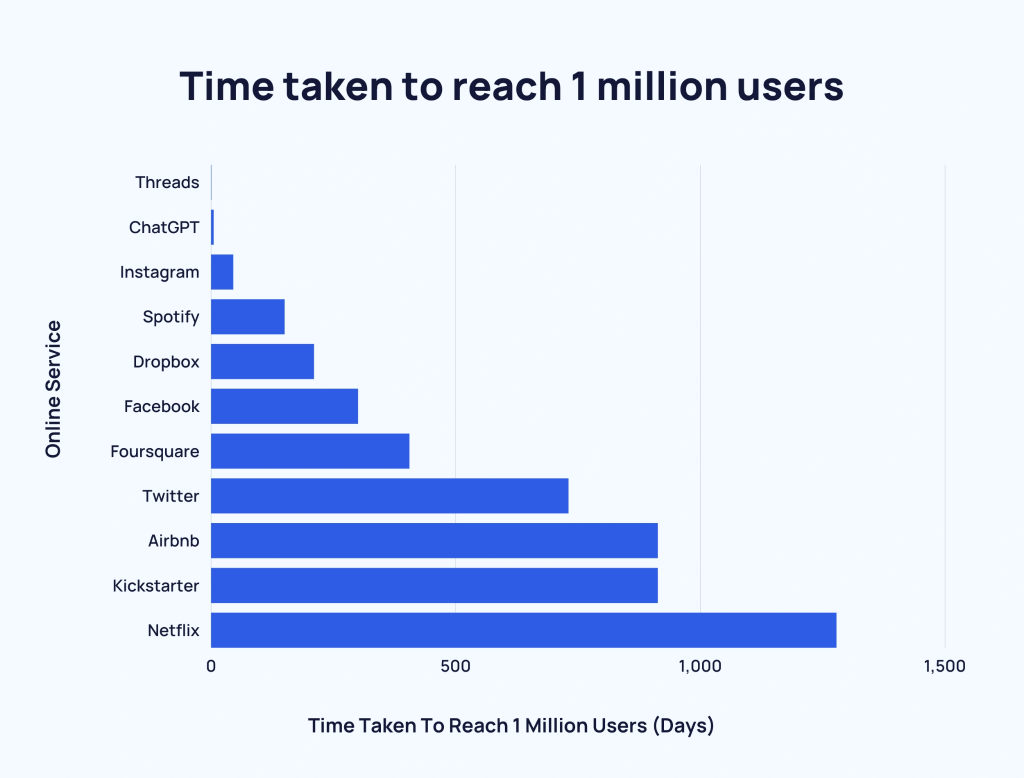
When ChatGPT was launched in November 2022. It became the fastest software to reach a million users within 5 days. Now almost 80% of bloggers use it and write more than 7.5 million blogs each day.
1. Can AI save time?
Absolutely—if used smartly. AI streamlines my repetitive tasks like content drafting, ideation, title tags, meta descriptions, and alt texts. This reduces writing time by almost 30%.

And not just me, research proves that. It was done on 27 students (native + non-native) of Carnegie Mellon University, Pennsylvania. They found a 65% reduction in writing time.
And this increased speed does not mean that the writing quality is reduced. Because the students in the above research improved their grades from B+ to A.
AI does not just help with content creation. Actually, it takes 60% to 70% of the workload, letting you and your team focus on creativity and optimization. Which reduces time and allows you to improve quality.
2. Can AI save money?
When you cut down production time as explained above, your costs automatically reduce. You can write more content in less time.
The average salary of a content writer in the USA is $61,254 a year, which is around $29.45 per hour (Glassdoor). And the cost of ChatGPT is only $20 a month. Its latest model can write up to 4,096 tokens (3000 words) in a single output.
While if you write with 30 words a minute, it will take 33 minutes to write only 1000 words. Even reading a thousand words takes 6.67 minutes for most of us.
I am not saying you will not need a human after that; you will. But you will have to manage a smaller team. Your major effort will be to edit and improve the quality of AI content. And you can use AI for that too, like rewording-tool.com.
It can simplify AI text and make it look more human. Plus, you can choose different tones from rewording-tool.com to improve the tone.
This way you can reduce your production costs. Just like McKinsey Digital has proved in their research, they say that a company using generative AI can see a 5–15% reduction in overall marketing spend, equal to a global potential of $463 billion annually.
3. Can AI increase efficiency?
Yes, and not just with writing. AI improves every stage of the SEO process. Let’s have a look at AI’s role in major aspects of SEO one by one.
- Keyword research: AI-powered tools like Surfer SEO and Clearscope read the intent of users and cluster relevant keywords according to your niche and topic. This improves your targeting and reduces the time spent by over 70% compared to traditional manual analysis.
- Content planning: We have already covered draft generation. AI can also generate briefs, outlines, and even content calendars in a fraction of the time. This helps you manage productivity and eliminates repetitive tasks. According to Salesforce, 71% of marketers say AI frees up time for strategic initiatives.
- Content publishing: The effectiveness of your strategy depends on your execution. And AI helps with that too. Tools like Yoast SEO check your content for proper keyword placement and readability of your content. The 1-2% rule is the best approach, which means you can use your primary keyword after every 100 to 200 words. This is considered a good ratio, and AI ensures that.
In simple words, AI makes your SEO smarter and more targeted, delivering better results with less manual effort.
The best way to use generative AI in your SEO strategy
I have learned through my experience of using AI in content writing that it benefits only if used the right way. So the things that I consider while using generative AI are:
- Use a human-AI hybrid model: AI tools are not sophisticated enough to work without humans. So let them handle the first draft, keyword research, and SERP analysis. Then, have human editors optimize tone, add expertise, and fine-tune structure.
- Use AI for data, not just words: With SEO research tools like MarketMuse and Semrush, combine keyword data, NLP insights, and real-time SERP analysis in your content. Additionally, use Venngage or Piktochart to generate infographics for your content. Make your content not just fast but strategic.
- Keep updating and humanizing: AI content must still pass Google’s helpful content updates. So, periodically update your AI-assisted content to keep it fresh, accurate, and valuable. And check its AI similarity with the AI detector before publishing. This tool at ai-detector.info will help you detect and humanize AI content. Single Grain says that updating blog posts increases traffic by 96%.
Conclusion
Generative AI isn’t a magic wand. But it is a powerful tool. If used correctly, it saves time, lowers costs, and improves your SEO efficiency in ways that were unimaginable just a few years ago.
Just don’t replace your team—empower them with AI. Let it handle the heavy lifting so your humans can focus on the high-impact strategy that gets results.
So yes, generative AI really can transform your SEO. Just don’t forget to keep it human where it matters most.