
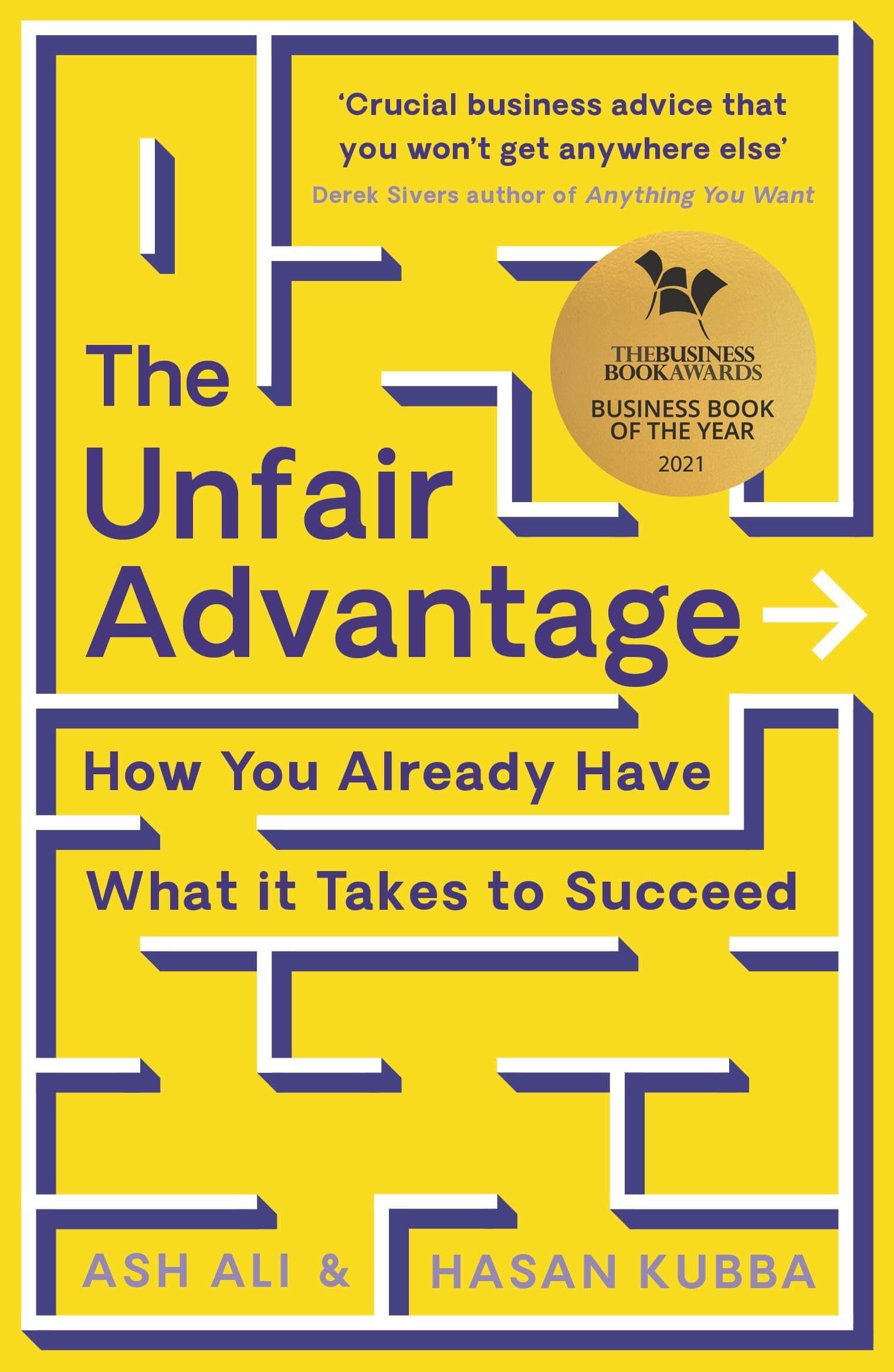
Overview of The Unfair Advantage by Ash Ali & Hasan Kubba
The Unfair Advantage by Ash Ali and Hasan Kubba is a book that explores how entrepreneurs and individuals can leverage their unique strengths and advantages to succeed in business and life. The authors argue that everyone has an “unfair advantage” – a combination of resources, skills, experiences, and circumstances – that can be used to achieve success. The key is to identify and use these advantages strategically, rather than relying solely on traditional measures of success, like talent, education, or financial resources.
The book introduces a new way of thinking about success, emphasising that it’s not about having the most resources, but about using the resources you have in the most effective way. Ali and Kubba outline different types of unfair advantages, such as personal skills, networks, mindset, timing, and access to capital, among others. They explain how each of these factors can contribute to business success, and how recognising and leveraging them can make the difference between success and failure.
The authors also highlight the concept of “entrepreneurial thinking” and how those who embrace this mindset are more likely to recognise and capitalise on their unique advantages. The Unfair Advantage is a guide for those who want to break free from the conventional path and find their own way to succeed. It challenges the notion that success is determined by luck or external circumstances, instead emphasising the importance of self-awareness, resourcefulness, and creativity.
Core Ideas of The Unfair Advantage:
- The Concept of Unfair Advantages:
- The book’s central idea is that everyone has unique advantages, such as their background, networks, or personal traits, which they can use to achieve success. These are often seen as “unfair” because they provide a significant edge over others.
- Example: If you grew up in a family with a strong business background, you may have access to valuable mentorship and networks, which is an advantage that others may not have.
- Recognising Your Own Unfair Advantage:
- One of the first steps in the book is recognizing what your unfair advantages are. This can include anything from your skills and experiences to your social connections and access to opportunities.
- Example: Perhaps you have a unique skill set in coding, or a close relationship with a key influencer in your industry. These advantages can give you an edge in the market.
- Using Your Advantage Strategically:
- Once you’ve identified your unfair advantages, the next step is to use them strategically. Ali and Kubba emphasise that success comes not just from having advantages, but from knowing how to leverage them in the right way.
- Example: If you have access to venture capital, you can use that funding to scale your business quickly. Or, if you have an extensive network in a specific industry, you can use those connections to build partnerships.
- Mindset and Resilience:
- The book discusses the importance of having the right mindset. Entrepreneurs with an entrepreneurial mindset are more likely to identify and leverage their advantages. They embrace failure as a learning experience and view challenges as opportunities for growth.
- Example: An entrepreneur with resilience might face a setback, like losing a major client, but instead of giving up, they use the situation to pivot or innovate and find new opportunities.
- The Role of Timing and Environment:
- Timing is an important factor in leveraging unfair advantages. The book explains how being in the right place at the right time, or having the right environment, can amplify your chances of success.
- Example: If you are in the tech industry during a period of rapid innovation, you may have an unfair advantage by being in an environment that fosters creativity and technological advancement.
- Building Networks and Relationships:
- A key advantage in business is the ability to network and build relationships. The book emphasises how personal networks and strong relationships can be leveraged for growth, support, and opportunities.
- Example: By attending industry events and connecting with like-minded professionals, you can gain insights, mentorship, and partnerships that can significantly boost your career.
Practical Implementation in Business and Soft Skills
Applying The Unfair Advantage in Business:
- Identify and Leverage Your Personal Strengths:
- Start by assessing your personal strengths and advantages. What do you bring to the table that others may not have? Use this knowledge to inform your business decisions and strategies.
- Example: If you have strong communication skills, use them to build strong relationships with clients and partners, or consider leading presentations and marketing efforts.
- Maximise Your Network and Relationships:
- Build and nurture your professional network. Relationships with others can be one of your greatest unfair advantages. Focus on expanding your network by attending events, joining industry groups, and connecting with potential mentors and partners.
- Example: Reach out to people you admire in your field, offering to collaborate or exchange ideas. Cultivating these relationships can lead to new opportunities and partnerships.
- Develop an Entrepreneurial Mindset:
- Cultivate a mindset focused on innovation, resilience, and growth. Understand that failure is part of the journey, and use setbacks as learning opportunities. This mindset will help you adapt to challenges and find creative solutions.
- Example: When faced with a setback, instead of getting discouraged, consider how you can pivot and use your existing advantages to overcome the challenge.
- Be Strategic About Timing:
- Pay attention to timing and market conditions. Recognising the right moment to launch a product or make a business move can significantly enhance your chances of success. Understand when opportunities arise and be prepared to act quickly.
- Example: If you notice a gap in the market or an emerging trend, take advantage of it by introducing a new product or service that aligns with the opportunity.
- Continuous Learning and Adaptation:
- Always be learning and evolving. The business world is constantly changing, and your ability to adapt and improve will be a major advantage. Continuously assess your strengths, weaknesses, and the opportunities around you.
- Example: Invest in training or courses that will enhance your skills, such as learning a new software tool or refining your leadership abilities.
- Optimise Resources:
- Use your resources wisely. Whether it’s financial capital, human resources, or technology, being strategic about how you utilise resources can give you a significant edge over competitors.
- Example: If you have access to capital, use it to invest in technology that automates tasks or enhances productivity, thus giving you more time and energy for strategic activities.
Conclusion
The Unfair Advantage by Ash Ali and Hasan Kubba provides a fresh perspective on how individuals can leverage their unique resources, experiences, and strengths to succeed. Rather than relying solely on conventional methods of success, the book advocates for recognizing and maximizing your personal advantages—whether through skills, timing, relationships, or mindset. By identifying these advantages and using them strategically, you can increase your chances of success and accelerate your business growth.
Key Takeaways
- Everyone Has an Advantage: Recognise and leverage your personal strengths and resources to gain an edge.
- Mindset is Key: Cultivate an entrepreneurial mindset that embraces innovation, resilience, and adaptability.
- Relationships Matter: Build and nurture a strong network of mentors, peers, and collaborators.
- Timing is Critical: Recognise the right moment to take action and capitalise on opportunities.
- Continuous Improvement: Keep learning and adapting to maintain a competitive edge.
- Strategic Use of Resources: Make the most of the resources available to you to streamline your efforts and accelerate growth.
By embracing your unfair advantage, you can create a path to success that is uniquely your own, with more control and potential for growth.