
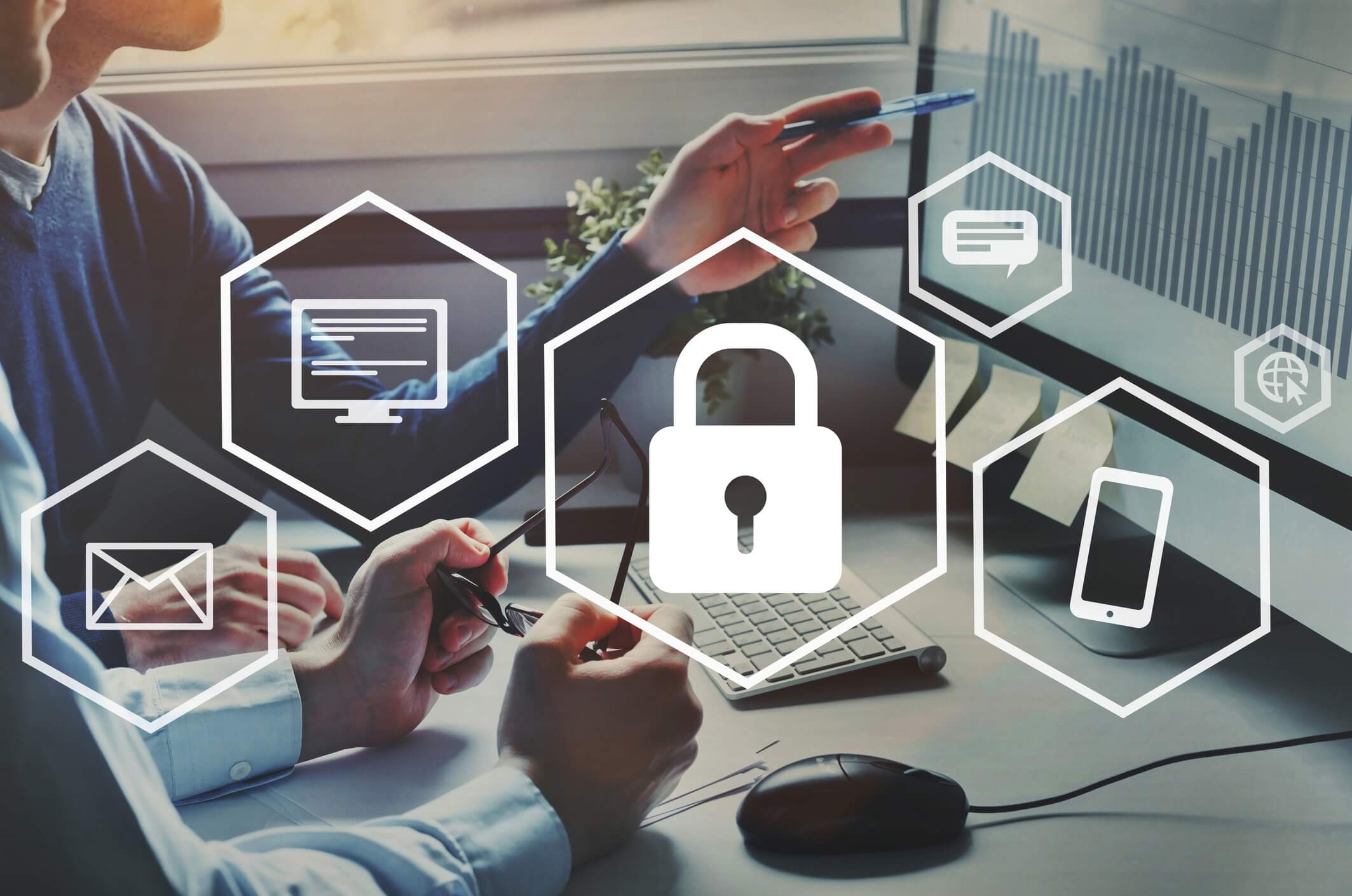
Are you doing all you can to protect your business from cyber threats? The risk of cybercrime is rapidly evolving and becoming more threatening by the second, stealing and damaging systems and sensitive data from businesses, and ultimately causing massive economic damage.
But tell me, is your organisation truly prepared for the violence? Most companies still operate under weak security policies and obsolete frameworks. One breach can completely shatter trust and irreparably damage operations.
In today’s world, robust cybersecurity isn’t merely a technical issue – it’s a business issue. This article describes the best practices your organisation can adopt to mitigate risks and bolster cyber defences.
1. Create a Strong Cybersecurity Policy
Your first line of defence begins with a well-articulated and formulated cybersecurity policy. It also helps caregivers mitigate errors.
- Cleanup procedures for sensitive material
- Guidelines on Email & Internet Usage
- Passcode criteria
- Courses of action in the event of a cybersecurity breach
It is harmful to caregivers or to reduce care errors. Forging active intrusion policies strengthens a policy’s efficiency. Template preservation is a defensive strategy that redefines the corrective lens. Of all concerned, avoid narrowing the perimeter of breach survivors. The irony, mirage-resourced centred relativity policies widen the beam as they function best as normative labour maps devoid of structured spars.
2. Train Employees on Cybersecurity
Humans commit errors, one of the most significant ways of breaching sensitive data. People will likely click on a false link, download virus-infected files, or get tricked. Regular training does help them overcome these risks. Make sure to discuss:
- Phishing recognition
- Safe searching practices online
- Setting strong passwords
- The ability to identify unusual behaviour
Conduct short workshops, online tutorials, and simulations. Make it easy. Adequate knowledge of what to look for can enhance your organisation’s safety.
3. Use Multi-Factor Authentication (MFA)
Passwords alone don’t suffice anymore. Adding extra layers of security, such as Multi-Factor Authentication (MFA), is a must. It requires providing two or more identity proofs, such as:
- A password (something you know)
- A code sent to your telephone (something you have)
- A fingerprint (something you are)
Even if a malicious user acquires your password, they won’t be able to log in without a second factor. Use MFA for sensitive emails, financial tools, and other systems.
4. Keep Software and Systems Updated
Old software harbouring unpatched vulnerabilities is a common target of hacker attacks. These ‘holes’ are plugged by software makers during updates. Leaving the updates uninstalled keeps your systems vulnerable. Use this logic on:
- Operating Systems (Windows, Mac OS, and Linux)
- Web Browsers
- Plugins and Applications
- Antivirus Tools
Enable automatic updates whenever possible. This routinely overlooked step protects systems while saving money in the long term.
5. Secure Your Network with Firewalls and VPNS
Firewalls control and monitor incoming and outgoing traffic. They protect against malicious access and internal data. You can use both hardware and software firewalls simultaneously.
A VPN, or Virtual Private Network, encrypts most internet traffic. Remote work makes VPNS critical, as VPNS conceal IP addresses and protect data from espionage. All company and remote staff devices should use a trusted VPN.
6. Backup Data Regularly
Losing all the files in a virus or ransomware attack is scary. Backups enable swift recovery. The 3-2-1 rule can be applied with ease:
- 3 copies of your data should be kept
- 2 copies have to be stored on multiple devices (examples being external drives or cloud)
- One copy has to be kept off-site or in the cloud.
Check your backups frequently. They must be restorable if the situation demands it. Reliable backups that can be relied on ultimately reduce the time and money wasted during such crises.
7. Use Strong, Unique Passwords
Cracking weak passwords is child’s play. Strong passwords are:
- No less than a dozen characters
- A combination of upper and lowercase letters, numbers, and symbols
- Unique to every account
Avoid simple names, birthdays, and patterns. Use a password manager to create and store secure passwords. Change them often and avoid reusing them.
8. Limit Access to Sensitive Information
Not every employee should have access to all data. Limit access based on job description using role-based access control (RBAC). For instance:
- Human Resources can view employee records.
- Billing systems are only accessible to finance staff.
Damage from an account hack is limited. Therefore, it is recommended that you regularly remove access for all ex-employees and unused accounts.
9. Monitor Systems and Networks
Act early and use the problem monitoring tools to look for:
- Expecting activity
- Failed logins
- Access file changes
All these actions will help prevent potential cyberattacks. Security Information and Event Management (SIEM) tools gather and analyse data from multiple sources. Issues are detected as soon as possible, allowing the IT department to act quickly.
10. Protect Mobile Devices
Cybersecurity measures seldom consider smartphones and tablets. Despite connecting to company resources, these devices carry invaluable information. Mobile devices should be secured through:
- PINS or fingerprints
- Device encryption
- The ability to remotely erase data
- Antivirus software
Set clear policies and security provisions for personnel who bring their own devices. Mobile devices require the same stringent attention as desktop systems.
11. Manage Third-Party Risks
Many small and medium-sized enterprises engage with vendors, independent contractors, or use third-party applications. Poorly managing any of these can expose your company to high levels of risk. Take the time to:
- Review their cybersecurity policies.
- Guard their data by establishing non-disclosure agreements.
- Provide them with the minimum access necessary.
Always restrict access to third-party users. Grant the removal of those privileges once the task is complete. Your business’s security system is as good as the weakest link in your company.
12. Use Encryption to Protect Data
Encryption is scrambling your data so that only someone with the correct key can decipher it. Information such as the following should be encrypted:
- Emails
- Files
- Databases
- Web traffic (HTTPS)
This is critically important when dealing with personally identifiable information, sensitive financial data, and proprietary business secrets. Even if hackers gain access to secure files, unscrambling remains impossible without the proper decryption keys.
13. Plan for Incidents with a Response Strategy
Every system is vulnerable, and a solid breach response plan often minimises damage. Your incident response plan needs the following:
- Detections of breach
- Actions and notifications
- Stopping the breach
- Recovering lost data
- Customer interactions
Mock drills will help you practice your plan. The quicker, the better, and the faster the team responds, the less damage.
14. Protect E-Commerce Platforms
Cybercriminals frequently target online stores. If you own an e-commerce platform, consider these steps:
- Secure payment gateways
- Install SSL certificates
- Monitor login and check out pages
- Conduct malware scans
A prime example would be WooCommerce. Updating your site and using proper secure themes and plugins offers adequate protection. WooCommerce banner ads promoting WooCommerce secure deal banners are a plus, but backend security is essential. Trust = loyalty.
15. Promote a Security Culture
Responsible cyber behaviour isn’t the responsibility of the IT Department alone; it is a shared responsibility that involves every person in an organisation. Foster a culture where everyone:
- Notifies of matters of concern immediately
- Adheres to policies and protocols
- Remains vigilant of emerging and new threats
Tracking perpetrator emails, phishing scams, and fake emails should be rewarded, along with other forms of ID breaches. Communication about security should be encouraged freely. All aspects of teamwork need to be enhanced.
Conclusion
With each new technological advancement comes newer cyber-attack methods that are much harder to detect. Ignoring cyber defence opens a company to its most vulnerable state. Cybersecurity is a living endeavour with strategic responses, policies, staff training, fortified infrastructure, and proactive measures implementing ongoing protective functions.
Planning for risk assessments ahead enhances the ability to remain clear and unbreeched. Rather than reacting to a security issue, establish measures for solutions.


