If you’re running an ecommerce business, you’ve probably heard the term “sales funnel” before. But what exactly is an ecommerce sales funnel, and how can you use it to increase your sales and grow your business?
In this article, we’ll take a closer look at what an ecommerce sales funnel is, the different stages of the funnel, and some strategies you can use to improve your funnel and drive more sales.
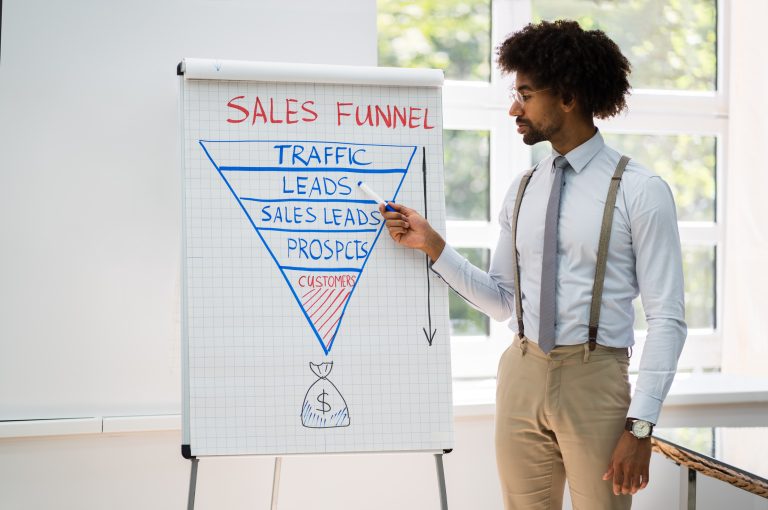
An ecommerce sales funnel is a series of steps that a potential customer goes through before making a purchase on your website. The goal of the funnel is to guide the customer through each stage of the buying process, from awareness to purchase, and to make it as easy and seamless as possible for them to complete their purchase. By understanding the different stages of the funnel and the strategies you can use to improve each stage, you can increase your conversion rates and grow your business.
Key Takeaways
- An ecommerce sales funnel is a series of steps that a potential customer goes through before making a purchase on your website.
- The different stages of the funnel include awareness, interest, consideration, and purchase.
- Strategies to improve your ecommerce sales funnel include using social media and online advertising, understanding your competitors, and leveraging user-generated content and reviews.
Understanding Ecommerce Sales Funnel
If you are running an online store, understanding the ecommerce sales funnel is crucial to your success in the ecommerce market. An ecommerce sales funnel is a visual representation of the journey that a customer takes from the moment they land on your website to the moment they make a purchase. It helps you identify the key stages of the customer journey and optimise each stage to maximise conversions.
The ecommerce funnel consists of four main stages: awareness, interest, decision, and action. Let’s take a closer look at each stage:
Awareness
At the top of the funnel is the awareness stage. This is where potential customers become aware of your brand and products. They may come across your website through search engines, social media, or advertising. Your goal at this stage is to grab their attention and make them interested in your products.
Interest
Once potential customers are aware of your brand, they move to the interest stage. This is where they start to explore your website and products in more detail. They may read product descriptions, check out customer reviews, and compare prices. Your goal at this stage is to keep them engaged and interested in your products.
Decision
The decision stage is where potential customers make a decision to purchase your products. This stage is critical because it’s where you can lose customers if you don’t provide the right information or experience. You need to make sure that your product information is accurate, your pricing is competitive, and your checkout process is smooth and hassle-free.
Action
The final stage of the ecommerce funnel is the action stage. This is where potential customers become actual customers by completing a purchase. Your goal at this stage is to make the checkout process as easy and convenient as possible. You can use tactics like free shipping, discounts, and upsells to encourage customers to complete their purchase.
In summary, understanding the ecommerce sales funnel is essential to your success in the ecommerce market. By optimising each stage of the funnel, you can maximise conversions and grow your business.
Stages of an Ecommerce Sales Funnel
An ecommerce sales funnel is a visual representation of the journey that a potential customer takes from the moment they become aware of your brand, to the point where they make a purchase and become a loyal customer. The funnel is divided into several stages, each of which requires a different approach to marketing and sales. In this section, we will explore the different stages of an ecommerce sales funnel and what you can do to optimise your marketing efforts at each stage.
Awareness Stage
The awareness stage is the first stage of the ecommerce sales funnel. At this stage, your goal is to create brand awareness and reach potential customers. This can be achieved through various marketing channels such as social media, advertising, SEO, content marketing, blogs, and articles. The key is to create content that resonates with your target audience and addresses their pain points. By doing so, you can attract potential customers to your website and generate interest in your products.
Interest and Consideration Stage
Once you have attracted potential customers to your website, the next stage is to nurture their interest and consideration. At this stage, potential customers are evaluating your products and comparing them to your competitors. To convert potential customers into actual customers, you need to provide them with the right information and user experience. This can be achieved through product pages, product descriptions, landing pages, and user-friendly website design. Email marketing and lead generation can also be effective in nurturing potential customers and moving them towards the next stage of the funnel.
Decision and Purchase Stage
The decision and purchase stage is where potential customers take action and make a purchase. At this stage, you need to make it as easy as possible for potential customers to convert. This can be achieved through various tactics such as product recommendations, discounts, promotions, order bumps, and cart abandonment reminders. The key is to provide potential customers with a seamless and hassle-free buying experience that encourages them to make a purchase.
Post-Purchase and Retention Stage
The post-purchase and retention stage is where you turn customers into loyal customers. At this stage, your goal is to provide a positive customer experience and encourage repeat purchases. This can be achieved through various tactics such as customer reviews, customer testimonials, user-generated content, and loyalty programs. The key is to make customers feel valued and appreciated, and to provide them with incentives to keep coming back.
In conclusion, understanding the different stages of an ecommerce sales funnel is essential for optimising your marketing efforts and increasing conversions. By creating targeted content and providing a seamless user experience, you can attract potential customers, nurture their interest, encourage them to make a purchase, and turn them into loyal customers.
Strategies to Improve Ecommerce Sales Funnel
If you want to improve your ecommerce sales funnel, you need to focus on optimizing your marketing strategy and efforts. Here are some strategies that can help:
Retargeting
Retargeting is a powerful strategy that involves showing targeted ads to people who have already interacted with your website. By retargeting these people, you can remind them of your products and encourage them to make a purchase.
Cross-sell and Upsell
Cross-selling and upselling are strategies that involve offering additional products or services to customers who have already made a purchase. Cross-selling involves offering complementary products, while upselling involves offering a higher-priced version of the product they are already buying. Both strategies can help increase the average order value and improve your overall sales.
Email Subscribers
Building an email subscriber list is a great way to keep in touch with potential customers and encourage them to make a purchase. By sending regular newsletters and promotional emails, you can keep your brand top of mind and encourage people to visit your website and make a purchase.
Personalized Purchasing Process
Personalization is an important part of the ecommerce sales funnel. By offering a personalized purchasing process, you can make it easier for customers to find the products they are looking for and encourage them to make a purchase. This can include personalized recommendations, customized product pages, and tailored search results.
Lead Magnets
Lead magnets are free resources that you offer to potential customers in exchange for their contact information. This can include things like ebooks, whitepapers, and webinars. By offering valuable content, you can attract potential customers and encourage them to sign up for your email list and make a purchase.
Overall, there are many strategies you can use to improve your ecommerce sales funnel. By focusing on optimization, marketing efforts, and personalized experiences, you can encourage more people to visit your website, make a purchase, and become loyal customers.
Role of Social Media and Online Advertising
Social media and online advertising play a crucial role in the success of an ecommerce sales funnel. Social media platforms such as Facebook, Instagram, and YouTube have become important channels for businesses to reach out to potential customers and raise brand awareness.
One of the key benefits of social media is its ability to provide social proof. Social proof refers to the phenomenon where people are more likely to buy a product if they see that others have already bought it and are satisfied with it. Social media platforms provide an ideal platform for businesses to showcase customer reviews and testimonials, which can help to build trust and credibility with potential customers.
Paid advertising on social media platforms can also be an effective way to drive traffic to your ecommerce store and increase sales. Facebook Ads, for example, allow businesses to target specific audiences based on a range of demographic and behavioural factors. This means that you can ensure that your ads are being seen by the people who are most likely to be interested in your products.
In addition to social media, online advertising can also be an effective way to drive traffic to your ecommerce store. Online advertising includes a range of different channels such as display ads, search engine marketing, and affiliate marketing. Display ads, for example, can be placed on relevant websites and can help to raise brand awareness and drive traffic to your store.
Overall, social media and online advertising are important components of an ecommerce sales funnel. By leveraging these channels effectively, you can reach out to potential customers, build trust and credibility, and ultimately increase sales and revenue for your business.
Understanding Your Competitors
To succeed in ecommerce, you need to have a good understanding of your competitors. By analyzing your competitors, you can learn from their successes and failures and apply those lessons to your own business. Here are some key areas to focus on when analyzing your competitors:
SEM
One of the best ways to understand your competitors is to analyze their SEM (Search Engine Marketing) campaigns. SEM involves using paid search ads to promote your products or services on search engines like Google. By analyzing your competitors’ SEM campaigns, you can gain valuable insights into their marketing strategies, including the keywords they’re targeting, the ad copy they’re using, and the landing pages they’re directing traffic to.
Keyword Research
Keyword research is another important aspect of understanding your competitors. By researching the keywords your competitors are targeting, you can gain insights into the products or services they’re promoting, as well as the language they’re using to describe those products or services. You can also identify gaps in your own keyword strategy and use that information to improve your own campaigns.
Competitor Analysis
Finally, it’s important to conduct a thorough competitor analysis to understand your competitors’ strengths and weaknesses. This analysis should include an assessment of their product offerings, pricing strategies, marketing tactics, and customer service. By understanding your competitors’ strengths and weaknesses, you can identify opportunities to differentiate your own business and gain a competitive advantage.
In summary, understanding your competitors is essential to succeeding in ecommerce. By analyzing their SEM campaigns, conducting keyword research, and conducting a thorough competitor analysis, you can gain valuable insights into their strategies and use that information to improve your own business.
Importance of Reviews and User-Generated Content
Reviews and user-generated content (UGC) play a crucial role in the success of an ecommerce sales funnel. In fact, they are one of the most important factors that can influence a customer’s decision to purchase a product or service. In this section, we will discuss the importance of reviews and UGC in more detail.
Social Proof
Reviews and UGC provide social proof, which is a psychological phenomenon that occurs when people assume the actions of others in an attempt to reflect correct behavior for a given situation. In other words, when people see that others have purchased and enjoyed a product or service, they are more likely to trust that product or service and make a purchase themselves. This is why reviews and UGC are so important in the sales funnel.
Customer Reviews
Customer reviews are a type of UGC that provide valuable feedback about a product or service. They allow potential customers to see the pros and cons of a product or service from the perspective of someone who has already purchased and used it. This can help potential customers make an informed decision about whether or not to buy the product or service.
Customer Testimonials
Customer testimonials are another type of UGC that can be used to build trust with potential customers. They are usually longer and more detailed than customer reviews and provide a more in-depth look at the customer’s experience with the product or service. Testimonials can be used in various parts of the sales funnel, such as on the product page or in email campaigns, to help build trust and credibility with potential customers.
Importance of Quality
While reviews and UGC are important, it’s also important to ensure that the quality of the content is high. Poorly written reviews or testimonials can actually have a negative impact on sales, as they can make a product or service seem less credible. It’s important to encourage customers to leave detailed and honest feedback, but also to moderate the content to ensure that it meets a certain standard of quality.
In conclusion, reviews and user-generated content are an essential part of any ecommerce sales funnel. They provide social proof, valuable feedback, and can help build trust and credibility with potential customers. It’s important to encourage customers to leave feedback and to ensure that the quality of the content is high to ensure the best possible outcome for your sales funnel.
Common Problems and Solutions
When it comes to ecommerce sales funnels, there are a few common problems that businesses face. Here are some of the most common issues and solutions to help you improve your sales funnel and increase your revenue:
Problem: Cart Abandonment
One of the biggest problems in ecommerce sales funnels is cart abandonment. Customers add items to their cart but then leave the site without completing the purchase. This can be frustrating for businesses, but there are a few solutions to this problem. One solution is to send abandoned cart emails to remind customers of the items they left behind. These emails can include a discount code or other incentive to encourage the customer to complete their purchase.
Problem: Lack of Communication
Another problem in ecommerce sales funnels is a lack of communication with customers. Customers may have questions or concerns about a product or the checkout process, but if there is no easy way to get in touch with the business, they may abandon their purchase. One solution to this problem is to offer live chat support on your website. This allows customers to get their questions answered quickly and easily, which can increase the likelihood of a sale.
Problem: Lack of Content
Creating content that is relevant and engaging can be a challenge for businesses, but it is an important part of the ecommerce sales funnel. Without relevant content, customers may not understand the benefits of your products or may not be motivated to make a purchase. One solution to this problem is to create a blog or other content hub on your website. This can help to educate customers about your products and services and can also improve your SEO, which can drive more traffic to your site.
These are just a few of the common problems and solutions in ecommerce sales funnels. By addressing these issues and continually optimizing your sales funnel, you can improve your conversion rates and increase your revenue.
Frequently Asked Questions
What are the key stages of an eCommerce funnel and how do they work?
An eCommerce funnel typically consists of four key stages: awareness, interest, decision, and action. In the awareness stage, potential customers become aware of your brand and products through various marketing channels. In the interest stage, they start to show interest in your products and engage with your website. In the decision stage, they consider purchasing your products and compare them with other options. In the action stage, they make a purchase and become a customer.
What metrics should I be tracking to measure the success of my eCommerce funnel?
There are several metrics that you should track to measure the success of your eCommerce funnel. These include website traffic, bounce rate, time on site, click-through rate, conversion rate, and average order value. By monitoring these metrics, you can identify areas of your funnel that need improvement and make data-driven decisions to optimize your eCommerce sales.
What are some benchmarks for eCommerce conversion funnels?
Benchmarks for eCommerce conversion funnels vary depending on the industry, product, and target audience. However, a good benchmark for the overall conversion rate is around 2-3%. The average cart abandonment rate is around 70%, while the average checkout abandonment rate is around 20%. By tracking these benchmarks, you can compare your performance to industry standards and identify areas for improvement.
How can I use Google Analytics to optimise my eCommerce funnel?
Google Analytics is a powerful tool that can help you optimize your eCommerce funnel. By setting up conversion tracking and goal tracking, you can monitor the performance of your funnel and identify areas that need improvement. You can also use Google Analytics to track user behaviour, such as where they drop off in the funnel and what pages they visit. This data can help you make data-driven decisions to optimize your eCommerce sales.
How can I use ClickFunnels to improve my eCommerce sales?
ClickFunnels is a popular tool that can help you create and optimize your eCommerce funnel. With ClickFunnels, you can create landing pages, upsell pages, and order bump pages that are designed to convert visitors into customers. You can also use ClickFunnels to track your funnel performance and make data-driven decisions to improve your eCommerce sales.
What is the difference between an eCommerce funnel and a marketing funnel?
An eCommerce funnel is a specific type of marketing funnel that is designed to drive sales for eCommerce businesses. While a marketing funnel can include various stages, such as awareness, consideration, and decision, an eCommerce funnel typically focuses on the four key stages of awareness, interest, decision, and action. The goal of an eCommerce funnel is to convert website visitors into paying customers, while the goal of a marketing funnel is to nurture leads and build brand awareness.