
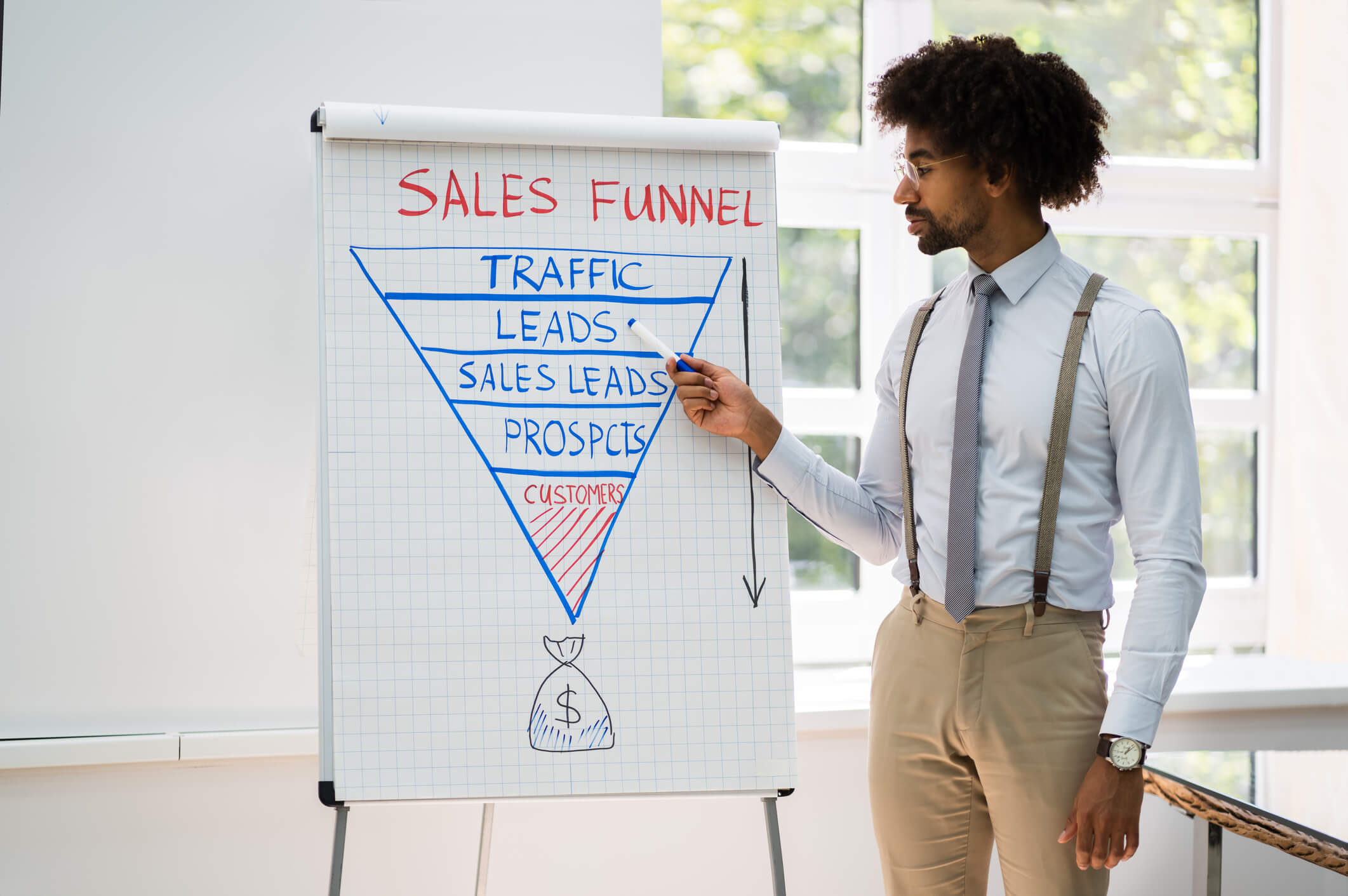
If you’re running a business, you know how important it is to track your sales funnel. A sales funnel is a visual representation of the customer journey from initial contact to final purchase, and it’s a crucial tool for understanding how your business is performing. By tracking your sales funnel, you can identify areas for improvement and optimize your sales process to increase conversions.
To effectively track your sales funnel, you need to understand its components. The sales funnel is made up of several stages, including awareness, interest, decision, and action. At each stage, you need to track metrics such as the number of leads, conversion rates, and revenue generated. By monitoring these metrics, you can identify where potential customers are dropping off in the sales process and make changes to improve conversion rates.
Tracking your sales funnel can be a challenging task, but it’s essential for the success of your business. By understanding the components of your sales funnel and monitoring key metrics, you can optimize your sales process and increase conversions. In the following sections, we’ll take a closer look at how to track your sales funnel and common challenges you may encounter along the way.
Key Takeaways
- Understanding the components of your sales funnel is crucial for effective tracking.
- Monitoring key metrics such as leads, conversion rates, and revenue can help you identify areas for improvement.
- By optimizing your sales process based on your sales funnel data, you can increase conversions and grow your business.
Understanding the Sales Funnel
Concept of Sales Funnel
The sales funnel is a visual representation of the customer journey from the moment they become aware of your product or service to the point of purchase. It is a framework that helps businesses understand and track the customer’s progress through the sales process. The sales funnel is divided into stages, and each stage represents a different level of engagement between the customer and the business.
The concept of the sales funnel is based on the idea that not all customers who become aware of your product or service will end up making a purchase. The sales funnel helps businesses identify where customers are dropping off and where they need to focus their efforts to improve the conversion rate.
Importance of Sales Funnel
Understanding the sales funnel is essential for any business that wants to increase revenue and customer acquisition. By tracking the customer journey through the sales funnel, businesses can identify the areas where they need to improve to increase conversions and revenue.
The sales funnel also helps businesses understand the lifetime value of a customer. By tracking the customer journey through the sales funnel, businesses can identify the stages where customers are most likely to make repeat purchases and become loyal customers.
The stages of a sales funnel typically include:
- Awareness: This is the stage where the customer becomes aware of your product or service.
- Interest: This is the stage where the customer shows interest in your product or service.
- Consideration: This is the stage where the customer considers purchasing your product or service.
- Intent: This is the stage where the customer intends to purchase your product or service.
- Purchase: This is the stage where the customer makes a purchase.
Tracking the customer journey through these stages can help businesses identify the areas where they need to improve to increase conversions and revenue.
In summary, understanding the sales funnel is crucial for any business that wants to increase revenue and customer acquisition. By tracking the customer journey through the sales funnel, businesses can identify the areas where they need to improve to increase conversions and revenue.
Components of a Sales Funnel
To effectively track your sales funnel, you must first understand its components. A sales funnel is a visual representation of the journey that a prospect goes through before becoming a customer. It is divided into four stages: Awareness, Interest and Desire, Action, and Retention. In this section, we will discuss the first three stages of the sales funnel.
Awareness Stage
The awareness stage is the first stage of the sales funnel, where prospects become aware of your product or service. At this stage, your goal is to increase your reach and awareness. You can achieve this by creating content that educates your target audience about the problem your product or service solves. This can include blog posts, social media posts, videos, and infographics.
To generate leads, you can offer a lead magnet such as a free e-book or webinar. This will encourage prospects to provide their contact information in exchange for valuable content.
Interest and Desire Stage
Once prospects are aware of your product or service, they move to the interest and desire stage. At this stage, your goal is to build trust and credibility with your prospects. You can achieve this by providing case studies, testimonials, and product demos. This will help prospects understand how your product or service can solve their problem.
To move prospects closer to making a purchase, you can offer a free trial or consultation. This will help them experience your product or service firsthand and understand its value.
Action Stage
The action stage is the final stage of the sales funnel, where prospects become customers. At this stage, your goal is to convert prospects into paying customers. You can achieve this by providing a clear call-to-action (CTA) and making it easy for prospects to make a purchase. This can include offering multiple payment options and providing a seamless checkout process.
To track your sales funnel, you can use tools such as Google Analytics, CRM software, and marketing automation software. These tools will help you monitor your lead generation, conversion rates, and customer retention.
In summary, the components of a sales funnel include awareness, interest and desire, and action. By understanding these components and tracking your sales funnel, you can improve your lead generation, conversion rates, and customer retention.
Tracking the Sales Funnel
Tracking the sales funnel is an essential aspect of any business that wants to grow and succeed. By tracking the sales funnel, you can identify areas that need improvement, optimize your sales process, and increase your revenue. In this section, we will discuss key metrics, the use of CRM tools, and the role of analytics in tracking the sales funnel.
Key Metrics
Tracking the right metrics is crucial to understanding how your sales funnel is performing. Some of the key metrics to track include:
- Conversion rates: This metric measures the percentage of leads that convert into paying customers. It is essential to track this metric at each stage of the sales funnel to identify areas that need improvement.
- Sales funnel metrics: These metrics include the number of leads, opportunities, and deals at each stage of the sales funnel. Tracking these metrics can help you identify bottlenecks and optimize your sales process.
- Sales metrics: These metrics include revenue, average deal size, and customer lifetime value. Tracking these metrics can help you understand the overall health of your sales process.
It is essential to track metrics that matter to your business. By tracking the right metrics, you can make data-driven decisions that will help you improve your sales process and increase your revenue.
Use of CRM Tools
CRM (Customer Relationship Management) tools are software that helps businesses manage their interactions with customers and prospects. CRM tools can be used to track sales funnel metrics, manage leads and opportunities, and automate tasks.
One popular CRM tool is Zendesk Sell. Zendesk Sell is a cloud-based sales CRM tool that helps businesses manage their sales process. With Zendesk Sell, you can track leads, opportunities, and deals, automate tasks, and get insights into your sales process.
Using a CRM tool like Zendesk Sell can help you streamline your sales process, improve your sales funnel metrics, and increase your revenue.
Role of Analytics
Analytics plays a crucial role in tracking the sales funnel. By using analytics, you can get insights into your sales process and identify areas that need improvement. Some of the data points that you can track with analytics include:
- Traffic sources: This data can help you identify which marketing channels are driving the most traffic to your website.
- Time on site: This data can help you identify how engaged your visitors are with your website.
- Bounce rate: This data can help you identify how many visitors leave your website after viewing only one page.
- Conversion rate: This data can help you identify how many visitors convert into leads and customers.
By tracking these data points, you can optimize your sales process and increase your revenue.
In conclusion, tracking the sales funnel is essential to the success of any business. By tracking key metrics, using CRM tools, and leveraging analytics, you can optimize your sales process, improve your sales funnel metrics, and increase your revenue.
Optimising the Sales Funnel
To ensure that your sales funnel is working optimally, it is important to focus on lead nurturing, sales strategies, and marketing strategies.
Lead Nurturing
Lead nurturing is the process of engaging with potential customers and guiding them through the sales funnel. This involves identifying the right leads, scoring them based on their level of interest, and providing them with relevant content at each stage of the funnel.
To effectively nurture leads, it is important to have a clear understanding of your target audience and their pain points. This will help you create content that resonates with them and addresses their needs.
Some effective lead nurturing strategies include:
- Personalisation: Creating personalised content and emails that are tailored to the individual needs of each lead.
- Drip campaigns: Sending a series of automated emails to leads over a period of time to keep them engaged and interested.
- Lead scoring: Assigning a score to each lead based on their level of interest and engagement, and using this to prioritise follow-up.
Sales Strategies
Your sales team plays a critical role in moving leads through the sales funnel and closing deals. To ensure that your sales strategies are effective, it is important to have a clear understanding of your target audience and their needs.
Some effective sales strategies include:
- Building relationships: Building relationships with leads and customers to establish trust and credibility.
- Providing value: Providing value to leads and customers by offering solutions that address their pain points.
- Following up: Following up with leads and customers to keep them engaged and interested.
Marketing Strategies
Marketing strategies are essential for driving traffic to your website and generating leads. To ensure that your marketing strategies are effective, it is important to have a clear understanding of your target audience and their needs.
Some effective marketing strategies include:
- Email marketing: Using email to reach out to leads and customers with targeted messages and offers.
- Social media: Using social media to engage with leads and customers and build brand awareness.
- Content marketing: Creating valuable content that addresses the needs of your target audience and positions your brand as an expert in your industry.
By focusing on lead nurturing, sales strategies, and marketing strategies, you can optimise your sales funnel and improve your chances of closing deals.
Common Challenges in Sales Funnel Management
Managing a sales funnel can be a complex process, and there are several common challenges that you may encounter along the way. In this section, we’ll explore some of these challenges and offer tips for overcoming them.
Funnel Leaks
One of the most significant challenges in sales funnel management is dealing with funnel leaks. Funnel leaks occur when potential customers drop out of the funnel at various stages, resulting in lost sales and revenue. Identifying and plugging these leaks is critical to the success of your sales funnel.
To identify funnel leaks, you need to closely monitor your sales funnel metrics, such as conversion rates and customer behaviour data. Once you’ve identified the leaks, you can take steps to address them, such as improving your lead generation strategies or streamlining your sales process.
Conversion Volume and Velocity
Another common challenge in sales funnel management is managing conversion volume and velocity. Conversion volume refers to the number of leads that convert into paying customers, while conversion velocity refers to the speed at which these conversions occur.
To manage conversion volume and velocity, you need to have a clear understanding of your sales funnel metrics and how they relate to your business goals. You may need to adjust your sales strategies or marketing campaigns to increase conversion rates and speed up the sales process.
Customer Experience
The customer experience is another critical factor in sales funnel management. A positive customer experience can help increase conversion rates and customer loyalty, while a negative experience can result in lost sales and damage to your brand reputation.
To improve the customer experience, you need to focus on providing excellent customer service, personalised content, and a seamless buying process. You may also need to invest in customer feedback tools to gather insights into customer needs and preferences.
In summary, managing a sales funnel can be challenging, but by focusing on identifying and addressing funnel leaks, managing conversion volume and velocity, and improving the customer experience, you can maximise your sales and revenue potential.
Case Studies of Effective Sales Funnel Tracking
Tracking your sales funnel is crucial to the success of your business. It helps you identify areas where you can improve and make data-driven decisions. Here are some case studies of effective sales funnel tracking to give you an idea of how it can be done.
B2B Sales Funnel
For B2B sales, tracking your sales funnel can help you identify which stage of the funnel your leads are dropping off. For example, if you notice that a lot of leads are dropping off at the demo stage, you can work on improving your demo process to make it more engaging and informative.
One B2B company that effectively tracked their sales funnel is Salesforce. They used a combination of sales analytics tools and customer relationship management (CRM) software to track their sales funnel and identify areas for improvement. By doing so, they were able to increase their conversion rates and revenue.
SaaS Sales Funnel
Tracking your SaaS sales funnel can help you identify which features are most important to your users and which ones they are willing to pay for. It can also help you identify which channels are most effective for acquiring new users.
One SaaS company that effectively tracked their sales funnel is HubSpot. They used a combination of analytics tools and customer feedback to track their sales funnel and identify areas for improvement. By doing so, they were able to increase their conversion rates and revenue.
B2B Sales Funnel for a Service-Based Business
Tracking your B2B sales funnel for a service-based business can help you identify which services are most in demand and which ones are not. It can also help you identify which channels are most effective for acquiring new clients.
One service-based business that effectively tracked their B2B sales funnel is Deloitte. They used a combination of analytics tools and client feedback to track their sales funnel and identify areas for improvement. By doing so, they were able to increase their conversion rates and revenue.
B2B Sales Funnel for a Product-Based Business
Tracking your B2B sales funnel for a product-based business can help you identify which products are most in demand and which ones are not. It can also help you identify which channels are most effective for acquiring new clients.
One product-based business that effectively tracked their B2B sales funnel is Apple. They used a combination of analytics tools and customer feedback to track their sales funnel and identify areas for improvement. By doing so, they were able to increase their conversion rates and revenue.
In conclusion, effective sales funnel tracking is crucial to the success of your business. By tracking your sales funnel, you can identify areas for improvement and make data-driven decisions to increase your conversion rates and revenue.
Conclusion
Tracking your sales funnel is crucial to the success of your business. By monitoring your ROI, business model, cross-selling opportunities, average deal size, and other KPIs, you can make informed decisions about how to improve your sales process.
Using a sales engagement platform that allows for full-funnel tracking can help you keep track of your customers’ decision stage and tailor your outreach accordingly. Cookies can also be used to track customer behaviour on your website and help you identify areas for improvement.
Blogs and email campaigns can be effective ways to engage with potential customers and move them through the sales funnel. Be sure to collect their email addresses and follow up with them regularly.
Sales managers can play a key role in tracking the sales funnel, providing guidance and support to sales reps as they move potential customers through the funnel. They can also help you identify areas where your sales process could be improved.
Offering a free trial or demo can be an effective way to get potential customers to engage with your product or service and move them closer to making a purchase. Calls can also be an effective way to engage with potential customers and answer any questions they may have.
Be sure to set clear KPIs for your sales team and track their progress towards these goals. This will help you identify areas where your sales process could be improved and ensure that you are making progress towards your overall sales goals.
Finally, be sure to have clear contracts in place with your customers to ensure that both parties understand their responsibilities and obligations. Tracking your average sale and total sales can help you identify areas for improvement and ensure that you are meeting your revenue targets.
In conclusion, tracking your sales funnel is essential to the success of your business. By using the right tools and techniques, you can identify areas for improvement and make informed decisions about how to improve your sales process.
Frequently Asked Questions
What are some effective ways to monitor the progress of a sales funnel?
To monitor the progress of your sales funnel, you can use a variety of methods. One effective way is to track the number of leads generated at each stage of the funnel. You can also monitor conversion rates to see how many leads are becoming customers. Another way is to use customer feedback to identify areas where your funnel can be improved.
How can I use funnel analysis tools to track and improve my sales funnel?
Funnel analysis tools can be used to track and improve your sales funnel by providing insights into customer behaviour at each stage of the funnel. These tools can help you identify areas where you are losing potential customers and make adjustments to improve conversion rates. By analyzing data from your funnel, you can also identify trends and patterns that can help you make informed decisions about your sales and marketing strategies.
What are some key metrics to track in a sales funnel?
Some key metrics to track in a sales funnel include the number of leads generated, conversion rates, and customer acquisition costs. Other important metrics include the average time it takes to move a lead through the funnel and the lifetime value of a customer. By tracking these metrics, you can gain a better understanding of how your funnel is performing and make data-driven decisions to improve it.
What are the best sales funnel software options available?
There are many sales funnel software options available, each with their own strengths and weaknesses. Some popular options include ClickFunnels, Leadpages, and Unbounce. These tools offer a range of features, including landing page builders, email marketing automation, and analytics tracking. When choosing a sales funnel software, it’s important to consider your specific needs and budget.
What are some successful sales funnel strategies used by top companies?
Top companies use a variety of sales funnel strategies to drive conversions and increase revenue. One effective strategy is to create targeted landing pages that are designed to convert visitors into leads. Another strategy is to use retargeting ads to keep your brand top-of-mind with potential customers. Providing value-added content, such as webinars or whitepapers, can also help to move leads through the funnel.
Can you provide some examples of successful sales funnels and how they were created?
One example of a successful sales funnel is the one used by Dropbox. They created a referral program that incentivized existing users to invite friends to sign up for the service. This helped them to rapidly grow their user base and increase revenue. Another example is the sales funnel used by HubSpot. They created a series of educational resources, such as webinars and ebooks, to attract leads and move them through the funnel.


