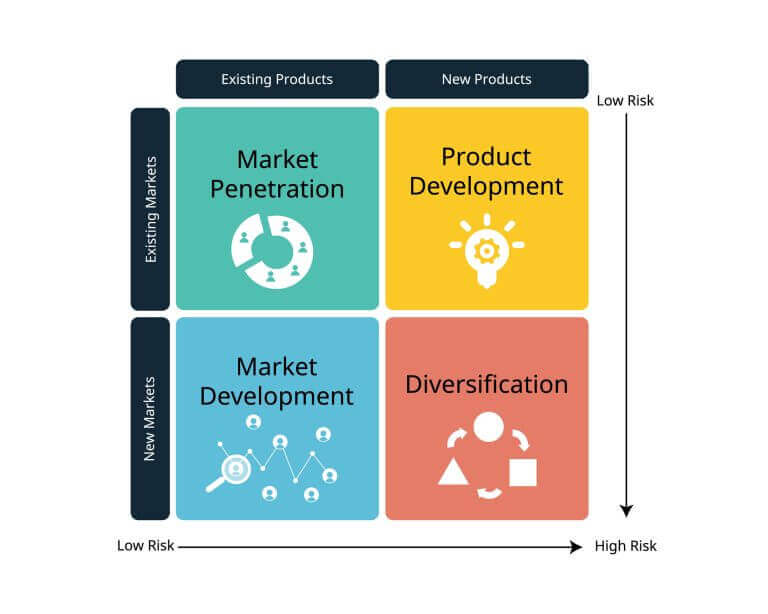
The Ansoff Matrix is a powerful tool that helps businesses determine their growth strategies. Referencing the Ansoff Matrix involves understanding its four main strategies: market penetration, market development, product development, and diversification. Knowing how to properly cite this framework can enhance your business plans and provide a clearer direction for your goals.
Utilising the Ansoff Matrix allows you to analyse your current market position and identify opportunities for expansion. By integrating this model into your strategy discussions, you can effectively communicate your approach to growth, making it essential for anyone involved in business development or marketing.
In this article, you will discover how to reference the Ansoff Matrix correctly, the significance of each strategy, and tips for ensuring your business decisions are well-informed and strategically sound.
Key Takeaways
- Understanding the four strategies can guide your growth decisions effectively.
- Market penetration and development focus on existing and new markets.
- Diversification requires careful analysis but opens doors to new opportunities.
Understanding the Ansoff Matrix
The Ansoff Matrix is a strategic tool that helps businesses identify growth opportunities by mapping different product-market strategies. Developed by H. Igor Ansoff, this matrix provides a framework for evaluating options based on risk and potential return.
Origins and Creator
The Ansoff Matrix was introduced in 1957 by H. Igor Ansoff in his article “Strategies for Diversification.” Ansoff, known as the father of strategic management, sought to assist companies in navigating their growth options. His work highlights how businesses can strategically align their products with market opportunities. Since then, the Ansoff Matrix has become a fundamental part of strategic planning, widely used by managers and strategists to assess growth strategies.
Fundamental Concepts
At its core, the Ansoff Matrix focuses on two key aspects: products and markets. These elements combine to form four growth strategies:
- Market Penetration: Selling more of existing products to current customers.
- Market Development: Introducing existing products to new markets.
- Product Development: Developing new products for existing markets.
- Diversification: Creating new products for new markets.
Each approach carries different levels of risk, with diversification typically seen as the most risky but potentially rewarding.
Components of the Matrix
The Ansoff Matrix is structured as a 2×2 grid. The horizontal axis represents products (existing vs new), while the vertical axis signifies markets (existing vs new). Each quadrant outlines a distinct strategy:
- Market Penetration: Focus on increasing market share.
- Market Development: Search for new markets for existing products.
- Product Development: Innovate to serve current markets better.
- Diversification: Take on the highest risk by moving into unknown areas.
This directional matrix allows you to visualise and evaluate various growth strategies, enhancing your decision-making process. By understanding these components, you can effectively apply the Ansoff Matrix to your strategic planning efforts.
Analysing Market Penetration
Market penetration focuses on increasing your share within existing markets using current products. This strategy aims to boost sales and enhance customer loyalty without significant changes to your offerings. You will explore the definition, strategies, and methods to enhance customer loyalty as key components to achieve market penetration.
Definition and Purpose
Market penetration refers to the strategy of increasing the market share of existing products within current markets. The primary purpose is to sell more to your existing customer base and attract new customers. This can be achieved by implementing different tactics, such as competitive pricing, effective promotions, or improved customer service.
A successful market penetration strategy can lead to increased revenue and a strengthened brand presence. By focusing on your existing products and markets, you can optimise resources and reduce risks associated with entering new markets.
Strategies for Market Share Expansion
To expand market share effectively, consider various strategies:
- Competitive Pricing: Offer attractive prices to encourage customers to choose your products over competitors.
- Promotional Campaigns: Implement marketing campaigns to raise awareness and attract more customers.
- Distribution Channels: Enhance the availability of your products through more diverse retail locations or online platforms.
Monitoring competitor actions is crucial to stay ahead. Additionally, assess customer preferences and behaviour to adjust your strategies accordingly. Effective analysis can help identify gaps and opportunities for increased penetration.
Customer Loyalty Enhancement
Building customer loyalty is essential for sustaining market penetration. Loyal customers are more likely to repeat purchases, refer others, and contribute positive reviews. To enhance loyalty, focus on:
- Quality Products: Ensure your existing products consistently meet quality standards.
- Customer Engagement: Use social media and email marketing to engage with customers. Offer exclusive promotions or rewards to encourage continued patronage.
- Feedback Mechanisms: Actively seek customer feedback to enhance your products and services. This shows customers you value their opinions, fostering a stronger connection.
By prioritising customer satisfaction and engagement, you create a loyal customer base that supports your market penetration efforts.
Exploring Market Development
Market development focuses on identifying and reaching new markets to expand your customer base. This process involves understanding the target market’s needs and preferences, creating strategies to enter these markets, and ensuring that your offerings resonate with new customers.
Identifying New Markets
To successfully identify new markets, start by conducting thorough market research. Evaluate factors such as demographic trends, customer behaviours, and regional demands. Consider using tools like SWOT analysis to assess strengths and weaknesses in potential markets.
Look for markets with unmet needs or where competition is low. You might explore international markets if local prospects are limited. Engaging with current customers can provide insights into potential opportunities.
Key questions to consider:
- What are the emerging trends in different regions?
- Who are my potential new customers?
- What are their needs and preferences?
Strategies for Entering New Markets
Once you’ve identified potential new markets, you need clear strategies to enter them. This could include several approaches:
- Direct Exporting: Sell products directly to customers in the new market.
- Partnerships: Collaborate with local businesses that understand the market landscape.
- Adaptation: Modify products or services to better fit local tastes and regulations.
Utilising digital marketing can also help you reach a wider audience effectively. Tailoring your marketing message to resonate with the target market is crucial.
Important considerations:
- How will you distribute your products?
- What local regulations must you comply with?
- How can you leverage local insights in your marketing strategies?
Product Development Strategies
In product development, creating new products is essential for growth. You can achieve this through effective research and development, ensuring that your offerings meet the specific needs of your customer segments.
Creating New Products
When developing new products, start by identifying gaps in the market. Focus on what your customers want and what competitors may not be offering. Brainstorm ideas based on customer feedback, industry trends, and technological advancements.
Consider utilising techniques like brainstorming sessions or focus groups to gather insights. Once you identify potential products, assess their feasibility. Create prototypes and conduct tests to understand how they will perform in real-world scenarios. This step is crucial to avoid costly mistakes later.
Research and Development
Investing in research and development (R&D) is vital for successful product development. R&D enables you to innovate and enhance existing products while exploring new ideas. It’s essential to allocate a budget specifically for these activities.
Establish a dedicated team to focus on innovative solutions that can set you apart from competitors. Use market analysis to guide your R&D efforts, ensuring that your team remains aligned with customer preferences and emerging trends.
The R&D process often includes collaboration with partners and stakeholders to share knowledge can lead to breakthroughs that benefit your product line.
Meeting Customer Needs
Understanding customer needs is at the core of product development. You must gather data through surveys, interviews, and focus groups to identify what your audience values most.
Once you have this data, prioritise features that matter. Build your new products around these features to improve customer satisfaction.
Use customer personas to represent different segments of your audience. This method helps you visualise who you are designing for and ensures that your products cater to various preferences and requirements, ultimately driving sales and loyalty.
Diversification Tactics
Diversification tactics offer businesses a way to explore new opportunities and reduce risk. By understanding the definition and risks involved, as well as using diversification as a growth strategy, you can make informed decisions for your organisation.
Definition and Risks
Diversification refers to the process of a business expanding its product lines or markets. This strategy aims to spread risk and enhance profitability by venturing into new areas.
Common types of diversification include:
- Horizontal Diversification: Introducing new products that are related to existing offerings.
- Vertical Diversification: Expanding into different stages of the production process.
- Conglomerate Diversification: Offering completely unrelated products.
While diversification can lead to growth, it carries risks. Entering unknown markets can strain resources. Misjudging demand for new products may result in financial losses. You should conduct thorough market research to mitigate these risks effectively.
Diversification as a Growth Strategy
Using diversification as a growth strategy can unlock new business growth opportunities. By introducing diverse products or entering different markets, companies can tap into new revenue streams.
For example, a company that sells electronics might expand into home appliances.
This approach can also improve competitive advantage by:
- Reducing dependency on a single market.
- Spreading fixed costs over multiple product lines.
- Enhancing brand recognition through varied offerings.
Corporate finance plays a critical role in this process. Adequate funding is essential to support diversification efforts, whether through internal reserves or external investments. By leveraging these tactics, you can position your business for sustained growth and stability in changing market conditions.
Utilising the Ansoff Matrix for Growth
The Ansoff Matrix is a valuable tool to help you identify potential growth strategies for your business. By assessing markets and products, you can tailor your strategic planning to increase your chances of success.
Incorporating the Matrix in Business Planning
When you incorporate the Ansoff Matrix into your business planning, you gain clarity. This framework consists of four strategies: market penetration, market development, product development, and diversification.
- Market Penetration focuses on increasing sales of existing products in current markets.
- Market Development involves selling existing products to new markets.
- Product Development means creating new products for existing markets.
- Diversification is introducing new products to new markets, often seen as the riskiest strategy.
You can use these strategies to outline your marketing plans and set specific growth objectives. This structured approach helps you allocate resources effectively and track progress.
Strategic Alliances and Partnerships
Forming strategic alliances or partnerships can strengthen your position when using the Ansoff Matrix. Collaborating with other businesses gives you access to new markets and resources.
For example, if you choose a market development strategy, partnering with a local company can help you navigate new customer preferences. This shared knowledge can ease entry into unfamiliar territories.
In product development strategies, alliances can offer technological advancements or insights into customer needs. As a result, you can create products that resonate better with your target audience.
Subscription models can also enhance growth strategies. By offering subscription services, you build customer loyalty and secure a steady revenue stream. Utilising the Ansoff Matrix alongside partnerships can amplify your chances of sustainable business growth.
Relevant Analytical Tools and Considerations
When using the Ansoff Matrix, several analytical tools can enhance your strategy development. These tools, such as SWOT analysis and the Product/Market Expansion Grid, provide valuable insights to guide your decisions and improve your strategic planning.
SWOT Analysis for Supportive Insights
SWOT analysis helps you evaluate your organisation’s strengths, weaknesses, opportunities, and threats. This tool allows you to understand your internal environment and external market conditions.
- Strengths: Identify what your business does well and what unique resources you possess.
- Weaknesses: Recognise areas that need improvement.
- Opportunities: Look for favourable conditions in the market or industry.
- Threats: Be aware of potential challenges from competitors or market shifts.
By mapping these elements, you can better position your choices within the Ansoff Matrix, ensuring they align with your overall strategy.
The Product/Market Expansion Grid
The Product/Market Expansion Grid is another essential tool that complements the Ansoff Matrix. This grid helps you assess potential paths for growth along two dimensions: products and markets.
- Market Penetration: Focus on selling existing products to your current market.
- Market Development: Introduce your current products to new markets.
- Product Development: Create new products for your existing market.
- Diversification: Develop new products for new markets.
By applying this grid, you can explore various growth strategies and decide which approach best fits your business goals. This method adds clarity to your strategic options, ensuring a well-rounded analysis.
Frequently Asked Questions
This section addresses common queries about the Ansoff Matrix. It covers proper citation methods, their origins, and practical applications in business strategy.
What is the proper way to cite the Ansoff Matrix in academic papers?
To cite the Ansoff Matrix, refer to Igor Ansoff’s original work published in 1957. Typically, you will include the author’s name, publication year, title of the work, and source. Check your institution’s preferred citation style for specific formatting.
Where can I find the original Ansoff Matrix article from 1957?
You can find the original article titled “Strategies for Diversification” in the Harvard Business Review, published in 1957. Many libraries provide access to archives of the Harvard Business Review, or you may find it through academic databases.
Who authored the Ansoff Matrix and what is their key contribution?
The Ansoff Matrix was created by Igor Ansoff, a prominent figure in strategic management. His key contribution lies in offering a framework to help businesses identify growth strategies through market and product analysis.
In what ways can the Ansoff Matrix be applied to business strategy?
You can use the Ansoff Matrix to guide strategic decisions regarding market penetration, market development, product development, and diversification. It allows for a systematic exploration of growth opportunities based on existing and new products and markets.
How should the Ansoff Matrix be accurately presented within a business plan?
When presenting the Ansoff Matrix in a business plan, include a clear diagram showing the four strategies. Explain each quadrant’s implications for your business. Ensure that data and examples support your chosen strategies.
Can you provide an example that illustrates the use of the Ansoff Matrix?
For instance, a company selling smartphones can use market penetration by expanding its customer base within the current market. If it introduces a new model, this qualifies as product development. Each quadrant illustrates practical paths for growth based on the company’s goals and market dynamics.